Insights

Museums in Historic Buildings Balance Respect and Reinvention

Whether rehabilitation or relocation, it is essential to seek solutions that champion reuse.
By Stephanie Kingsnorth, FAIA, LEED AP, Principal, Executive Director, and Renovation + Historic Buildings Practice Leader
By Stephanie Kingsnorth FAIA LEED AP
Museums in Historic Buildings Balance Respect and Reinvention
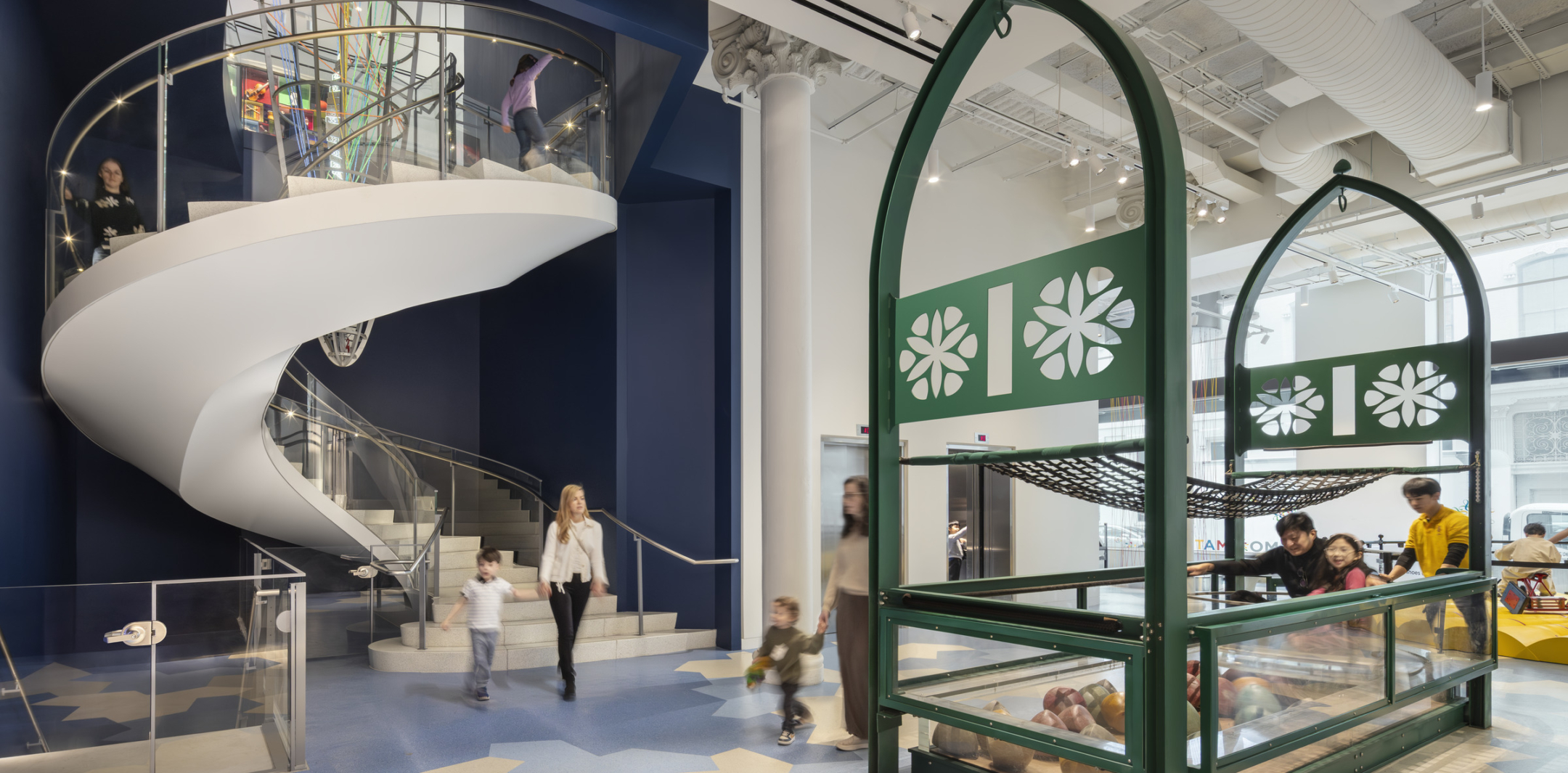
Mathematical logic informed a spiral stair and patterned floor in the historic setting of the National Museum of Mathematics. Photographs by Andrew Rugge © Perkins Eastman

The National Museum of Mathematics, known as MoMath, opened last month in Manhattan’s Chelsea neighborhood with 70 interactive exhibits on display—many of them employing technology that didn’t exist when the Beaux-Arts buildings the museum inhabits were constructed more than a century ago. Visitors pass through a historical frame to engage with the present and future of mathematical inquiry.

In addition to the inherent value of preserving materials and their embodied carbon, reuse enables design solutions that honor an existing building while ensuring it can be transformed or modified to meet a museum’s needs. We consider a building’s critical infrastructure and facade while exploring creative ways to expand or, in the case of MoMath, reshape space—without disturbing original architecture if the structure is historic. We guide clients through decision-making challenges related to sustainability, historic regulations and preservation, building-envelope best practices, and collection and exhibit materials to help them arrive at the best solution for their institution and building. We support a museum’s mission to celebrate culture and heritage by placing equal priority on the building it occupies.

Keeping or Replacing Mechanical Systems

One of the easiest scenarios with adaptive reuse projects is when we can replace a building’s existing infrastructure to meet the client’s new requirements. However, budget and schedule priorities can call for retaining systems if they are relatively new. This was the case with MoMath, which had outgrown its original Manhattan space and chosen a new location within two conjoined buildings in the Ladies’ Mile Historic District.
Museums in Historic Buildings Balance Respect and Reinvention 1

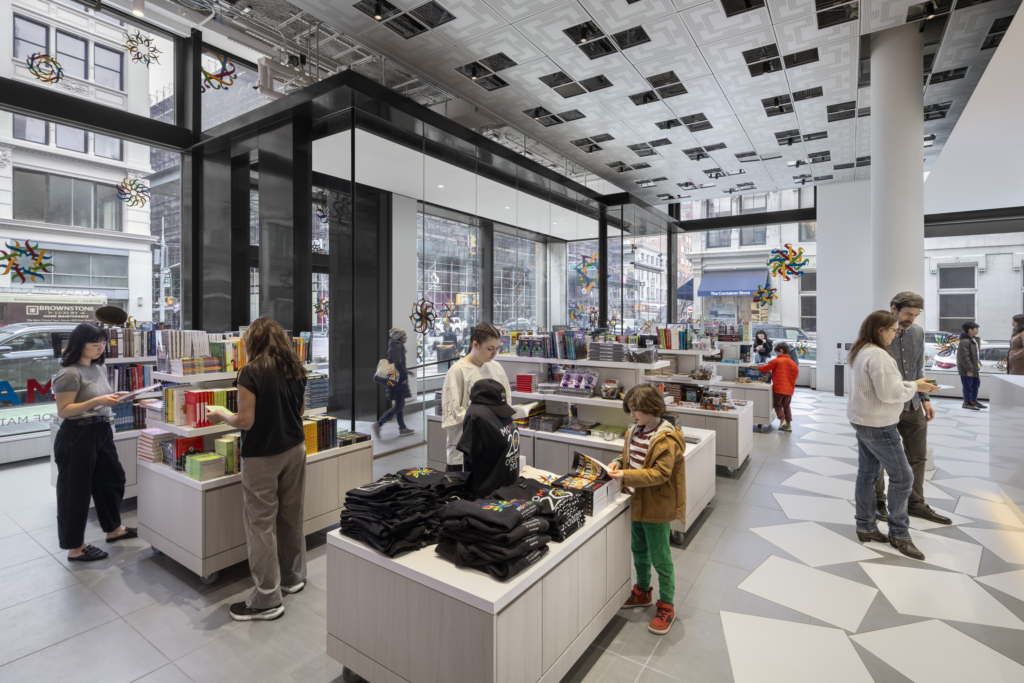
Framed glass walls in the museum’s gift shop echo the building’s original storefront scale.

The buildings’ large volumes and high ceilings were perfectly suited to a museum, yet they came with unique challenges. The mechanical system was in good shape, and keeping it in place was economical, but working around it required structural gymnastics to reinforce the floors and create new openings for the installation of heavy, technologically rich exhibits. The exhibits required more than 50 new structural steel plates, both embedded in the floor slab and suspended from the slab above, that had to circumvent existing beams, pipes, and ducts. To bring continuity to ceiling and floor planes, our team embedded mathematical elements at strategic locations within the architecture, creating a network of surfaces that enhance the museum’s mission as a space for pedagogical engagement.
Vintage Architecture Versus Modern Demands

Many museum collections require strict temperature, light, and humidity controls that historic and existing buildings were not designed to support. The Museum of Riverside in Riverside, CA, faced just such a dilemma.

Museums in Historic Buildings Balance Respect and Reinvention 2

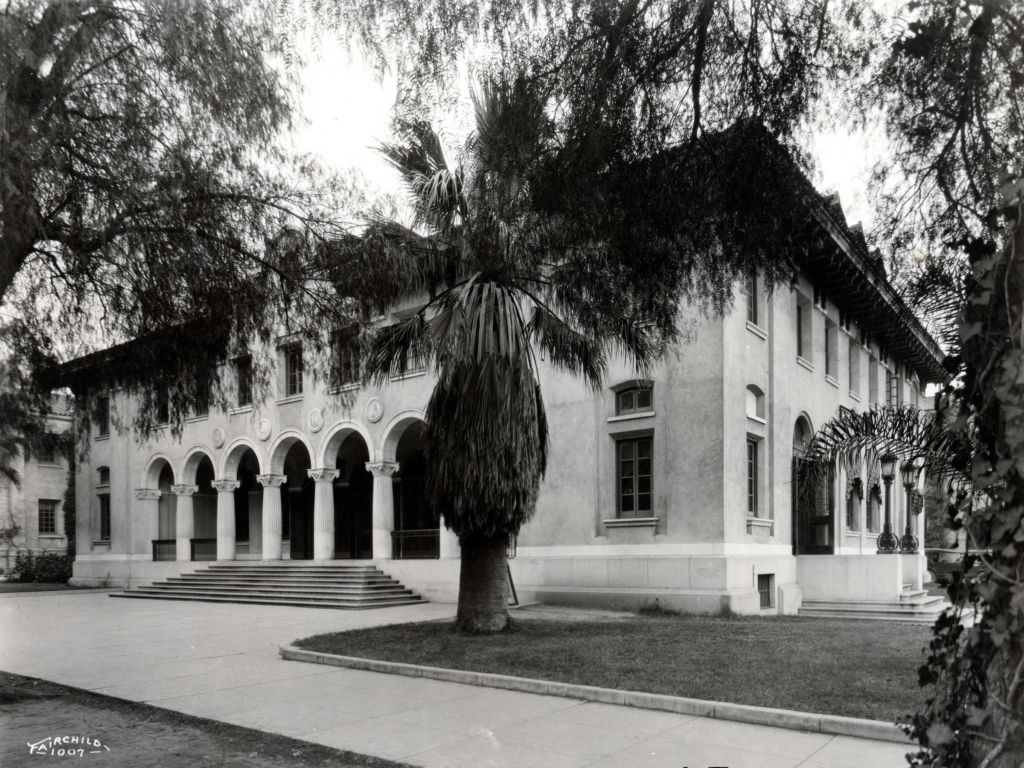
The Museum of Riverside’s building was constructed as a post office in 1912. Perkins Eastman’s renovation and addition enrich the visitor experience and meet modern exhibit standards.
Photograph Courtesy Collection of the Museum of Riverside

The museum occupied a historic, stucco-clad masonry building that was originally a post office and had been expanded through numerous additions as different occupants inhabited it over time. Museum leadership wanted to install traveling exhibits from the Smithsonian and other institutions, but the existing building could not meet their temperature and humidity requirements.

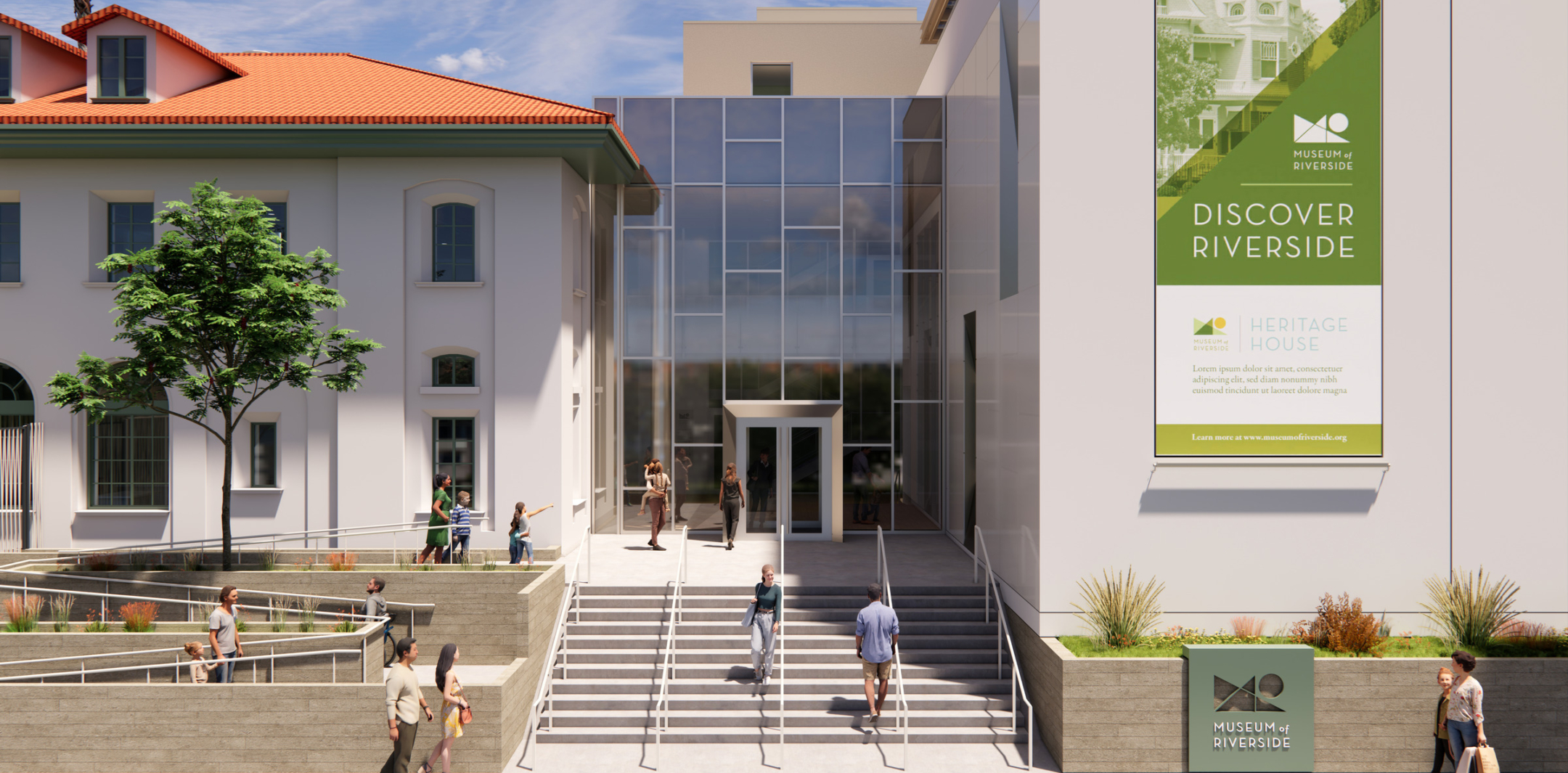
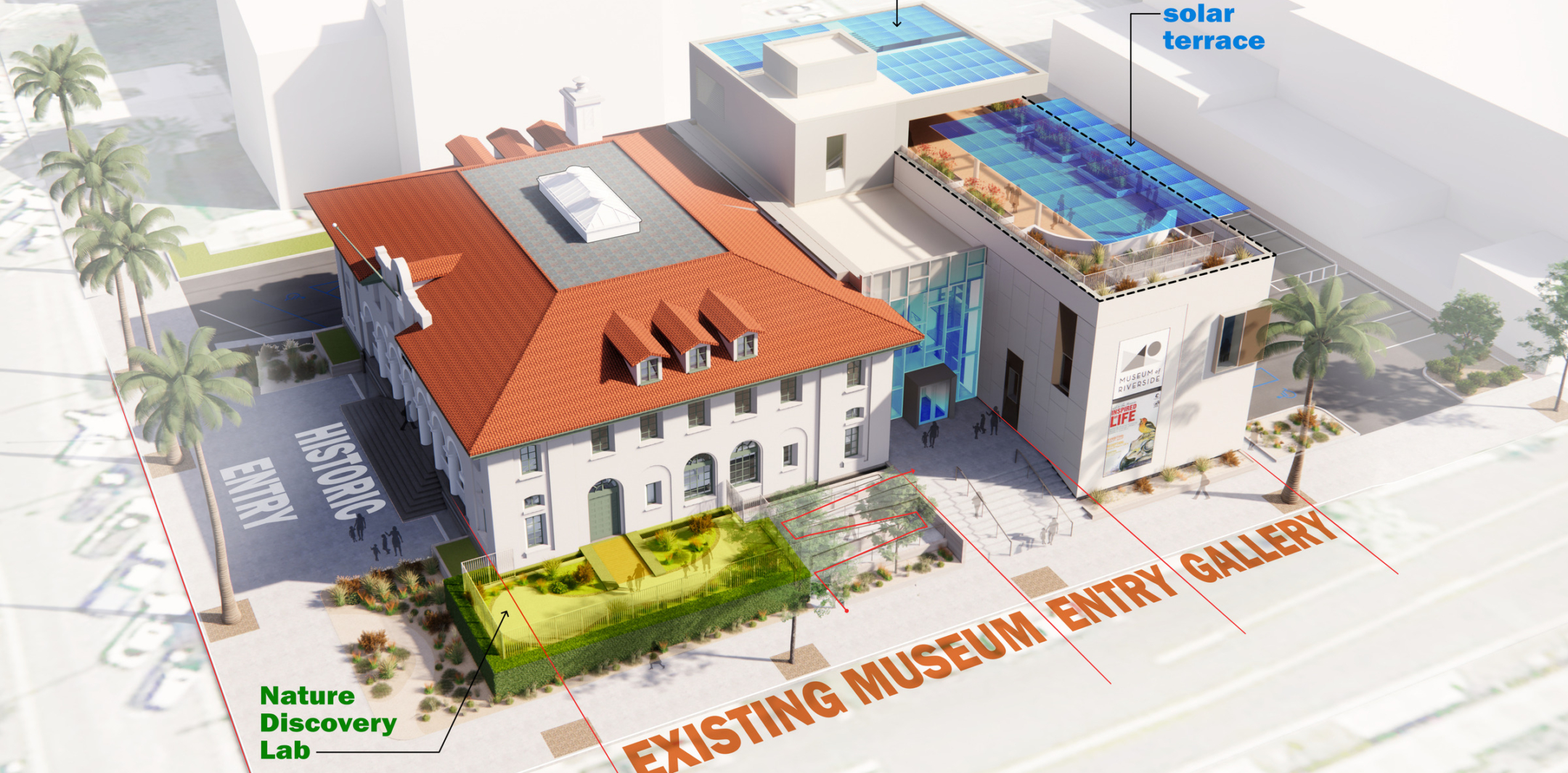
The Museum of Riverside’s original building is being rehabilitated, while a new addition, joined via a glass connector and lobby, will house galleries and event space. Renderings © Perkins Eastman

Meeting these standards in the existing building was not only cost prohibitive but would have disturbed its historic character. Instead, our client and project team decided to replace the building’s significant though nonhistorical additions with a new structure that would meet the requirements for traveling exhibitions while rehabilitating the historic building to house the less demanding collections. The solution we reached both acknowledges the limitations of the original building and provides a new space—on budget—that meets modern exhibition standards.

Weaving Old with New
Museums in Historic Buildings Balance Respect and Reinvention 5

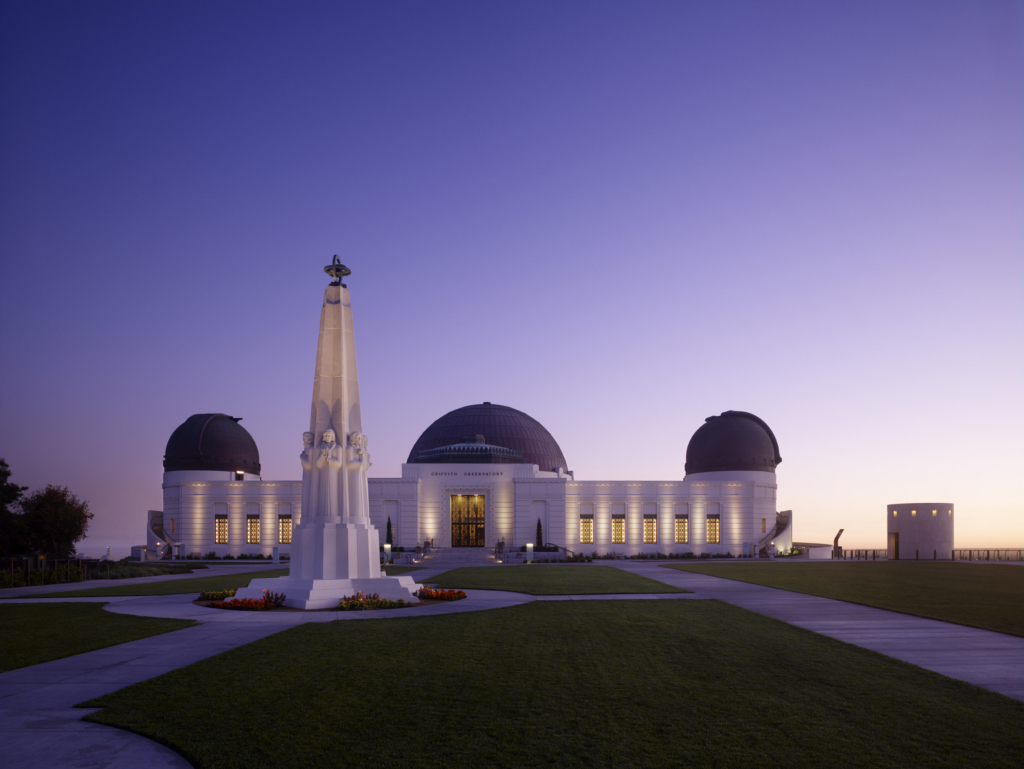
The renovation and expansion of the Griffith Observatory respect the iconic view of the institution’s
1935 Art Deco design. Photographs © Tim Griffith

There are times when a museum has outgrown its current facility and needs to expand, but when its building is a beloved icon, any change is minutely scrutinized.

This was the case with the Griffith Observatory in Los Angeles. The building had been “loved to death,” as Executive Director Ed Krupp described it when the renovation and expansion project was conceived nearly seven decades after the observatory opened in 1935. With more than a million visitors each year, the intent wasn’t to attract more people, but rather to enrich their experience while preserving the landmark building and its longtime exhibits. New features, however, required new space. We treated the observatory itself as an exhibit, designing three sensitive additions that preserve its hilltop silhouette. Blending past and present through multiple additions is a precedent that is drastically different from the singular-addition approach that many museums undertake, but Griffith Observatory provides a model for maintaining the integrity of a historic structure while strategically inserting modern functions.

Museums in Historic Buildings Balance Respect and Reinvention 6

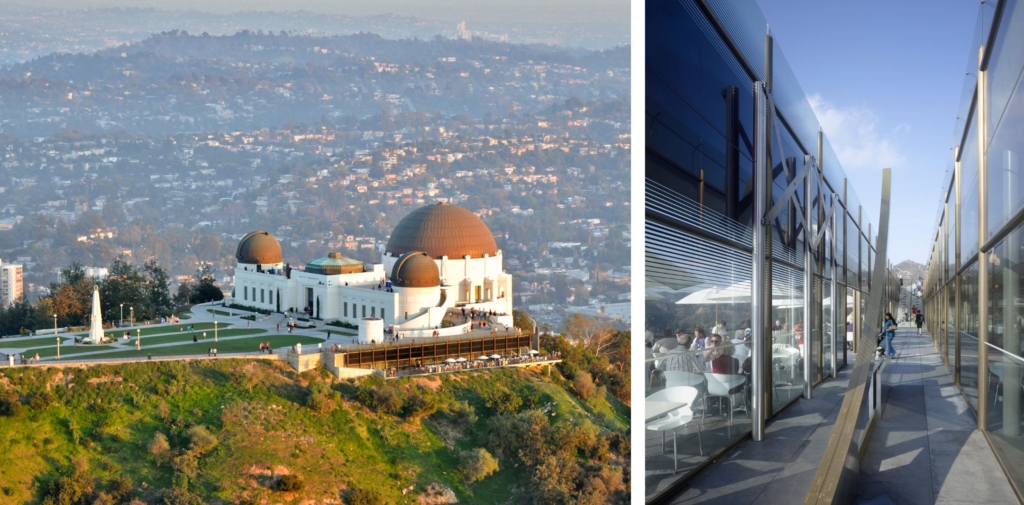
Tucked into the hillside below the original observatory building are the Gottleib Transit Corridor and outdoor seating for the new café.

We added 40,000 square feet of new exhibition space underground and located the Gottlieb Transit Corridor outside, where it serves as both a circulation passageway and an instrument that tracks the sun’s path throughout the year. A café located adjacent to the corridor offers sweeping views of the city’s skyline. Another addition, almost indistinguishable from the original observatory structure, accommodates back-of-house shops for exhibit creation and is directly adjacent to the loading access. The design team merged old and new spaces, allowing visitors to move easily around, through, and under the historic building.

Curating Architectural History

Every time we have a chance to refresh, expand, or rehouse a museum, we partner with its leadership, curators, and patrons to find solutions that express their building’s distinctive legacy. Reuse carries myriad benefits: it enhances the visitor experience; creates environments that highlight a museum’s collections, prioritizes sustainable practices, and preserves a community’s architectural fabric and history.

For media inquiries, please reach out to: news@perkinseastman.com.