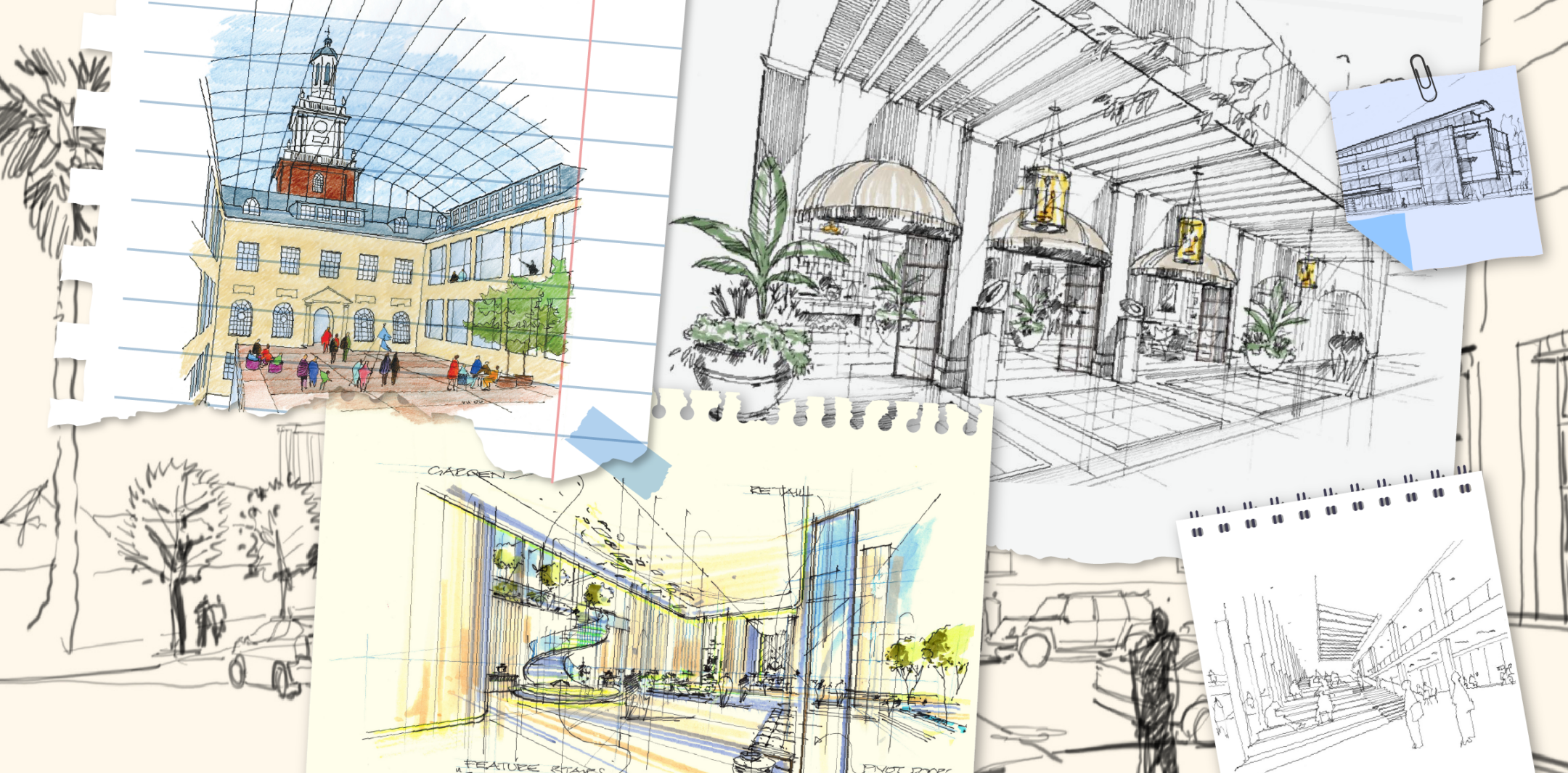
As our visualization director, I spend my days almost entirely in the digital realm, as do my colleagues, creating visual documentation for our design teams and advocating for the evaluation and adoption of new tools, including some powered by AI.
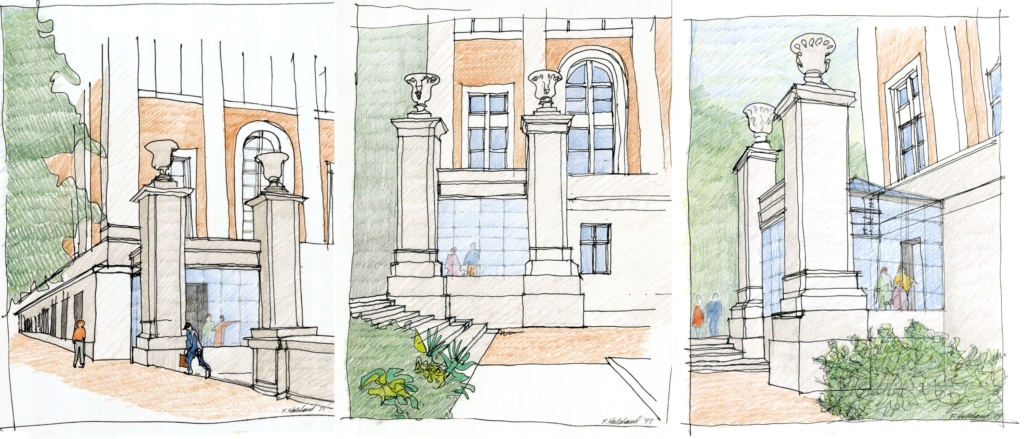
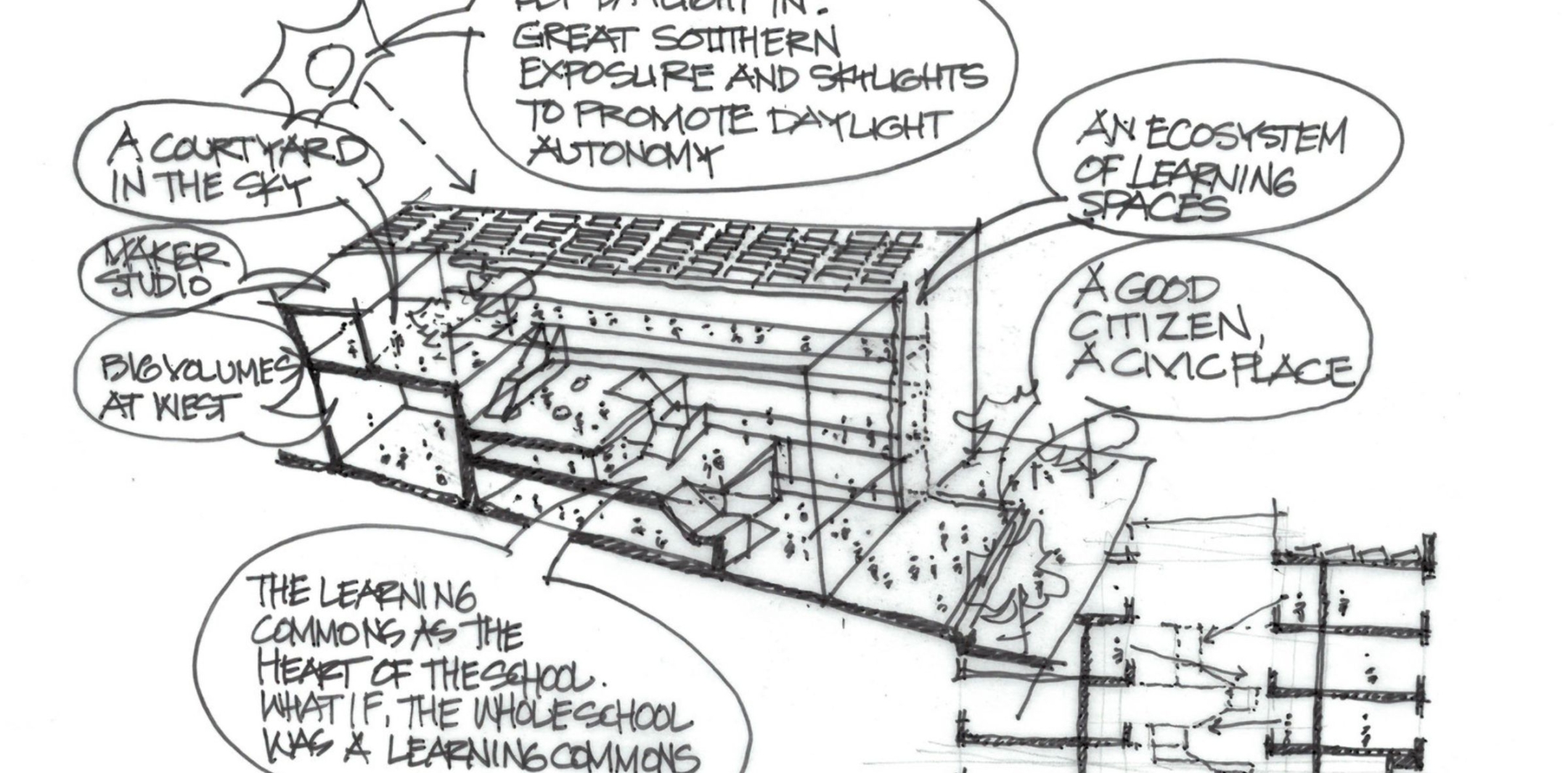
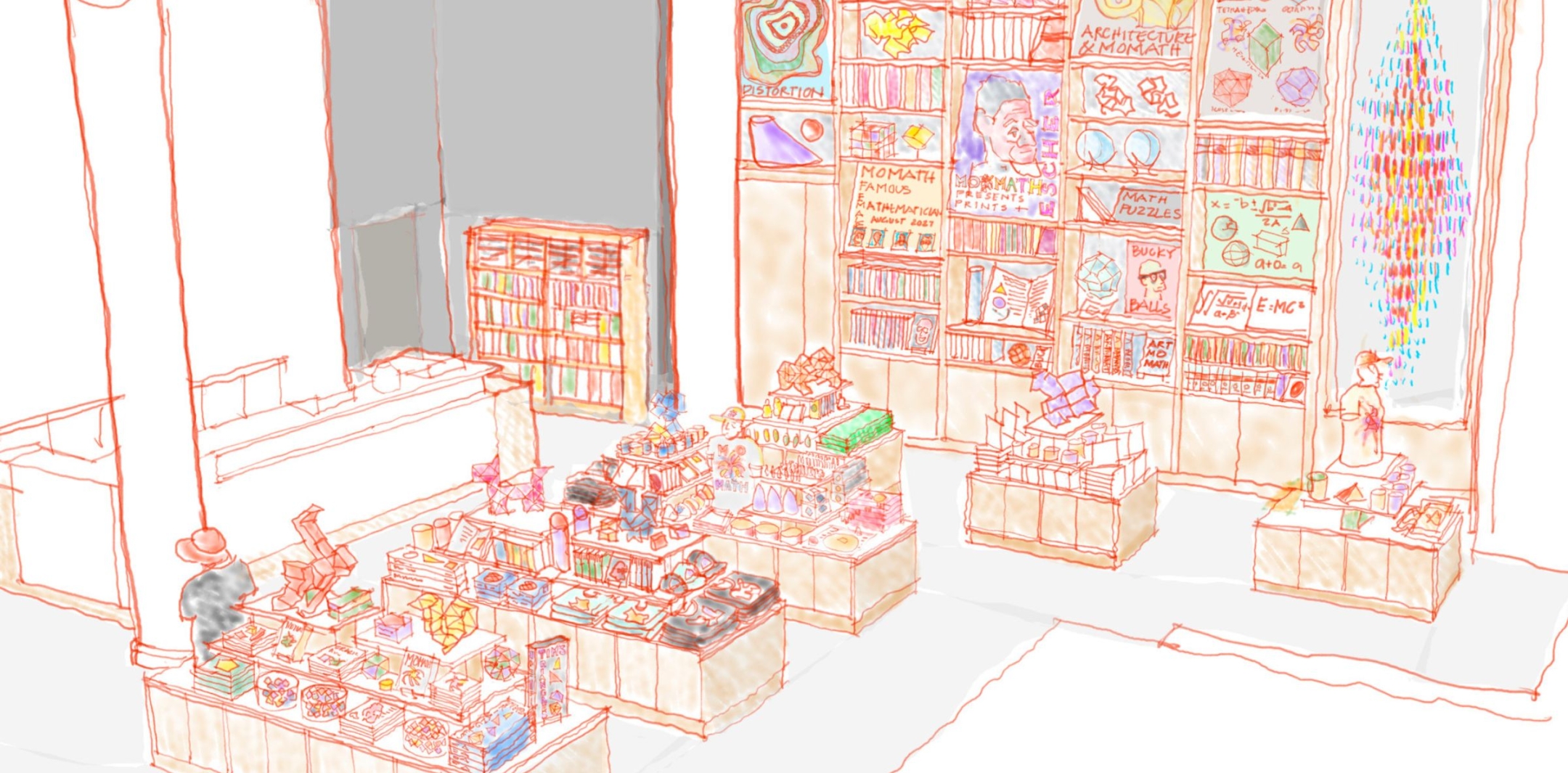
The software we have at our fingertips allows us to create striking three-dimensional imagery with increasingly greater speed and efficiency. Until recently, digital visualization was mostly outsourced to specialty studios, but now we can create high-quality imagery in-house. However, our personal connection to project concepts can get lost in the process. To reconnect, our designers constantly revert to the primordial design tool: drawing by hand. That’s why we are planning a series of firmwide sketching workshops this year featuring dozens of our talented practitioners. The goal is to deepen our culture of conceptualizing, exploring, explaining, and problem-solving with pencil and paper.
AI-generated sketches, watercolors, and other imagery may mimic the work of the hand, but the engines that create them are susceptible to what have become known as hallucinations, adding details that are either out of place or entirely nonsensical. This makes honing our own skills ever more essential.
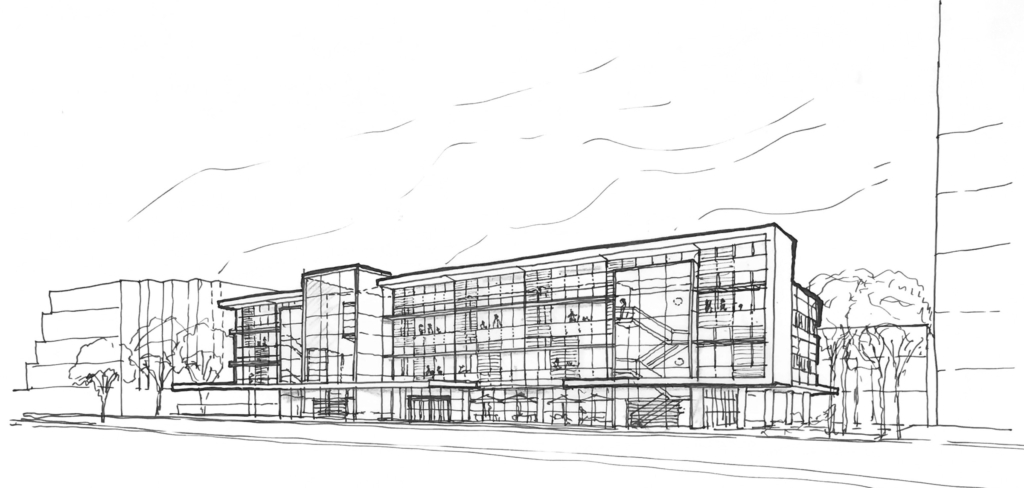
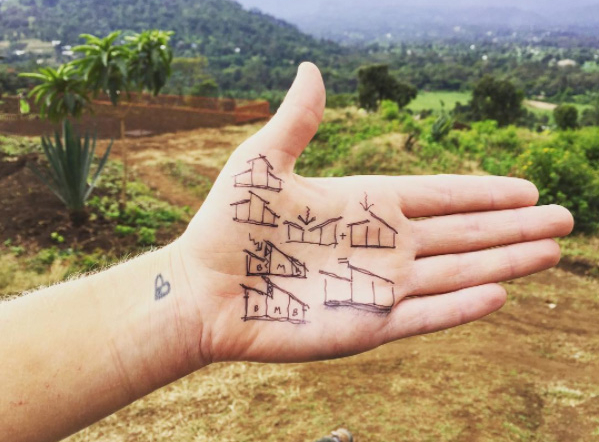
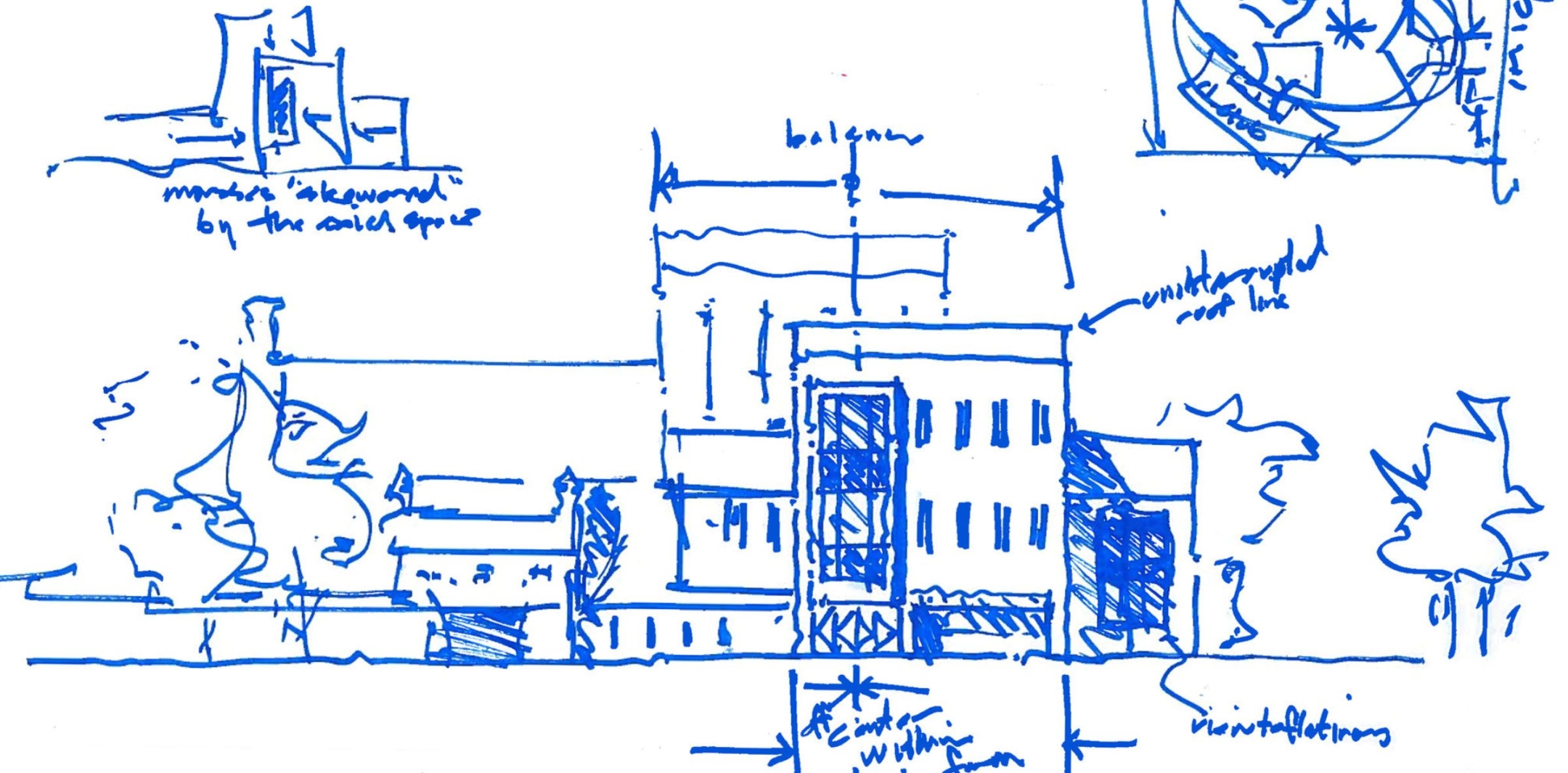
An early design sketch by Associate Principal Sina Yerushalmi shows options for the size, shape, and character of a proposed building for Providence St. John’s Health Center South Campus master plan in Santa Monica, CA.