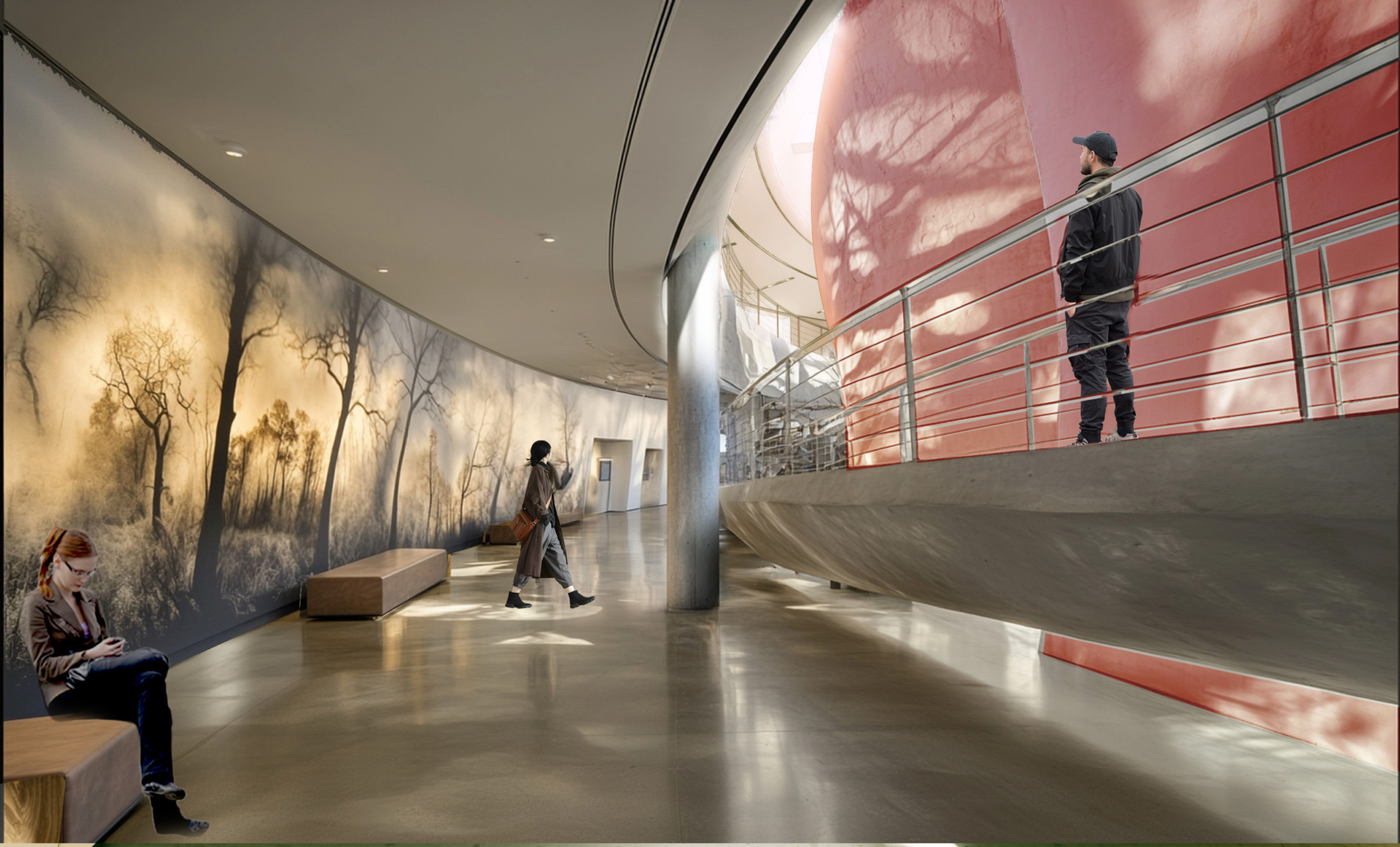
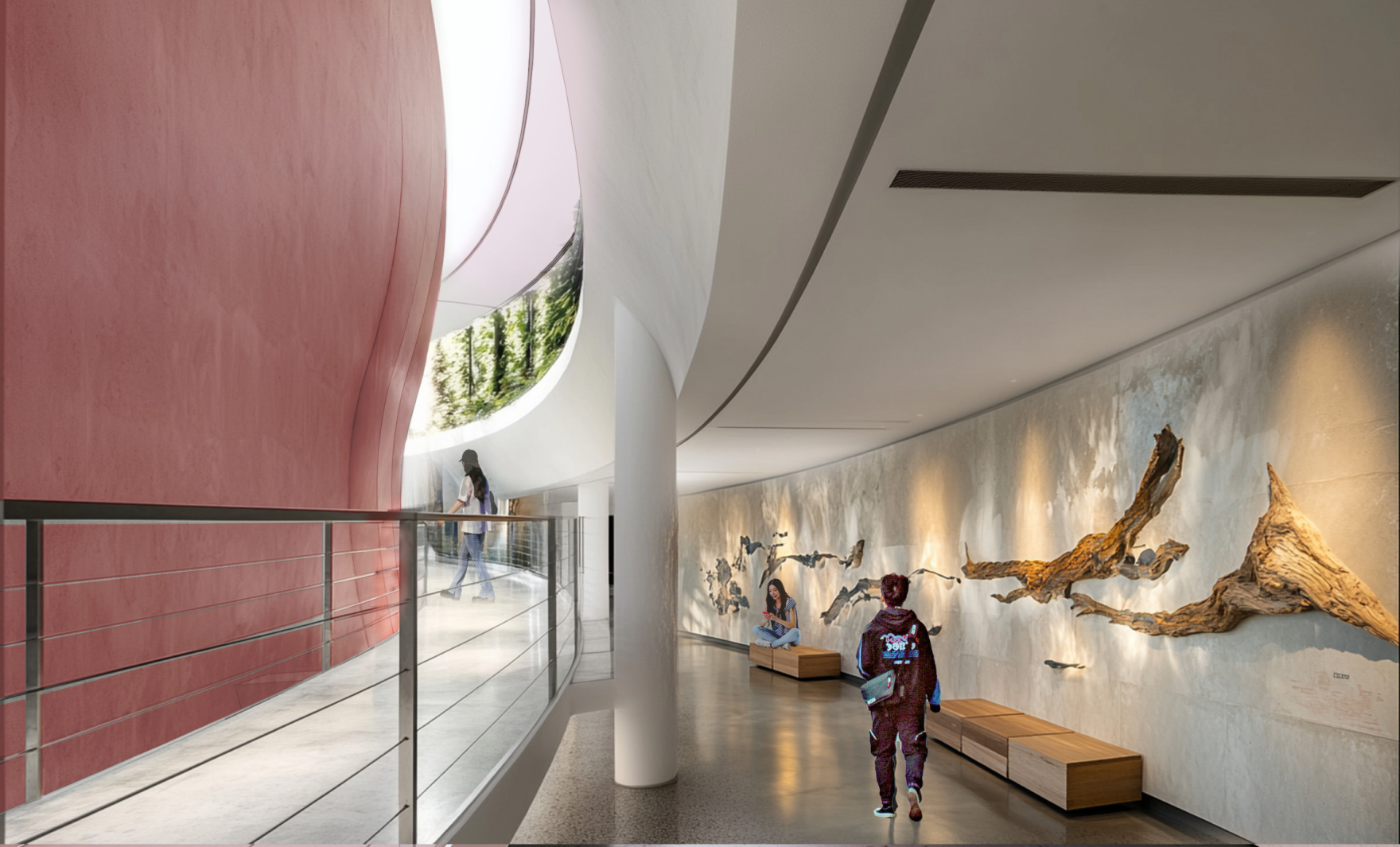
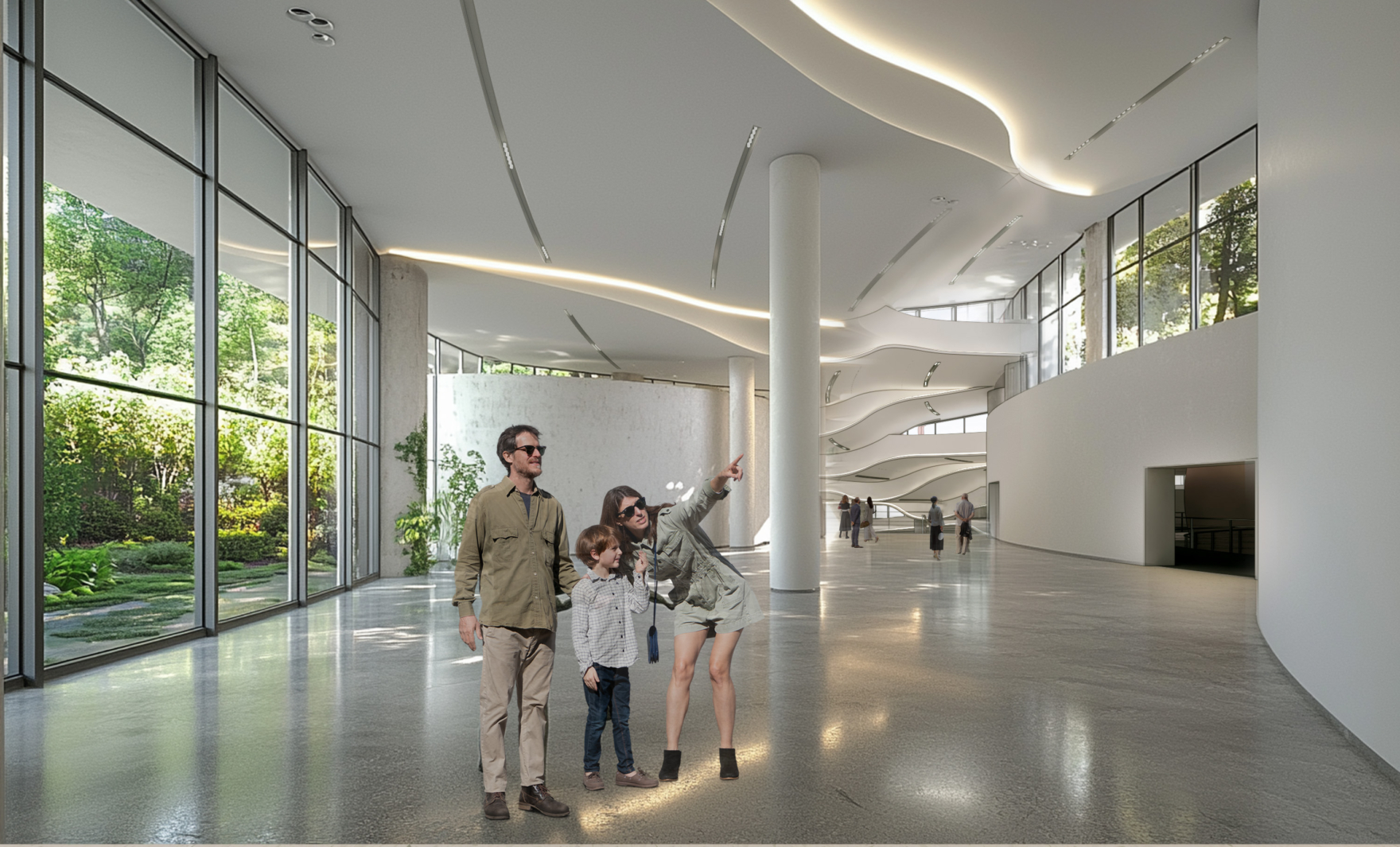
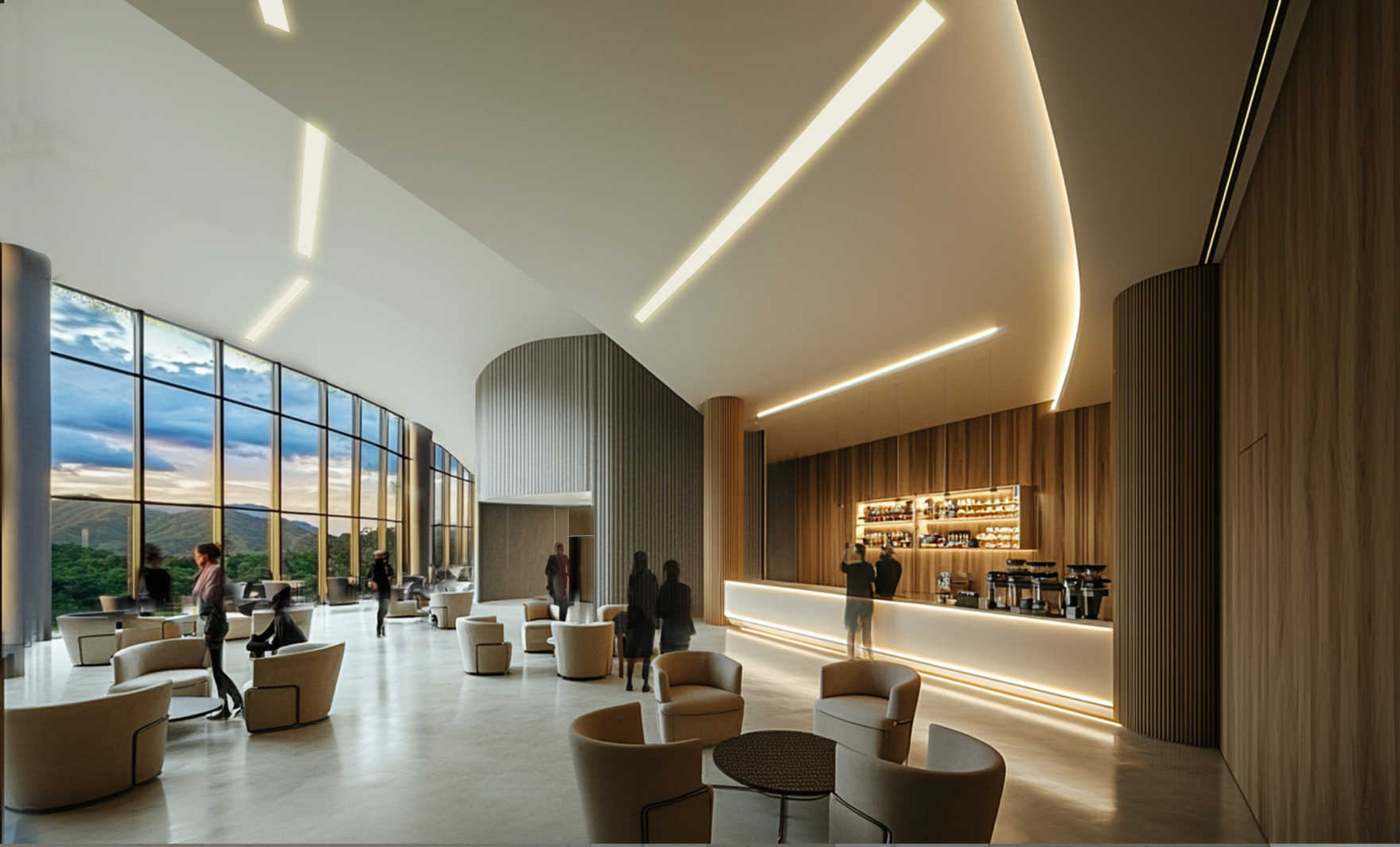
The Wuxi Yangshan Peach Museum, located in Wuxi, Jiangsu, China, investigates and celebrates nearly 6,000 years of the cultural and techno-agricultural influence of peach cultivation in the region in an intentionally unconventional museum design—equal parts earthwork, landscape design, and architecture. Surrounded by farmland and open views to the mountains, the museum is a new landmark, rooted in both its agrarian context and positioned as a cultural beacon for the region.
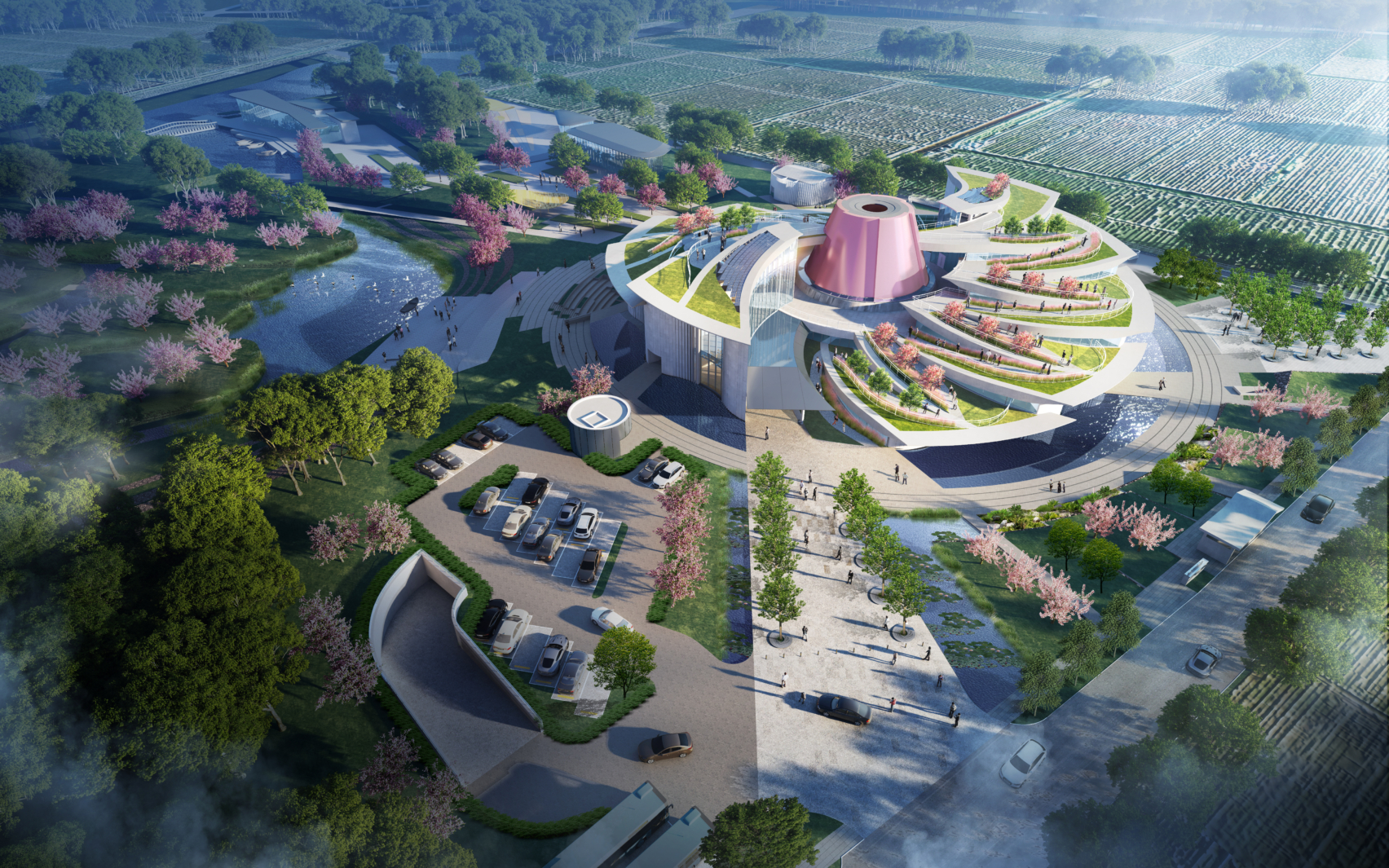
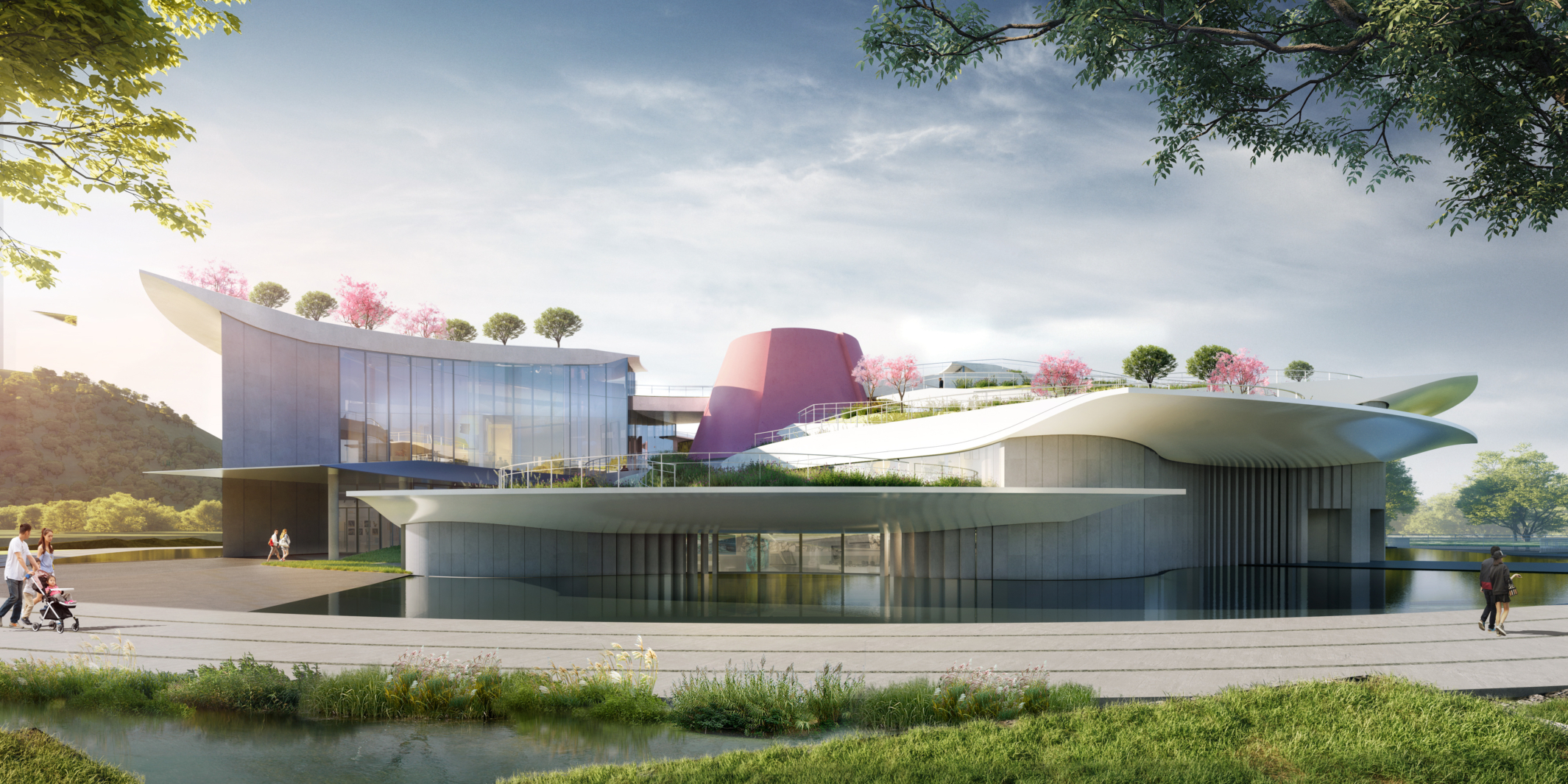
The design concept for the building and its surrounding site is “Harvest.” Envisioned as a living landscape and a working museum where cultivation is both practiced and celebrated, the museum rises from the earth, merging exhibition, research, and production into a new typology that blurs the boundaries between architecture and agriculture. Inspired by the 24 solar terms of the Chinese lunisolar calendar, the building’s geometry radiates around a central axis. From this framework, 22 of the 24 segments are roof terraces that spiral upward as accessible plots for peach cultivation interwoven with seasonal gardens. In this way, circulation is imagined as a vertical journey where visitors move skyward and earthward, echoing the natural growth of a tree.
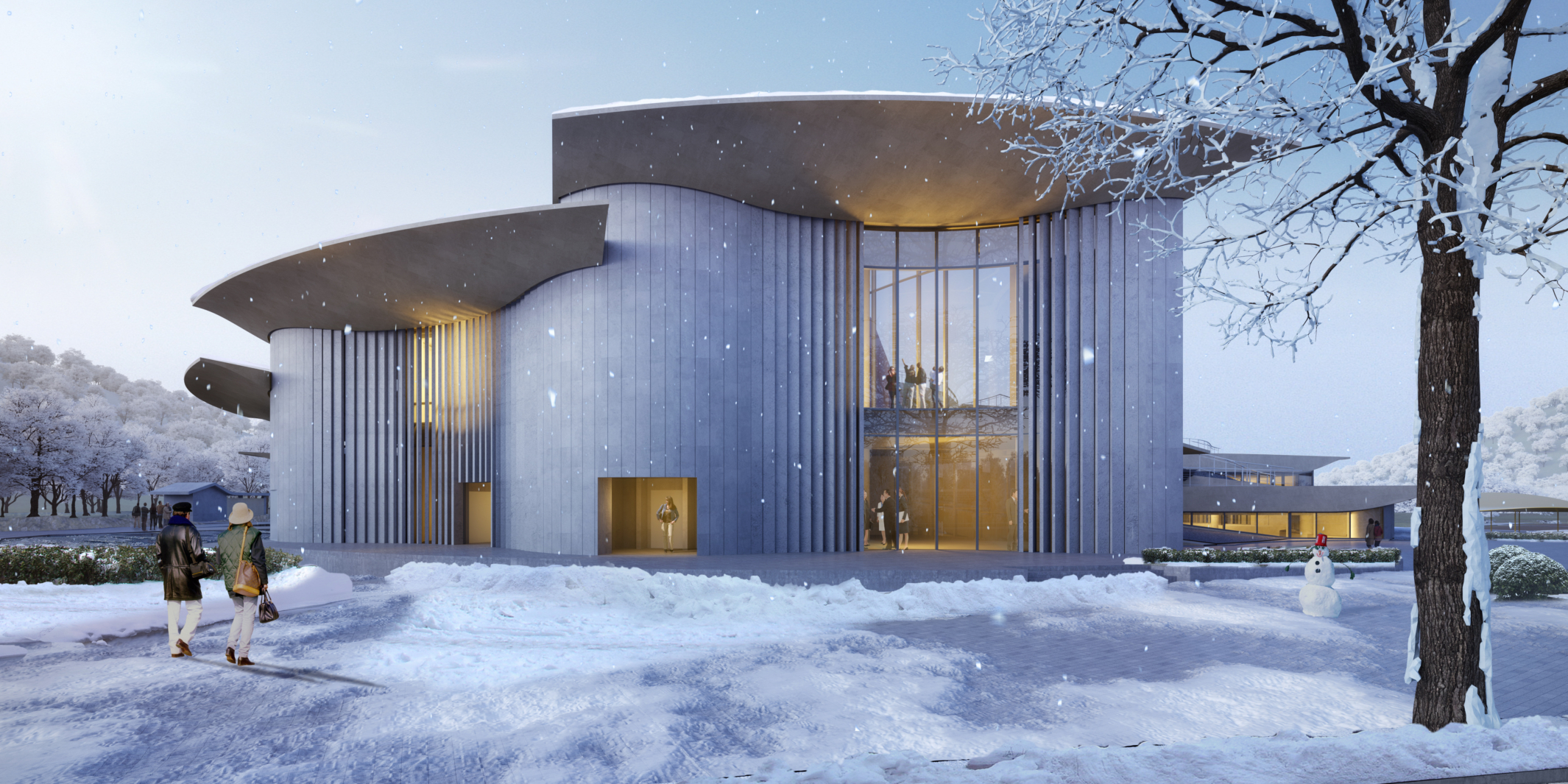
From the southern side, a formal entrance welcomes visitors, while a northern gateway connects to the community and marketplace. Outside, amphitheaters, rooftop walkways, and outdoor gathering spaces extend the museum experience. At the center, a core structure inspired by the nearby ancient volcano, anchors the design, while elevated galleries and meeting halls at the building’s perimeter frame panoramic views of the surrounding mountains.
By layering cultural, scientific, and regional narratives, “Harvest” becomes an architectural expression of growth—an integration of landscape and form that rises upward from the ground to capture light, water, and views. It is a place where tradition meets innovation and where cultivation becomes the narrative theme.