Insights

Beyond the Classroom: The Expanding Spatial Ecology of Teaching and Learning

Research, collaboration, and discovery unfold across the higher education campus experience.
By Carisima Koenig, AIA, LEED AP, Principal and College + University Practice Leader
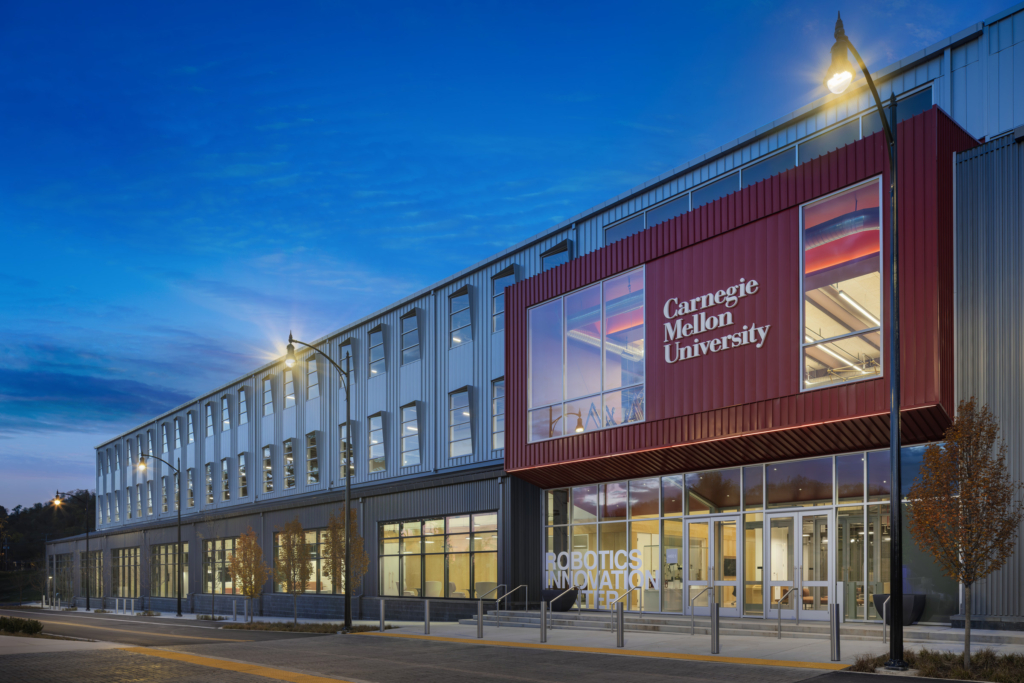
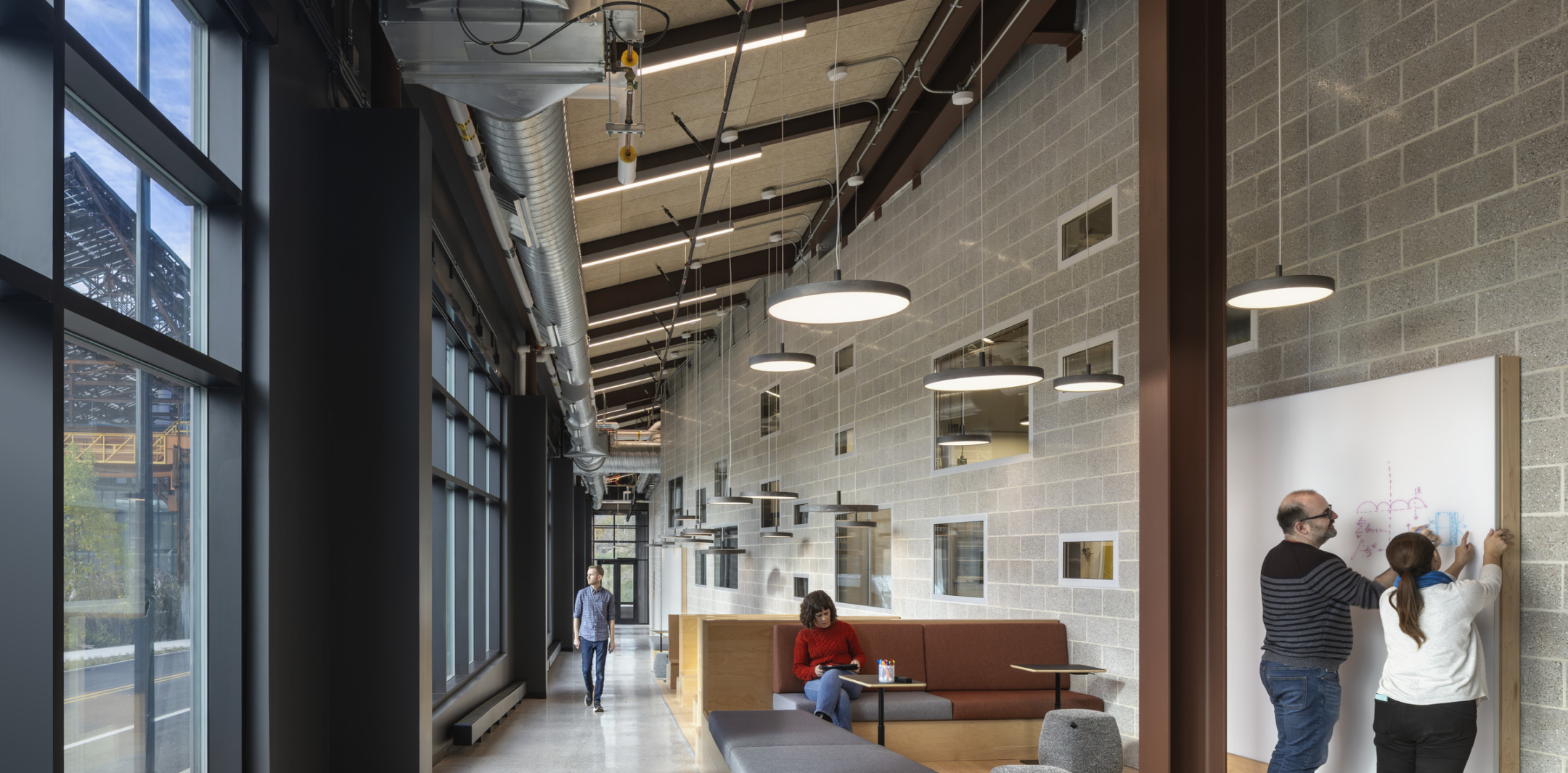
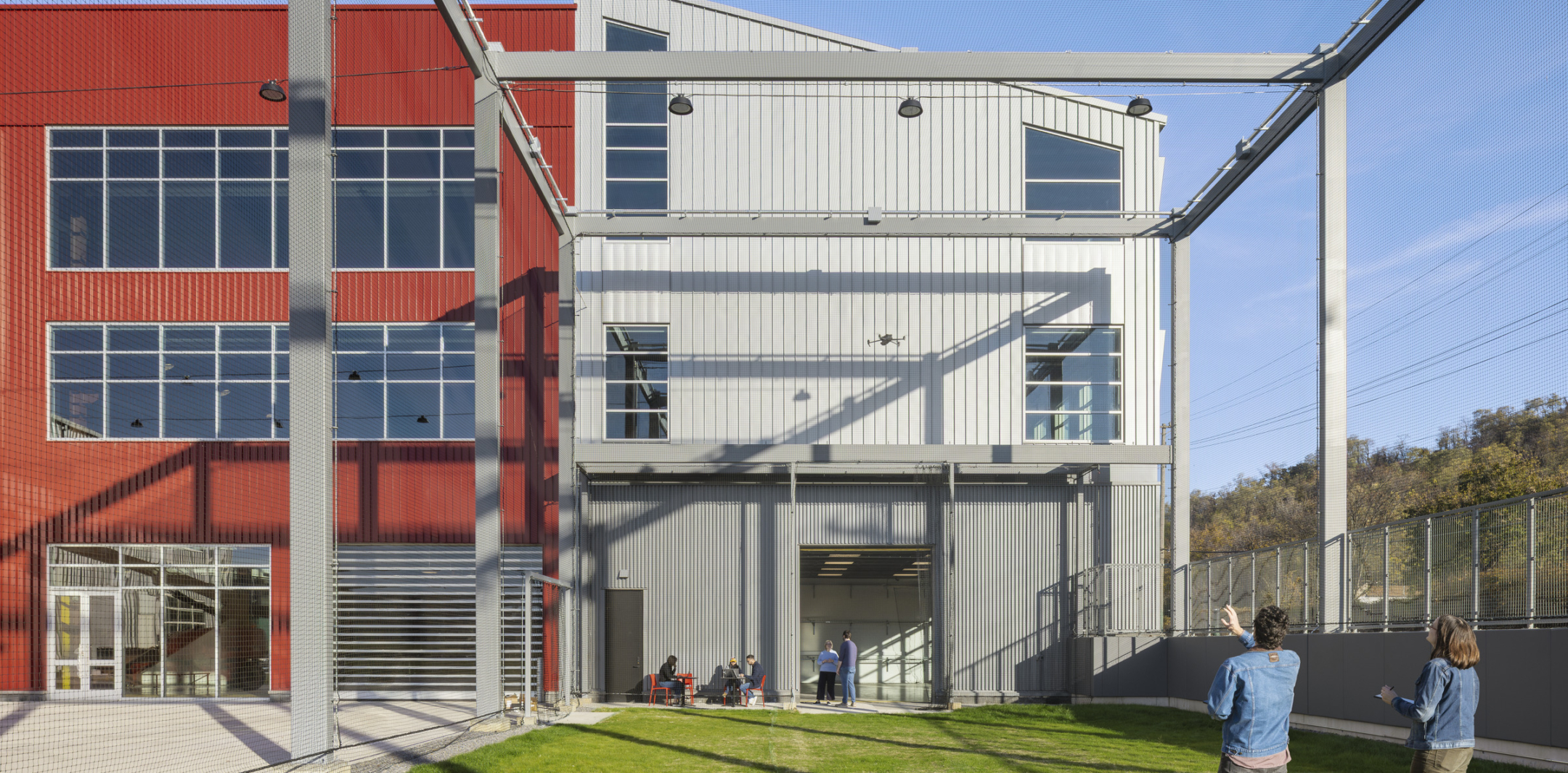
The Robotics Innovation Center at Carnegie Mellon University, built for research and testing, includes both indoor and outdoor drone cages. Photographs by Andrew Rugge/© Perkins Eastman
The Robotics Innovation Center at Carnegie Mellon University, built for research and testing, includes both indoor and outdoor drone cages.
Photographs by Andrew Rugge/© Perkins Eastman

As teaching and research evolve toward collaboration, interdisciplinarity, and applied inquiry, the landscape of learning continues to expand beyond the classroom. This shift presents an opportunity to reimagine the spatial logic of academic buildings in support of discovery that blurs the boundaries between classroom, lab, and field. Informal environments such as shared lounges, study zones, and collaborative studios play a critical role in this intellectual exchange.

For much of the twentieth century, colleges and universities organized their buildings around a stable instructional model: classrooms as a primary site of knowledge transfer, offices as spaces of disciplinary connection, and corridors as neutral conduits between them. This order reinforced a framework in which learning was largely structured, instructor-led, and contained within discrete rooms. As the academic mission has expanded, so too have the frameworks that structure interaction, enable new forms of inquiry, and reflect institutional values. Whether it is through the renovation of existing campus buildings or new construction, the design of academic space must engage directly with how knowledge is produced and shared.
Transforming Older Academic Buildings into New Forums for Learning

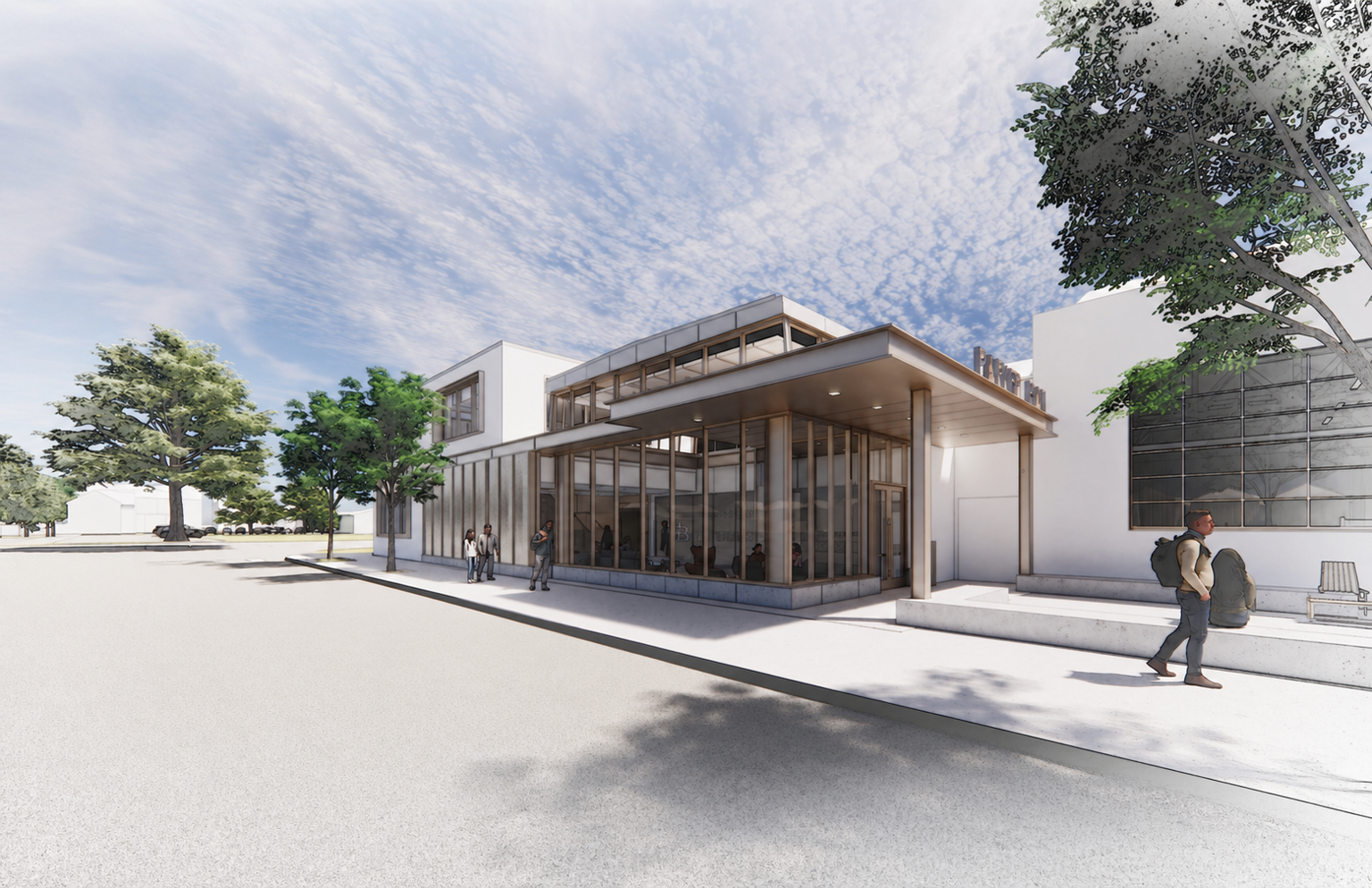
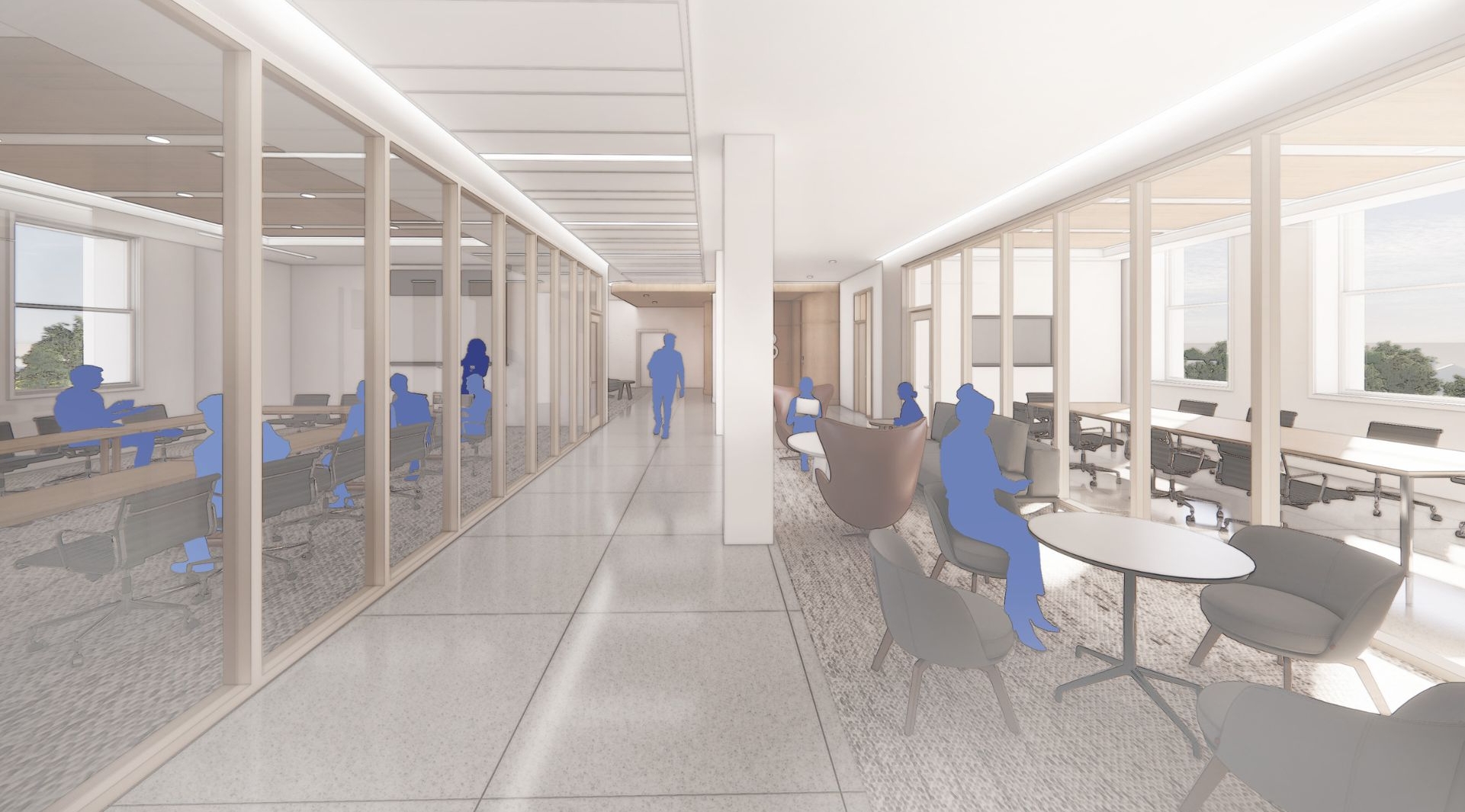
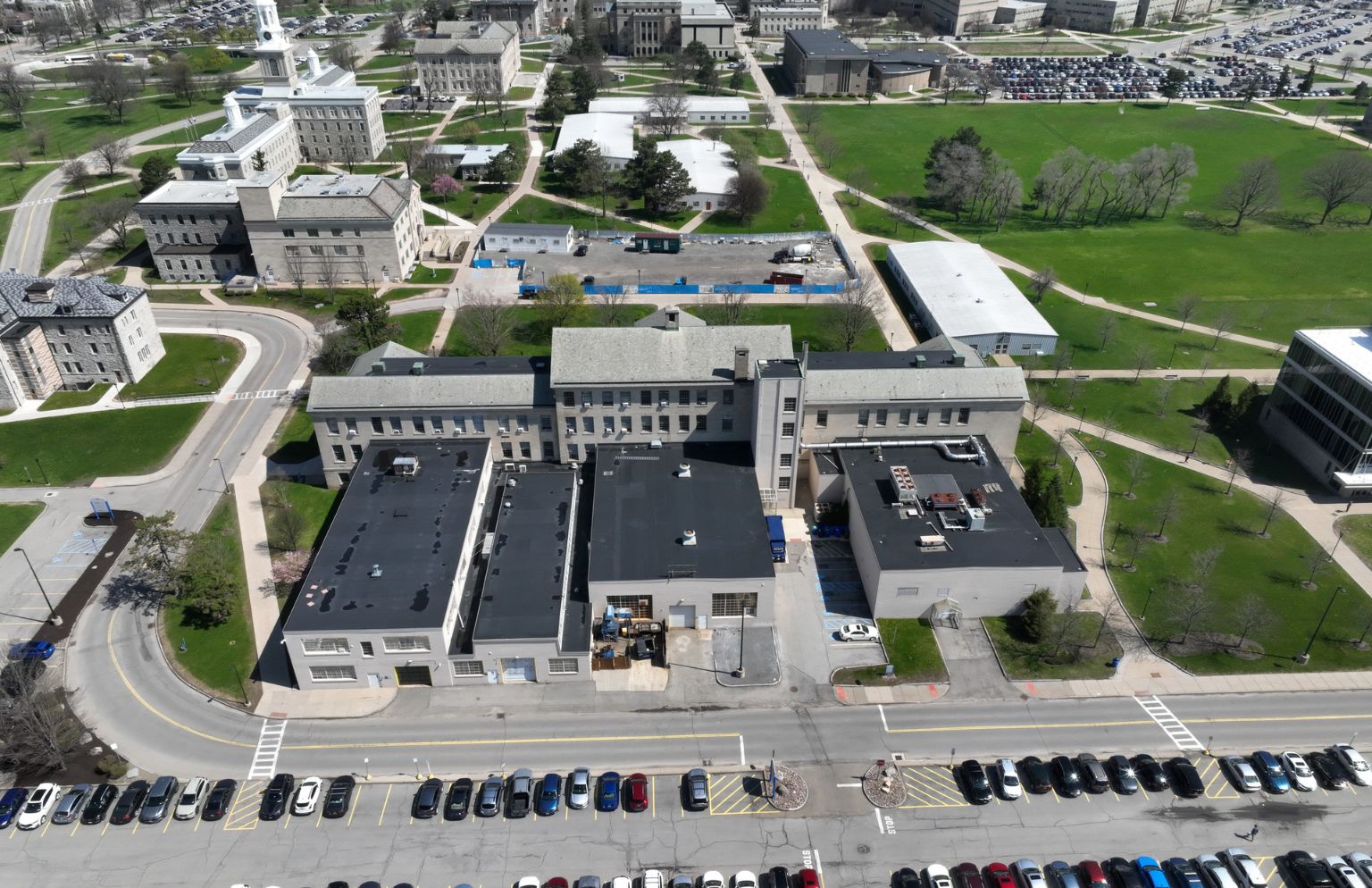
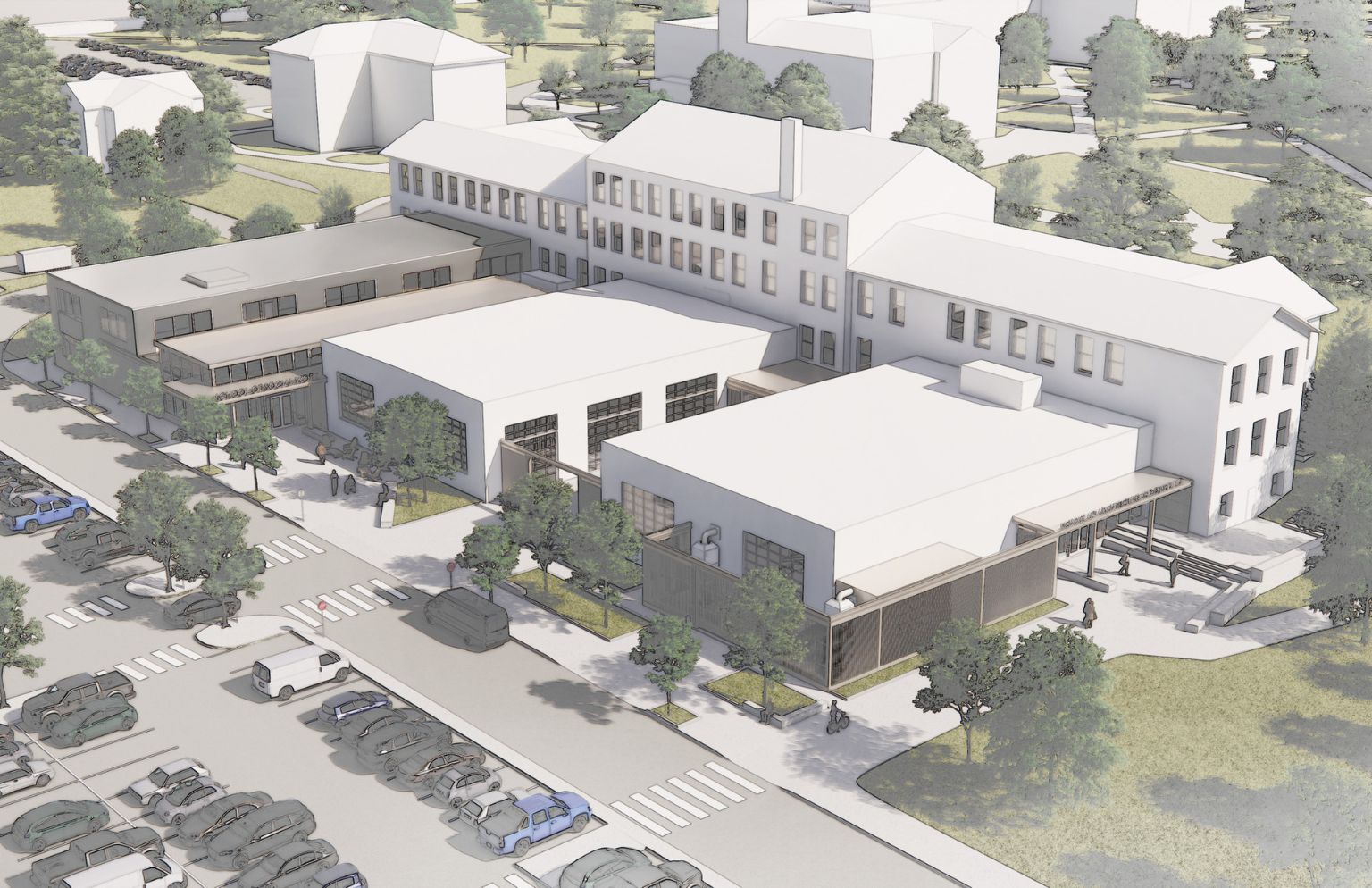
Utilitarian volumes at the rear of the University at Buffalo’s Parker Hall are being redesigned into a cohesive whole, creating both shared common spaces and designated entrances for the schools of social work and architecture and planning. Renderings © Perkins Eastman

The University at Buffalo’s Parker Hall was designed for an academic model aligned with mid-century engineering education when it opened in 1948. Its transformation into the new home of the School of Social Work and the School of Architecture and Planning reflects how learning occurs today. The revitalized Parker Hall, scheduled to open in 2030, brings together two disciplines oriented toward public impact. Their co-location reflects a broader shift in higher education toward shared problem-solving across fields, in this case benefiting the communities and people of Western New York through outreach and other public programs.

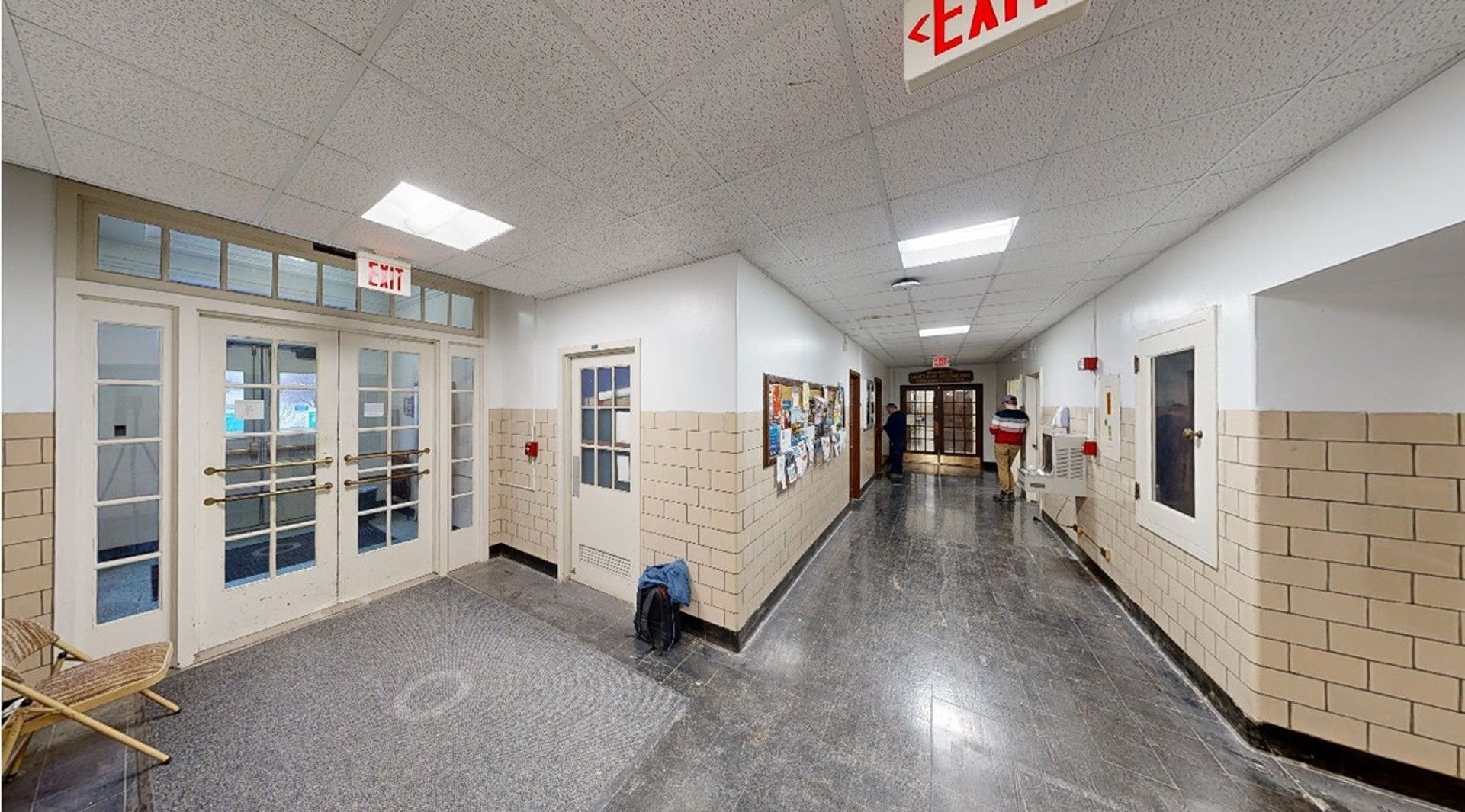
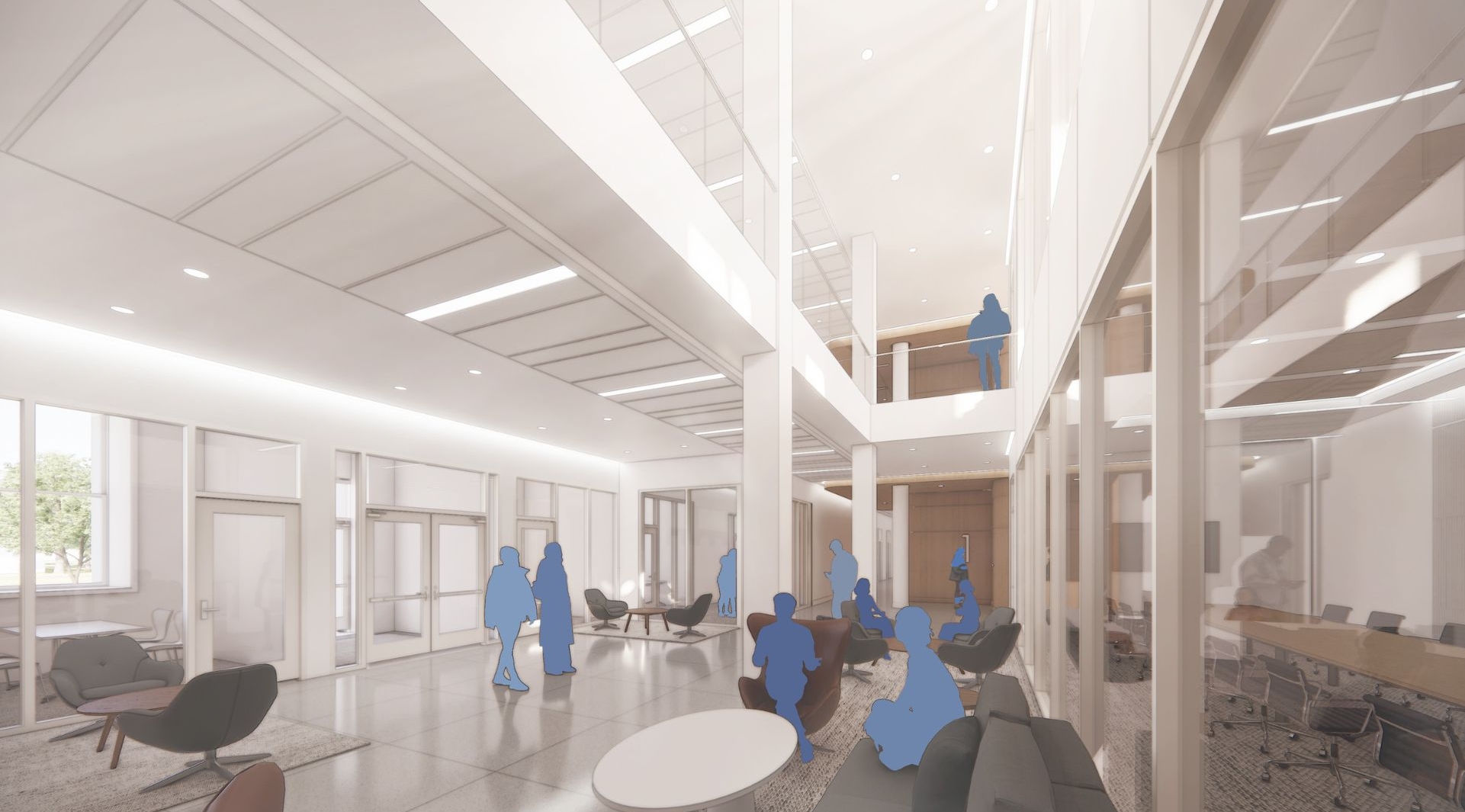
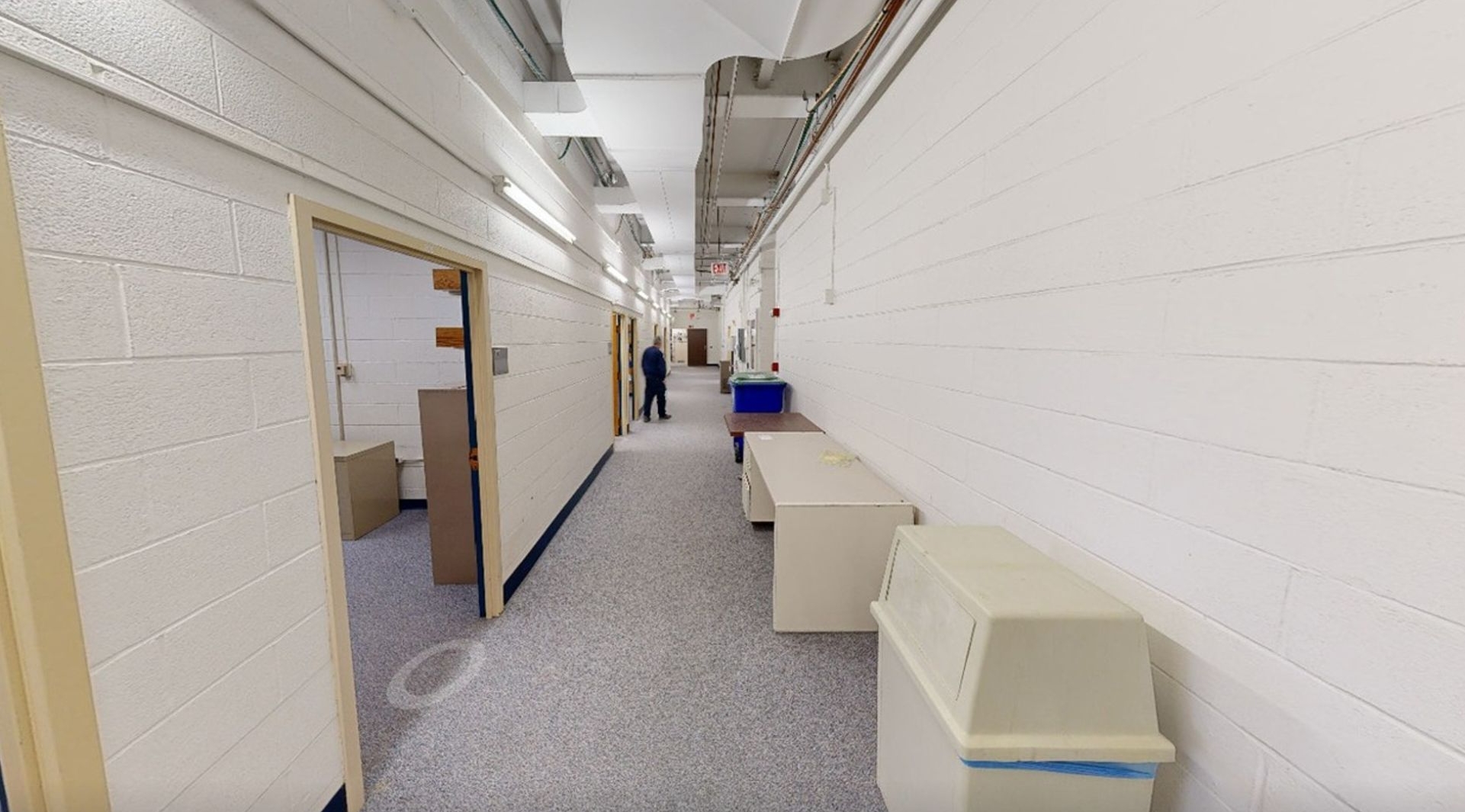
Concept designs illustrate how the new interiors remove barriers, visible in the “before” pictures on the left. The new design provides light-filled connections between floors, meeting rooms, circulation, and learning landscapes.

Parker Hall’s redesign translates these pedagogical priorities into physical space. Organized as a series of interconnected neighborhoods, the redesign integrates formal and informal learning environments, including collaborative studios, shared commons, and quiet zones. Circulation is no longer simply pragmatic space but a site of encounter, where visibility and access to daylight fosters connection across disciplines. By integrating informal gathering spaces and a range of conditions along circulation pathways, Parker Hall encourages spontaneous interaction and allows individuals greater choice and agency in how they engage with the building and one another.

These strategies reflect the School of Social Work’s current research, aligning with principles of trauma-informed design, which emphasize clarity, safety, and autonomy within buildings and spaces. These strategies also reinforce the School of Architecture and Planning’s research and pedagogy, which are centered on the relationship between design, human behavior, and the social performance of the built environment.

Supporting Rapidly Changing Technologies in Connected Environments
Beyond the Classroom: The Expanding Spatial Ecology of Teaching and Learning 7

The Robotics Innovation Center, which opened in early 2026, serves as a bridge between foundational research and real-world deployment.

While Parker Hall demonstrates how existing buildings can be reconfigured to support the intersection of pedagogy and research, the Robotics Innovation Center (RIC) at Carnegie Mellon University illustrates how emerging fields are informing new spatial types. The facility supports robotics research in high-bay spaces, testing environments, fabrication spaces, and collaborative work areas that operate across scales, from prototyping to full-system deployment.

Beyond the Classroom: The Expanding Spatial Ecology of Teaching and Learning 9

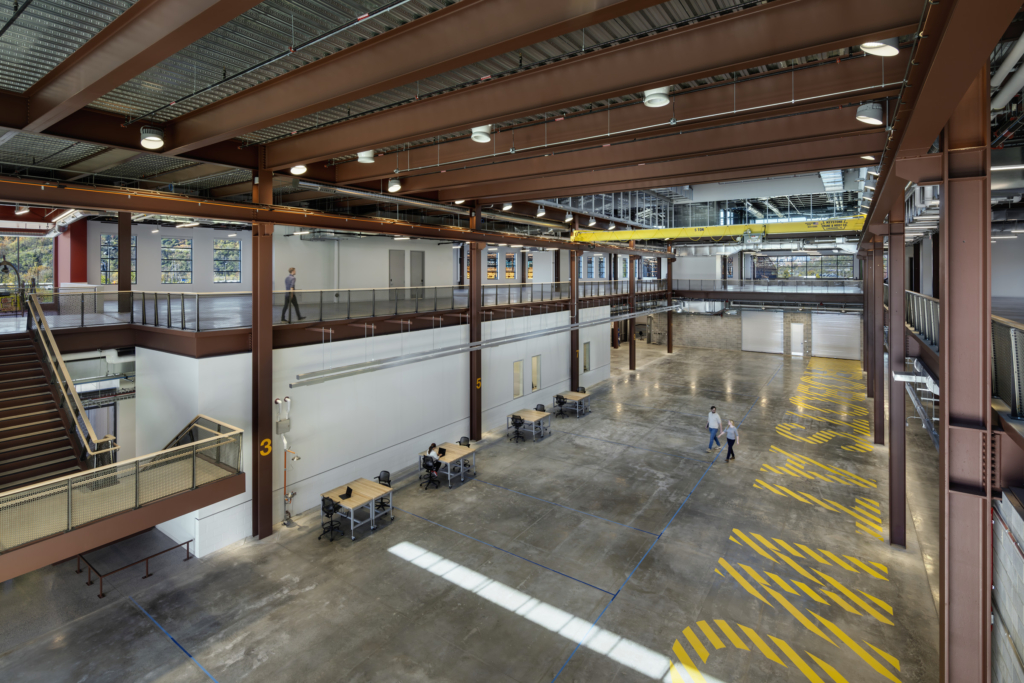
Flexible, high-bay interiors were designed to be adaptable to evolving robotics research.

Shaping the future of robotics education and discovery is at the core of the RIC. Its spaces allow the university community to process, iterate, and experiment across disciplines, which require continuous feedback between design, simulation, fabrication, and real-world testing. The building is designed as a series of interconnected systems that allow ideas and people to move fluidly. As a result, the RIC supports visibility, adaptability, and proximity across research domains.

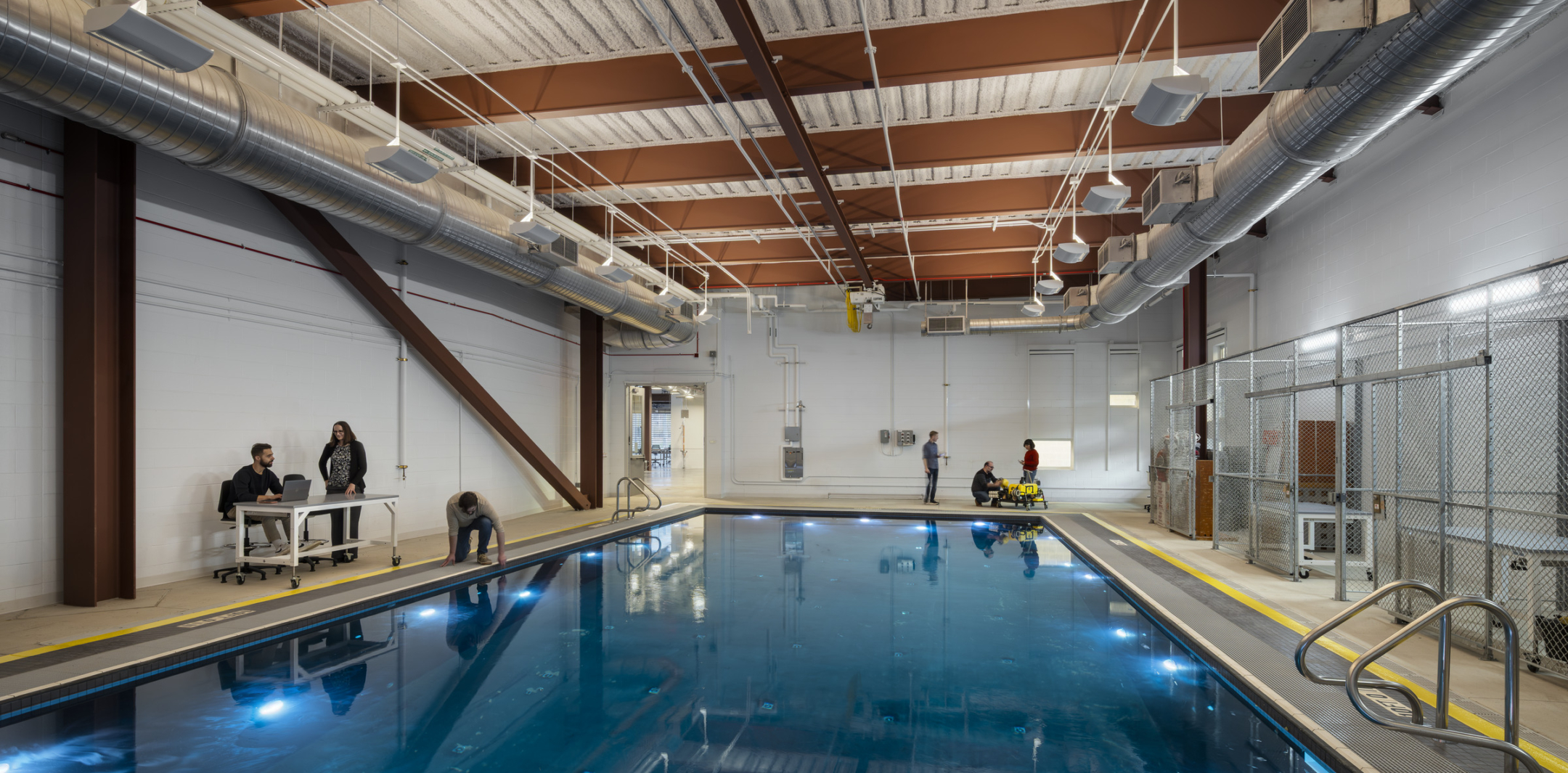
Specialized spaces include a tank room for underwater robotics testing, while circulation pathways include learning landscapes for collaboration.

The RIC is also an environment that reflects a broader shift in higher education toward learning through making and testing; knowledge is generated through action as much as instruction. The RIC demonstrates how robotics education can directly produce new architectural relationships, reshaping individual buildings and resetting expectations for what academic space can be.

Rethinking Educational Environments

As colleges and universities explore options for renovating existing structures and building new ones, their programmatic frameworks must support the ongoing evolution of teaching and learning. To that end, it is worth examining the ways in which today’s educational experience extends beyond the classroom. Whether that is by forming connections between departments with a shared public mission or creating new pathways for discovery, the future of campus design depends on space, both inside and outside, that is more agile, connected, and interactive.

For media inquiries, please reach out to: news@perkinseastman.com.