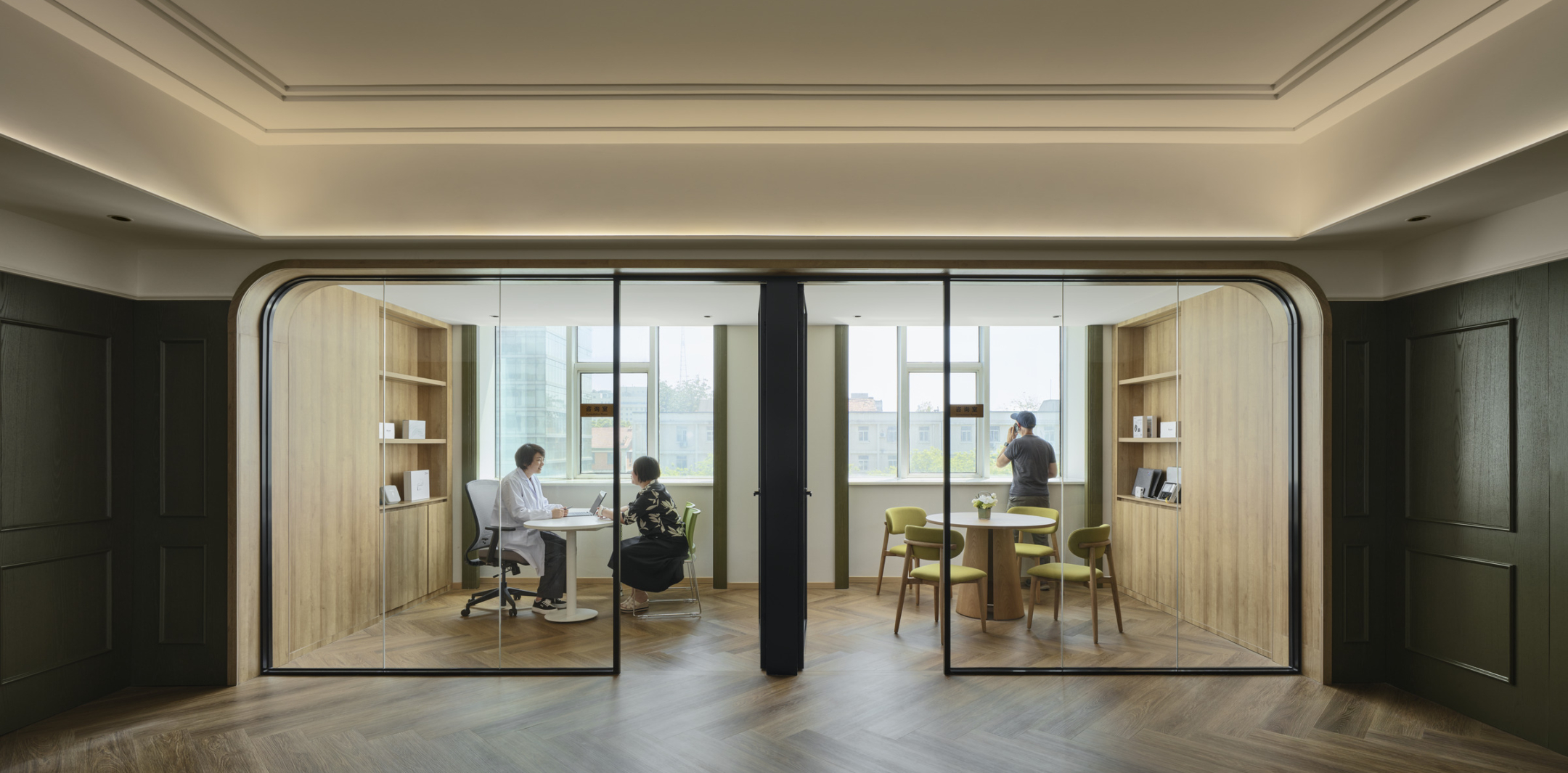
1. Calming Environments: Through the deployment of biophilic cues—natural textures, organic forms, and vibrant greenery—we aim to calm all five senses and counteract the anxiety associated with clinical settings.
2. Purposeful Placemaking: By treating every moment at a human scale, we create meaningful experiential scenarios to ensure patients and families feel seen, grounded, and emotionally supported.
3. Seamless Continuity: To help the patient dissolve the psychological barrier between public areas and exam rooms, we bring nature and warmth into even the most clinical spaces.
4. Clinical Adaptability: To balance rigorous healthcare standards and human dignity in every interaction, we respect clinical workflows and safety requirements while giving patients agency.
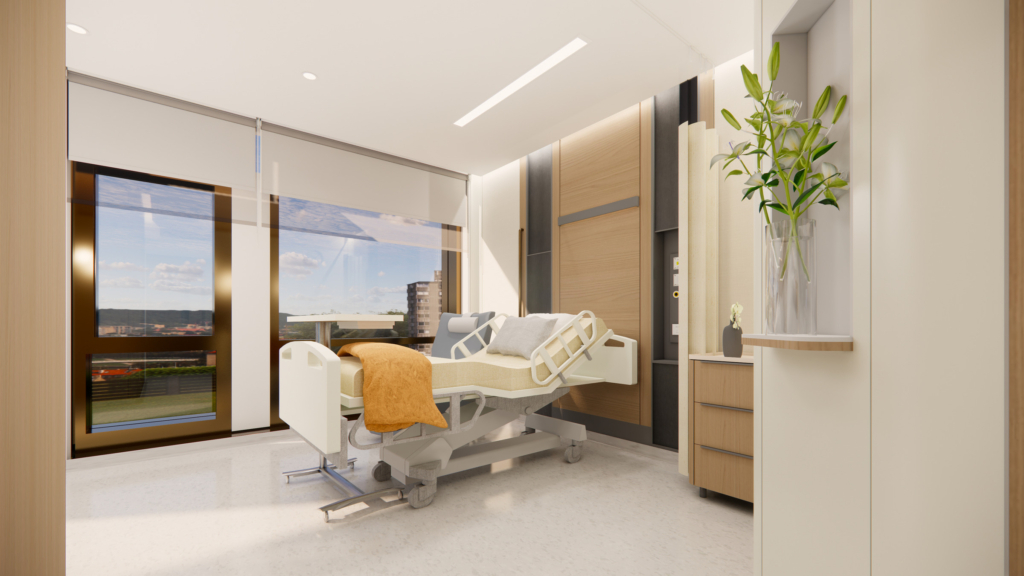
5. Natural Surfaces: By selecting wood, stone, clay, and textiles, we engage the sense of touch with warm, tactile surfaces while providing durable, easy to clean, medical-grade performance.
6. Caring Furniture: Through furniture selection and placement, we preserve personalization and dignity by accommodating healthcare needs such as adjustable features for patients and comfortable seating for the family.
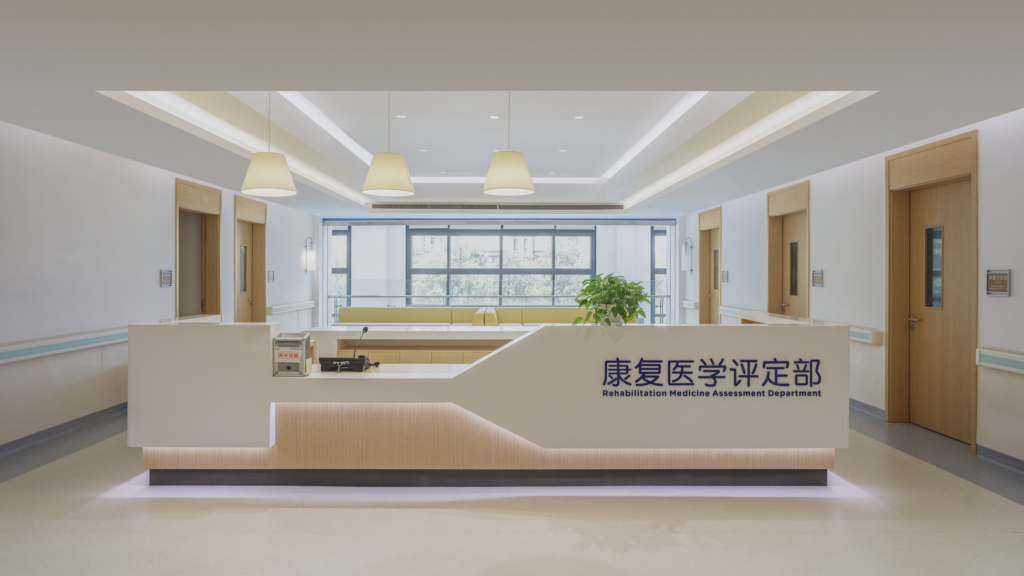
7. Lighting Mood: Shaping the atmosphere throughout the day through strategic employment of natural and artificial light sources helps regulate circadian rhythms, reduce stress, and promote restorative calm.
8. Artful Wayfinding: Designing waiting areas with visual transparency and clear signage orients patients and visitors in large medical complexes by transforming wayfinding from a potential source of confusion into a reassuring journey.
Our strategies are implemented in healthcare environments across China (top to bottom): Transparent wall panels and wayfinding signage at the waiting areas in Xi’an Zhongda International Hospital in Xi’an; a homelike postpartum suite at the Nanjing Golden Eagle Health Center in Nanjing; soft colors and a serene mural in an MRI exam room at Xi’an Zhongda International Hospital; wood paneling and floor-to-ceiling windows in patient rooms at Xi’an Zhongda International Hospital; and a nurses’ station with abundant natural light at the rehabilitation hospital within the Taikang Wuhan Chuyuan Senior Living Community in Wuhan.
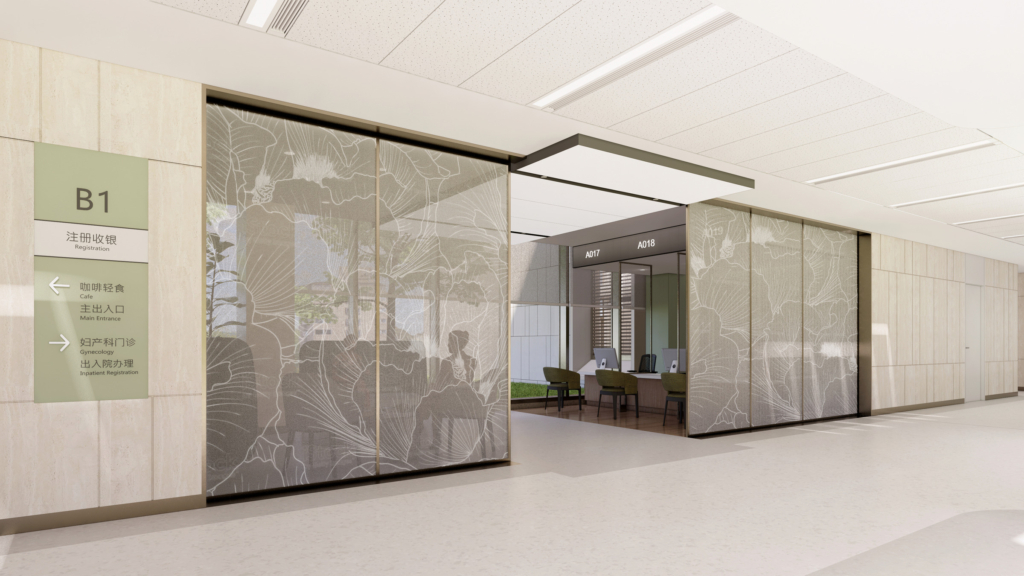
Renderings © Perkins Eastman
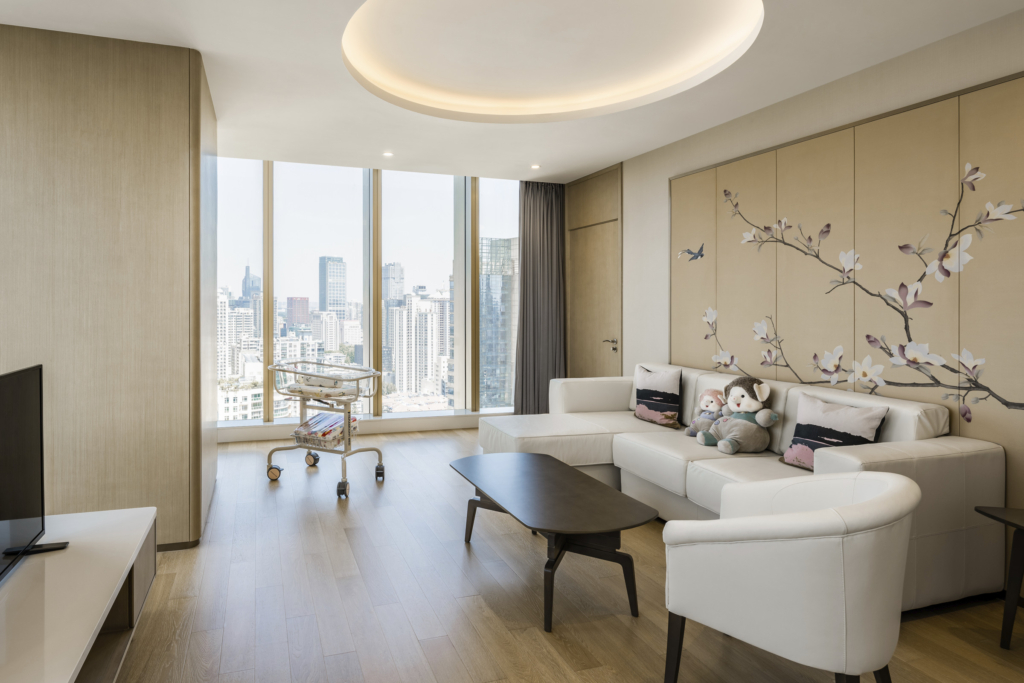
Photograph © CreatAR
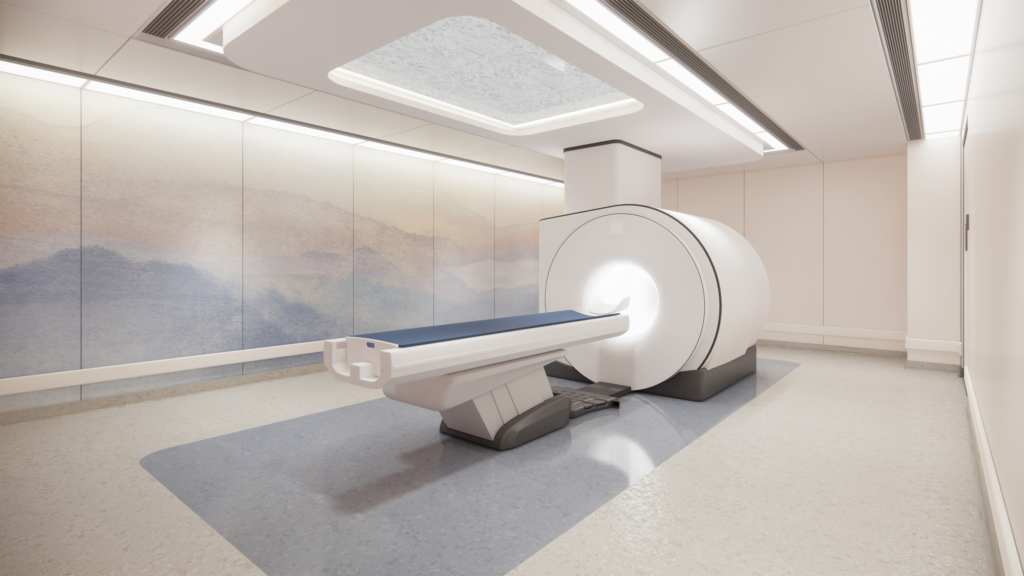
Photograph © Aaron&Rex