Insights

Bringing Socioeconomic Diversity to Senior Living Offers Community-Wide Benefits

Mixed-income developments for older adults are an emerging opportunity for developers, operators, and residents alike.
By Emily Pierson-Brown, AIA, AICP, NOMA, LEED Green Associate, Principal, Senior Living Practice Leader, and People Culture Manager
Bringing Socioeconomic Diversity to Senior Living Offers Community-Wide Benefits
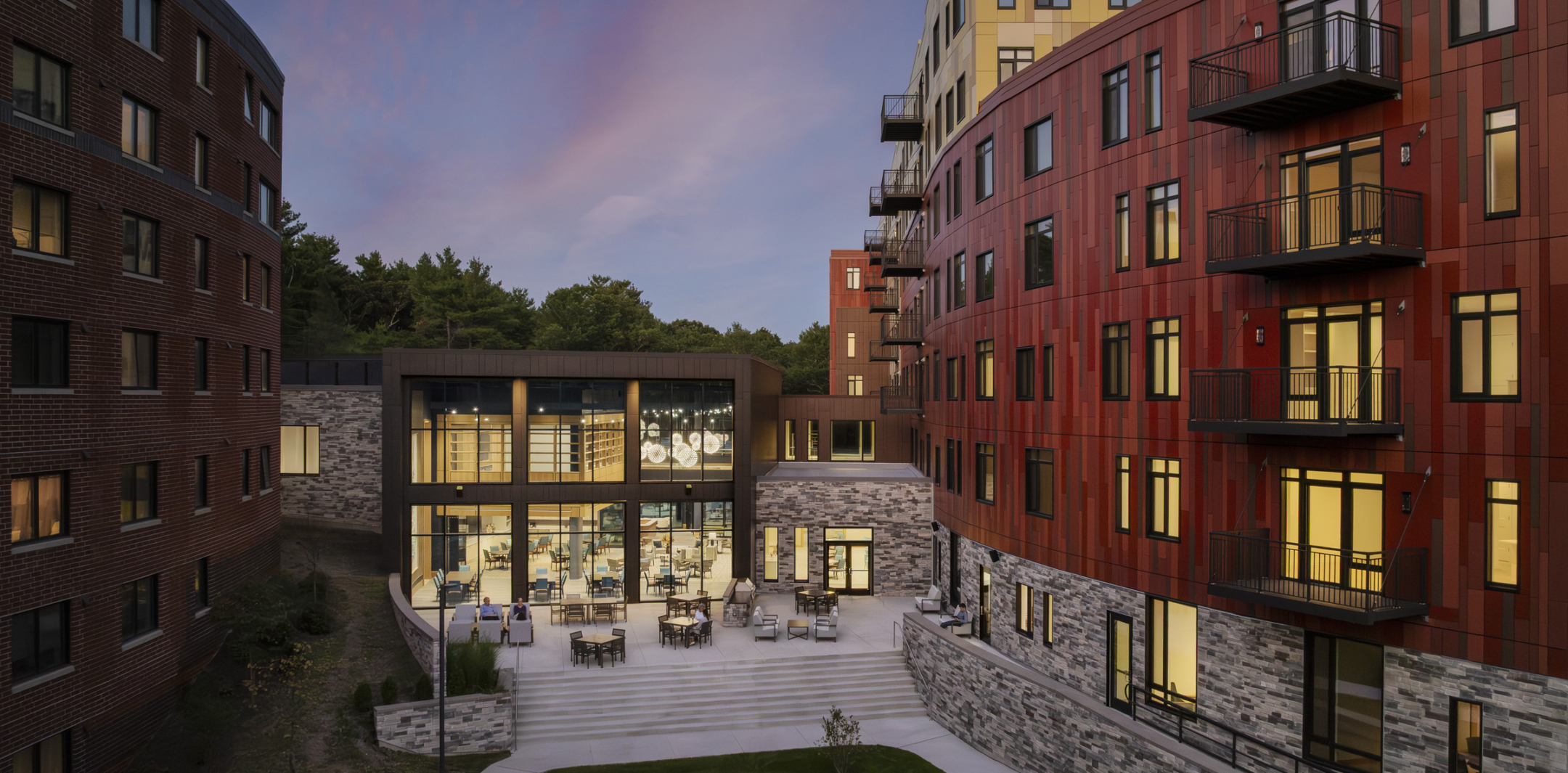
Together, Opus Newton, a new development for middle-income seniors, and Together, Opus Newton, a new development for middle-income seniors, and Coleman House, an existing affordable development, create a mixed-income community in Massachusetts committed to an equitable living environment.
Photographs by Andrew Rugge/© Perkins Eastman

As the US population ages and the housing affordability gap widens, mixed-income senior living communities are emerging as a promising model for vibrant, inclusive environments where older adults of varying economic backgrounds can age with dignity and support. In fact, mixed-income housing, which combines market- and below-market-rate options, has become a potential model to address the nation’s housing crisis, and it is often located in “higher-opportunity neighborhoods,” according to a recent Urban Institute report. Socioeconomically diverse communities offer a higher quality of life for all residents, better neighborhood safety, and increased economic resilience, notes the National Housing Conference.

However, successful mixed-income communities do not happen by accident, especially in the senior living sector. They require intentional investment and thoughtful planning, diverse housing and service offerings, engaged management practices, and equitable access to high-quality amenities (to encourage a stronger sense of community though social interaction and to minimize isolation and loneliness). Seamless integration into a well-connected neighborhood and a stigma-eliminating design are essential.

The need for housing accessible to seniors at a range of income levels is increasing rapidly: “The number of Americans ages 65 and older,” per the Population Reference Bureau, “is projected to increase from 58 million in 2022 to 82 million by 2050.”

Creating a Replicable Model for Mixed-Income Communities

Reimagining long-established conventions for the financing and design of senior living developments can yield many benefits. Since the 1960s, 2Life Communities has focused mainly on affordable housing for older adults, but in an expansion of its mission and vision, the nonprofit developer-operator opened Opus Newton, welcoming middle-income earners to its first income-integrated campus last year. By collocating Opus with one of its existing affordable apartment buildings, Coleman House, in Newton, MA, 2Life has established a mixed-income community for more than 400 residents.

At the project’s ribbon-cutting ceremony, President and CEO Lizbeth Heyer made it clear that Opus is not a one-off: “We have done something creative to stretch the limited dollars of people who did everything right and were otherwise left out of this market. This community is more amazing than anything we could have dreamed of, and it sets a course for our future.” Measures that allow Opus to remain financially accessible include offering home healthcare assistance in 30-minute increments instead of the four-hour industry standard, constructing amenity space that is smaller but more flexible than in typical market-rate developments, and employing a robust volunteer program for residents that helps to reduce operating costs. The latter also builds intentional community because everyone is invested in the life of the campus.
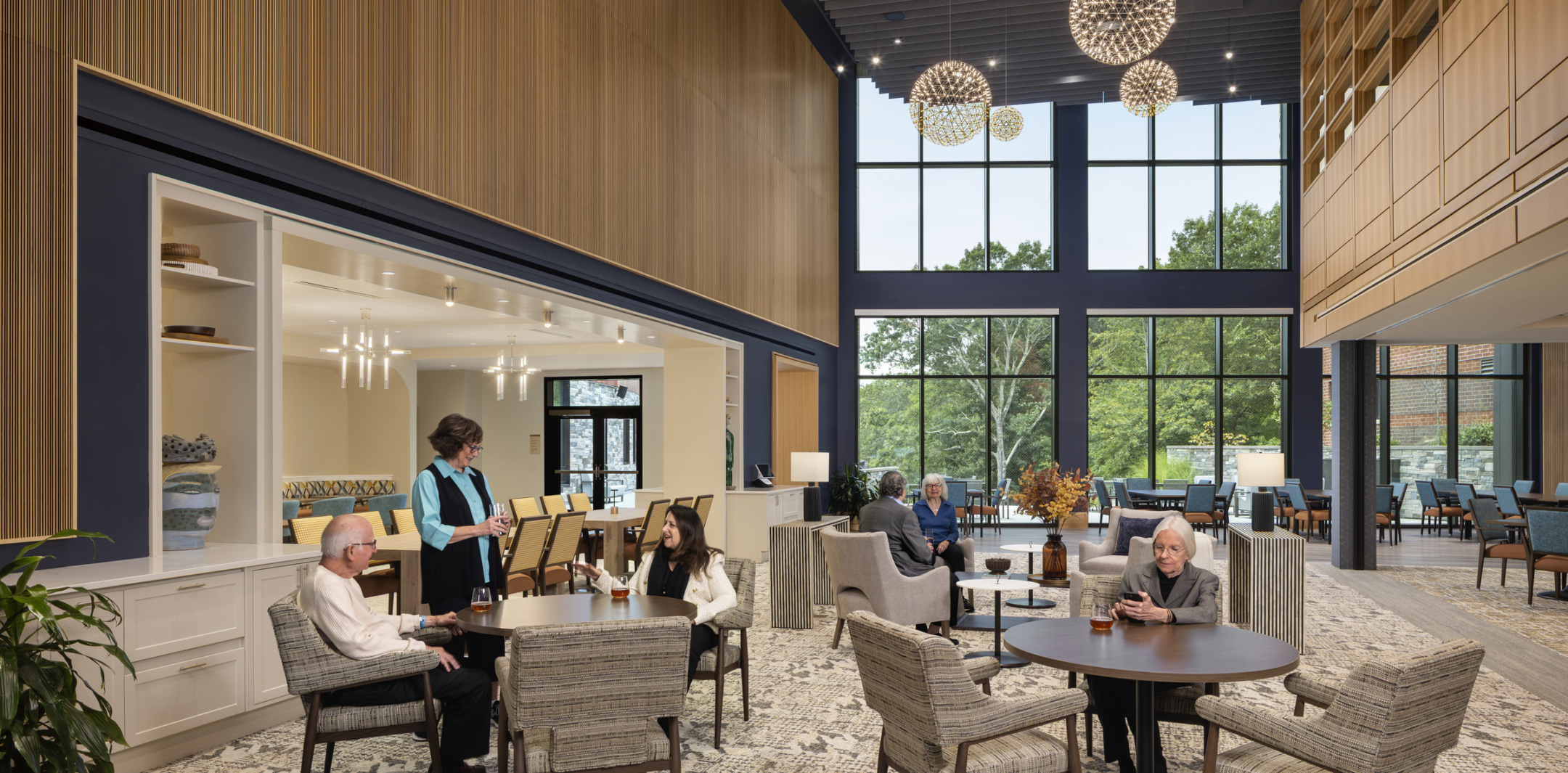
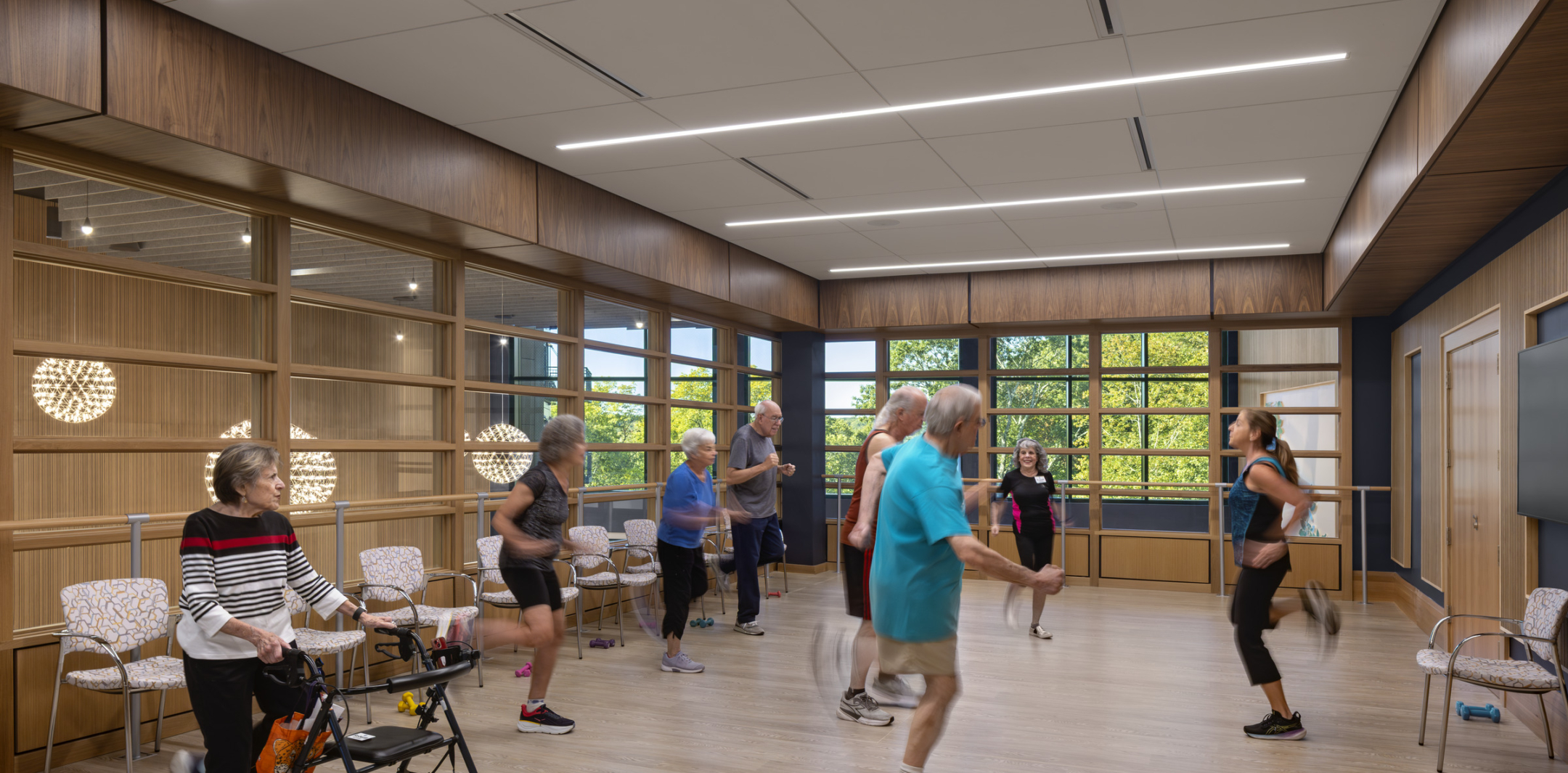
The Connector’s living room (left) and fitness room (right) are shared amenity spaces for all residents of the mixed-income Opus Newton-Coleman House community.

Opus sits just south of Coleman House with a new 14,500-square-foot amenity space, known as the Connector, joining the two apartment buildings. We organized this central hub into hyperflexible common spaces that allow residents to design and run their own programs, building community in the process. The location of amenities between the two buildings encourages a shared sense of ownership and communal use of space. The linked apartment buildings are adjacent to the Newton Jewish Community Center, which expands the available amenities and connects residents to a larger community.

Leveraging Mixed-Income Neighborhoods to Expand Senior Living Options

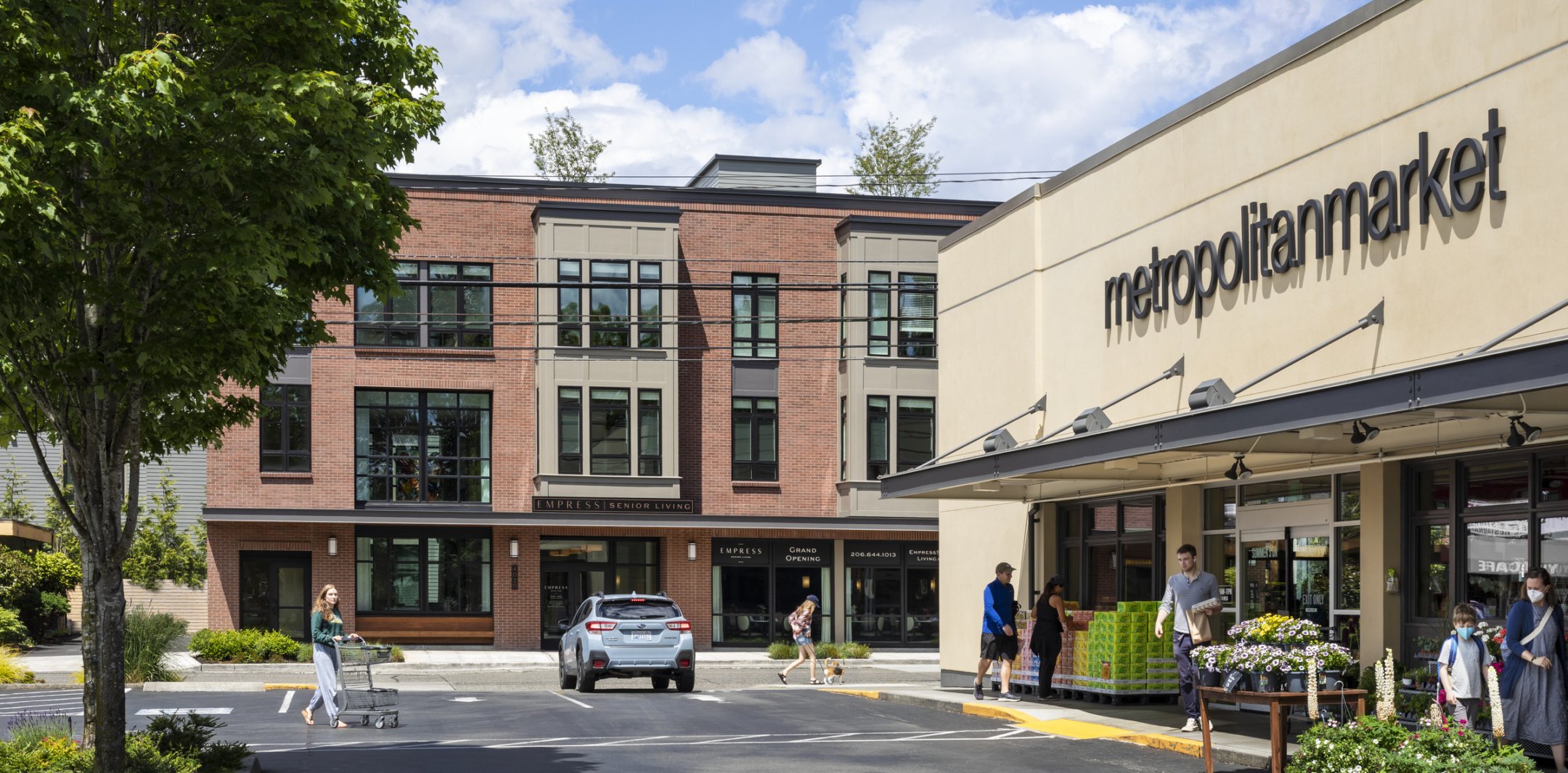
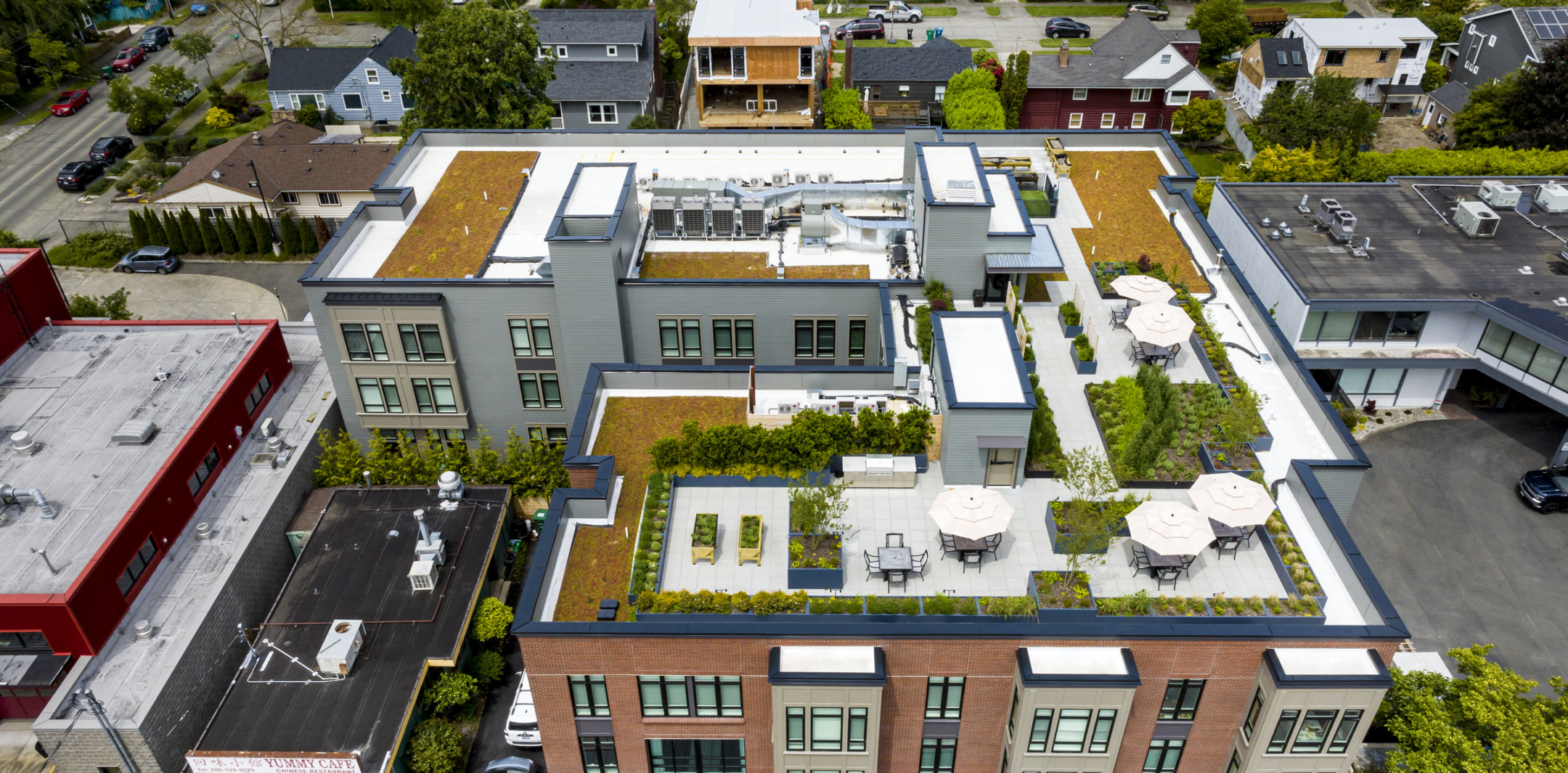
Proximity to existing community assets also influenced our designs for Empress Senior Living, an assisted living and memory care complex in the Laurelhurst neighborhood of Seattle, and La Mora Senior Apartments, an affordable housing development in Yonkers, NY. At Empress, the 80-unit building is tucked into a commercial district adjacent to a local market. We were able to take advantage of the constrained site by designing a compact building with moderately sized apartments, which, in turn, enable residents at different income levels to live in this high-end residential area. Likewise, the location’s access to surrounding amenities, which help to support the wellness and social needs of the residents, eliminated the need for extensive on-site amenity spaces.

In Seattle, Empress Senior Living blends into its low-rise neighborhood context (right) of both commercial and residential buildings and provides convenient access to stores (left) and services.

We worked with King County Metro to incorporate a bus stop into the architectural language of the Empress building and to provide seating for waiting transit riders, minimizing car dependency.

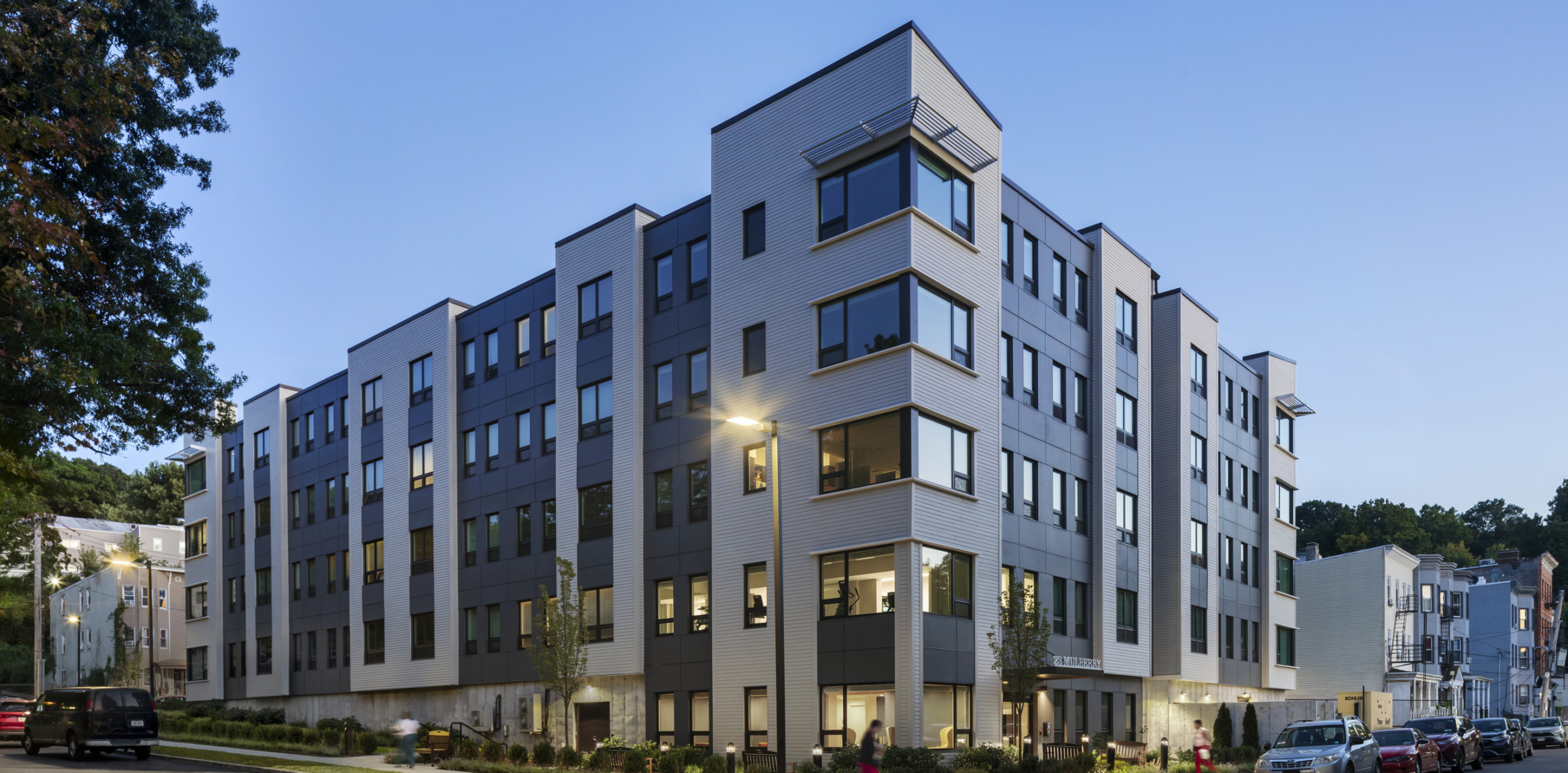
In Yonkers, a demographically diverse community that has seen a rapid pace of growth in recent years, older adults are being priced out of the market. La Mora Senior Apartments gives some of those residents an opportunity to stay in their own neighborhood—an opportunity that may be otherwise unattainable given the increased cost of living. While not a mixed-income building, La Mora follows some of the same principles through integrated neighborhood design, access to high-quality amenities, and exacting construction standards. With 60 apartments priced for seniors at or below 60 percent of the area median income, La Mora capitalizes on an advantageous location by providing an affordable housing option in a desirable neighborhood rich in amenities and social opportunities.

Bringing Socioeconomic Diversity to Senior Living Offers Community-Wide Benefits 5
At La Mora Senior Apartments in Yonkers, NY, modular construction offers a replicable model for equitable, sustainable (Phius-certified) housing for seniors to age in place in the neighborhoods they have long called home.
Overcoming Income Barriers to Support Community Building for Seniors

Older adults, many of them baby boomers, are influencing the way senior living communities are designed and operated today. They are interested in engaged, integrated, and diverse places to age in their existing communities. Intentional mixed-income communities can transcend traditional barriers of class and income. When the right design elements and financing are in place, mixed-income housing for older adults can foster social connection, economic diversity, and long-term community stability while meeting the evolving needs of an aging population.

For media inquiries, please reach out to: news@perkinseastman.com.