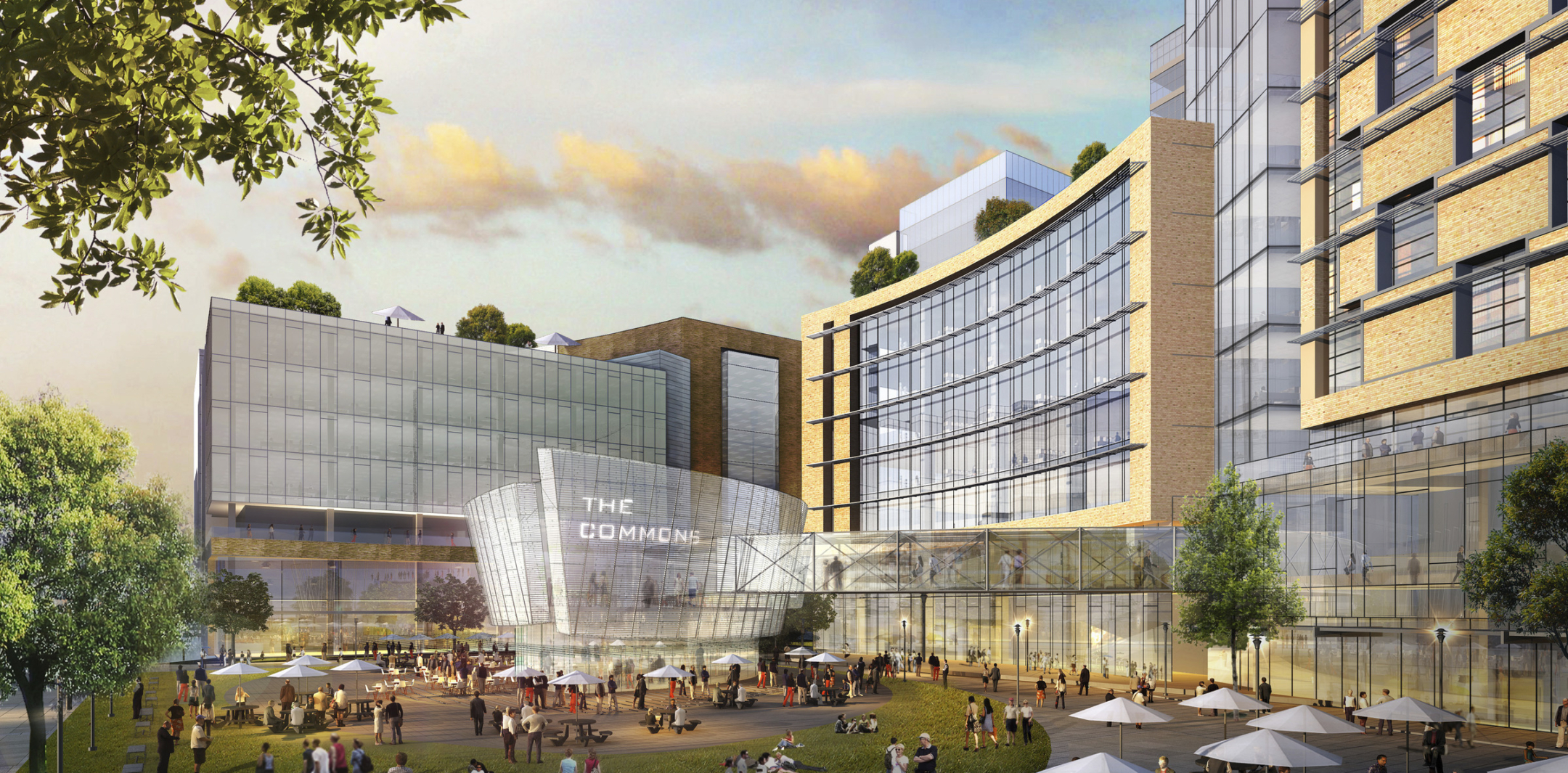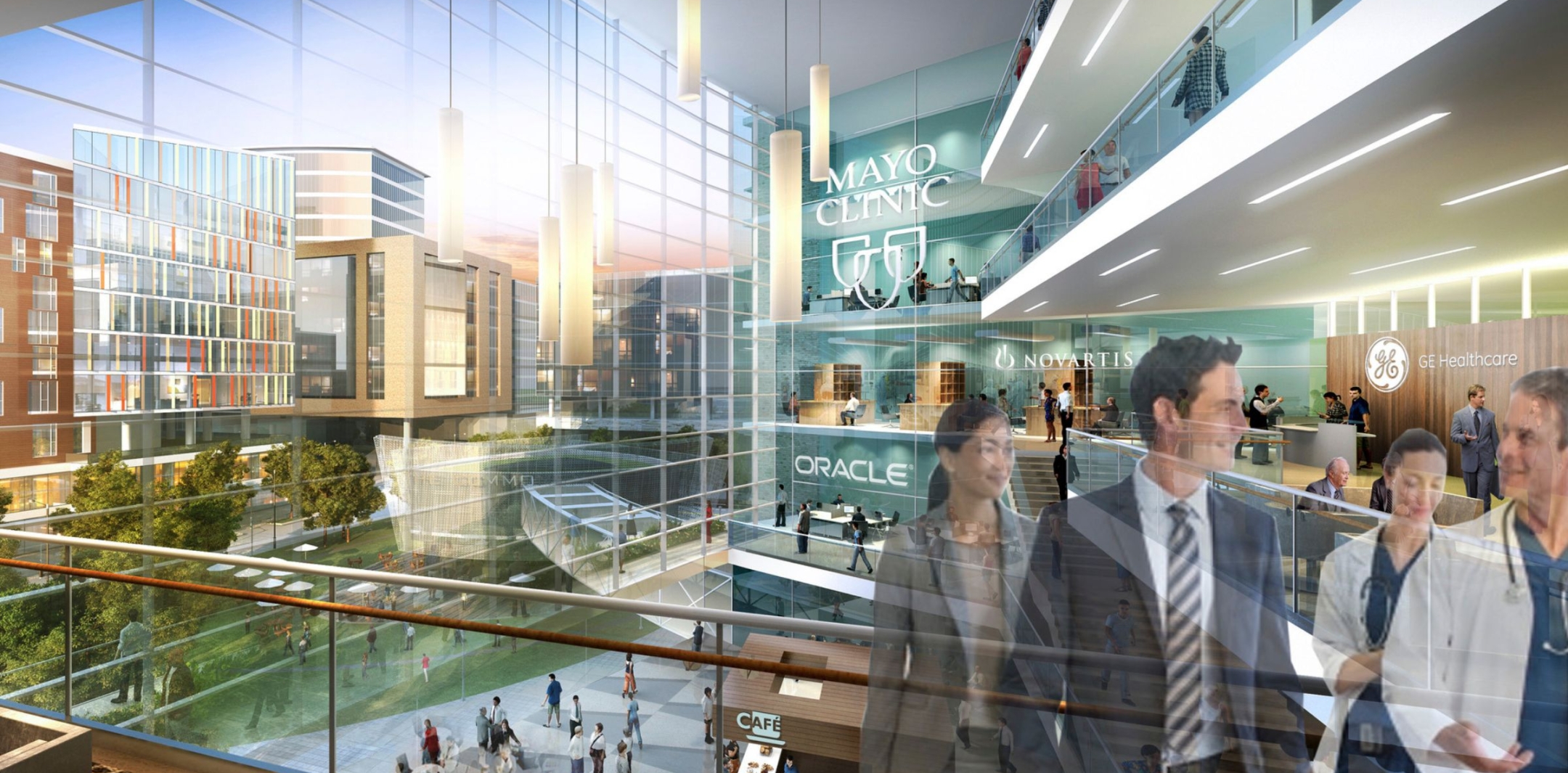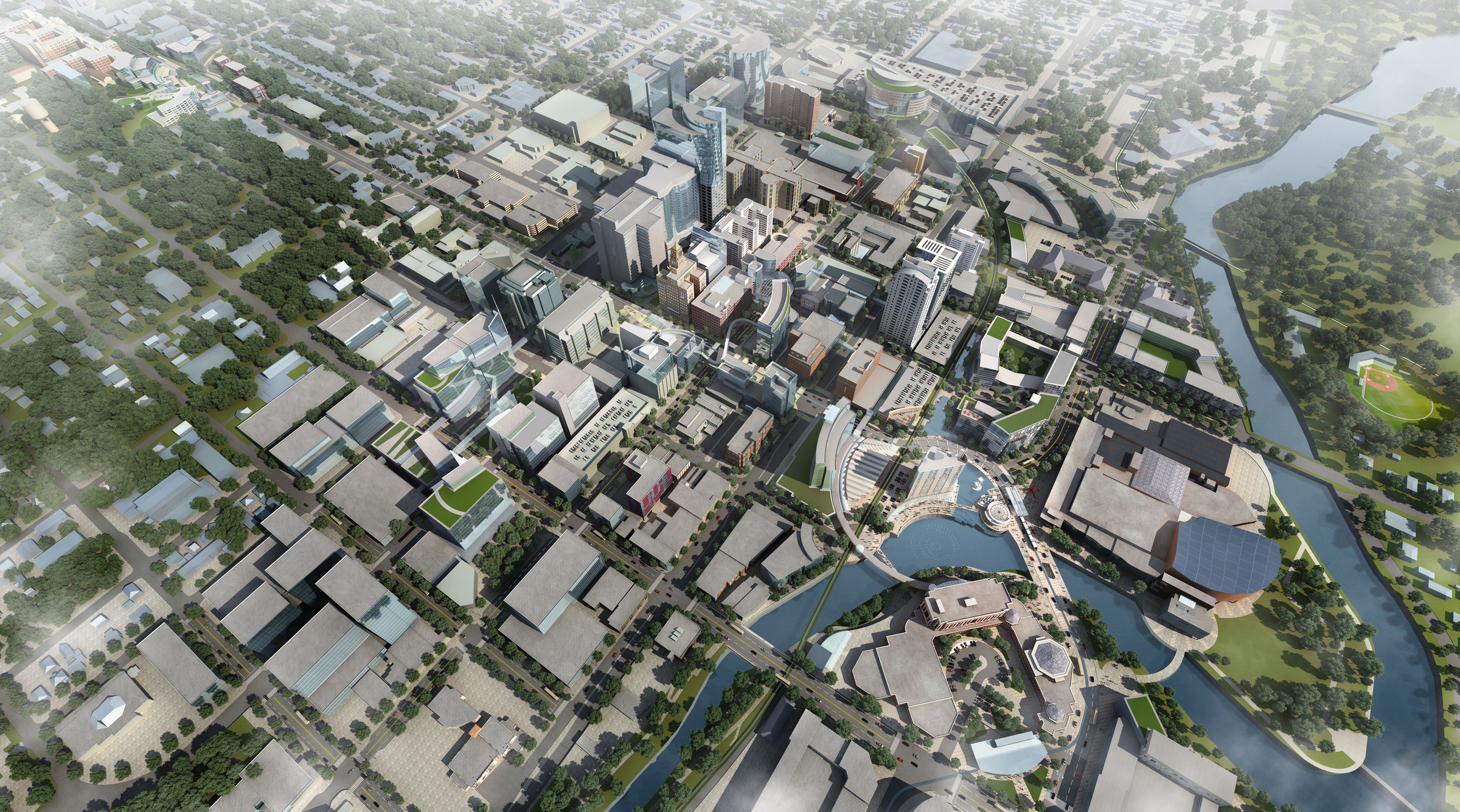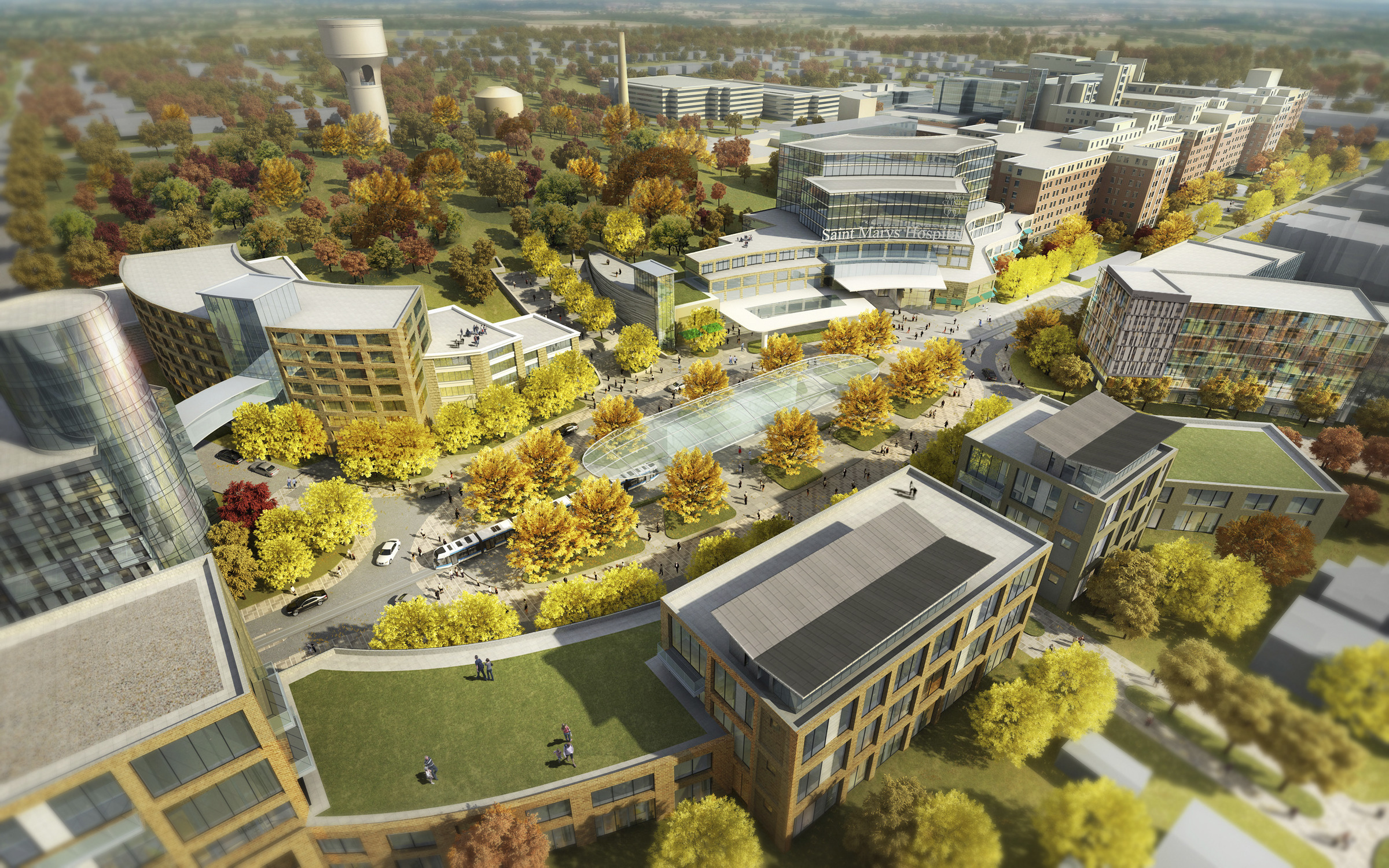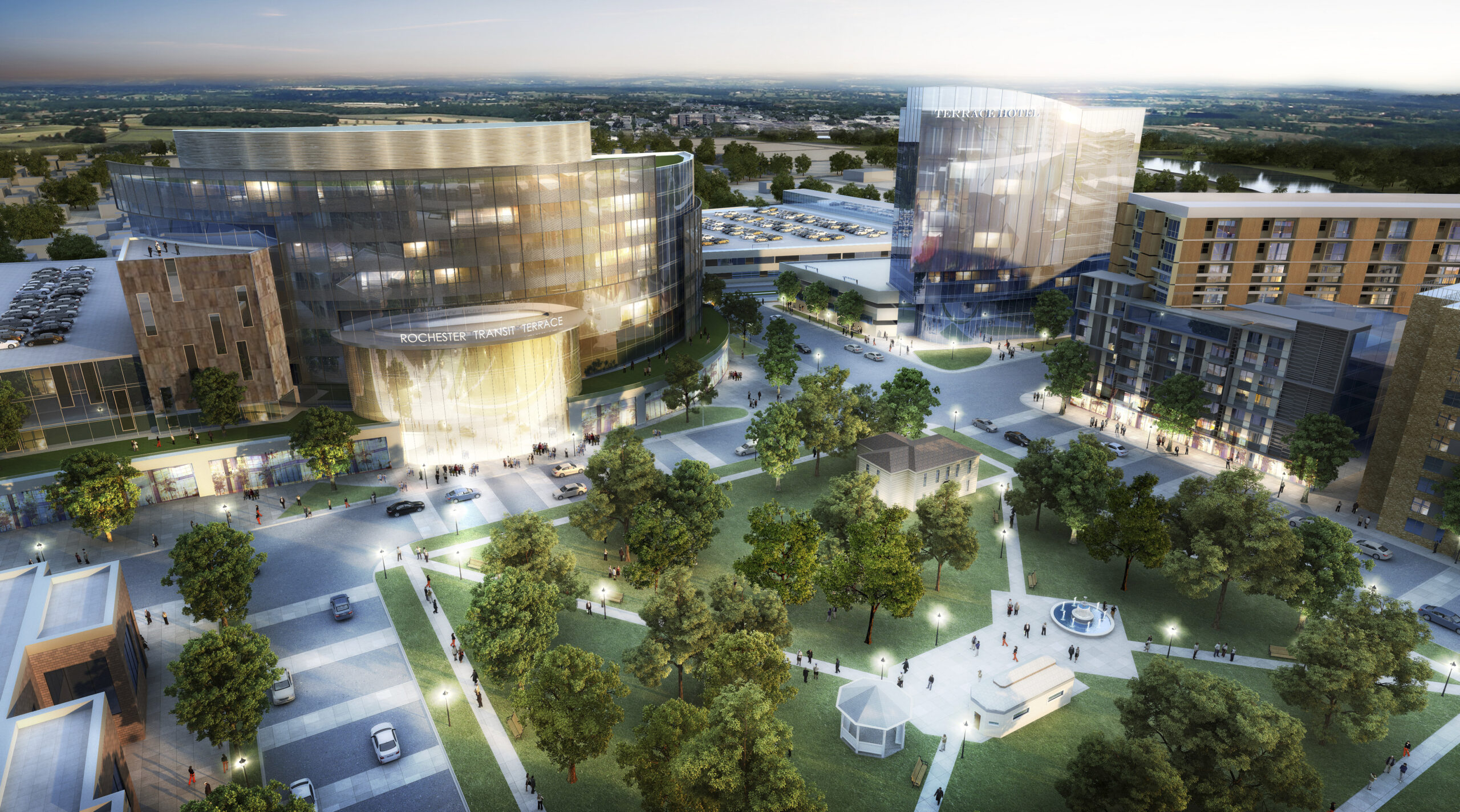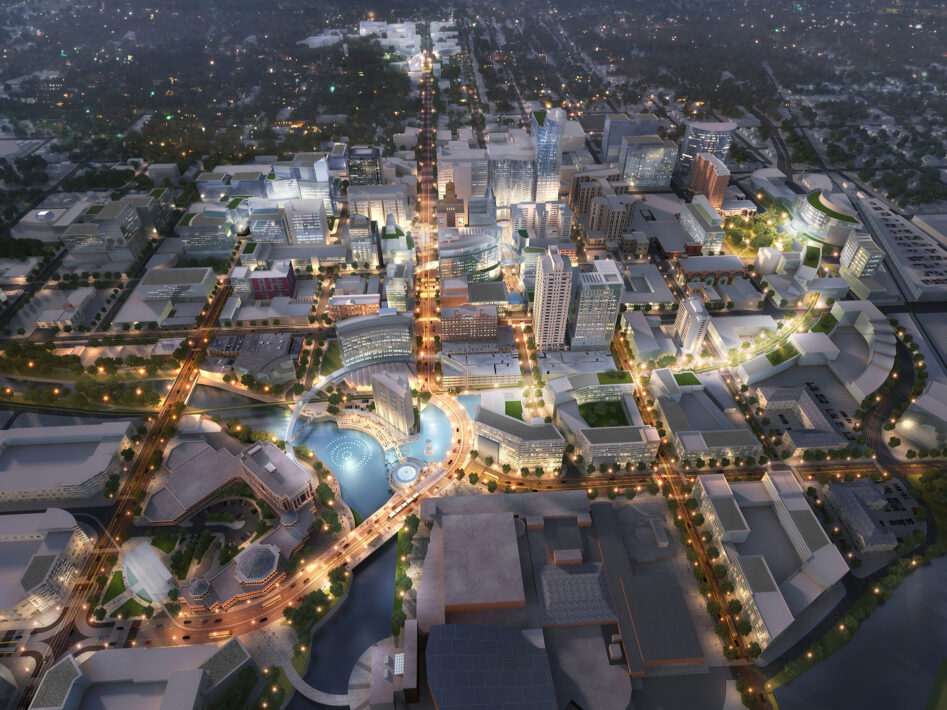
By their very scope and scale, urban master planning and infrastructure projects involve long-term vision—and lots of patience—because they can take decades to realize. Such a vision is playing out in Rochester, MN, where a placemaking-focused development plan has reached the halfway point of its 20-year horizon. Perkins Eastman designed this plan to knit the renowned Mayo Clinic’s 40-building footprint more holistically within the city and the life of its residents and its millions of yearly visitors.
The Destination Medical Center (DMC) is a public-private partnership that was formed in 2013 to execute a $5.6 billion economic development initiative, the largest in Minnesota’s history. It funds public infrastructure to attract private development in support of Mayo’s continued expansion, and it hired Perkins Eastman in 2015 to guide that growth. “The Perkins Eastman document sets out a vision for how to heal a city that has suffered from the urban illnesses of the late 20th century, such as too many cars and surface parking lots, too little density and diversity, and too few gathering places,” Thomas Fisher wrote in an article for the Minnesota AIA when the plan was adopted.
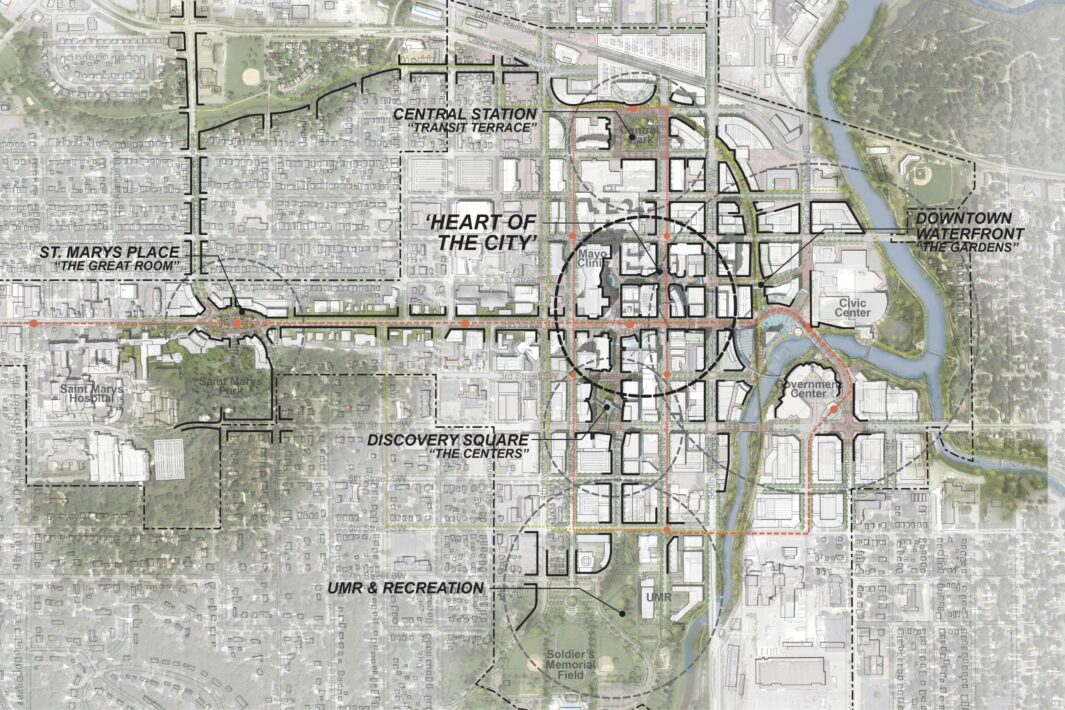
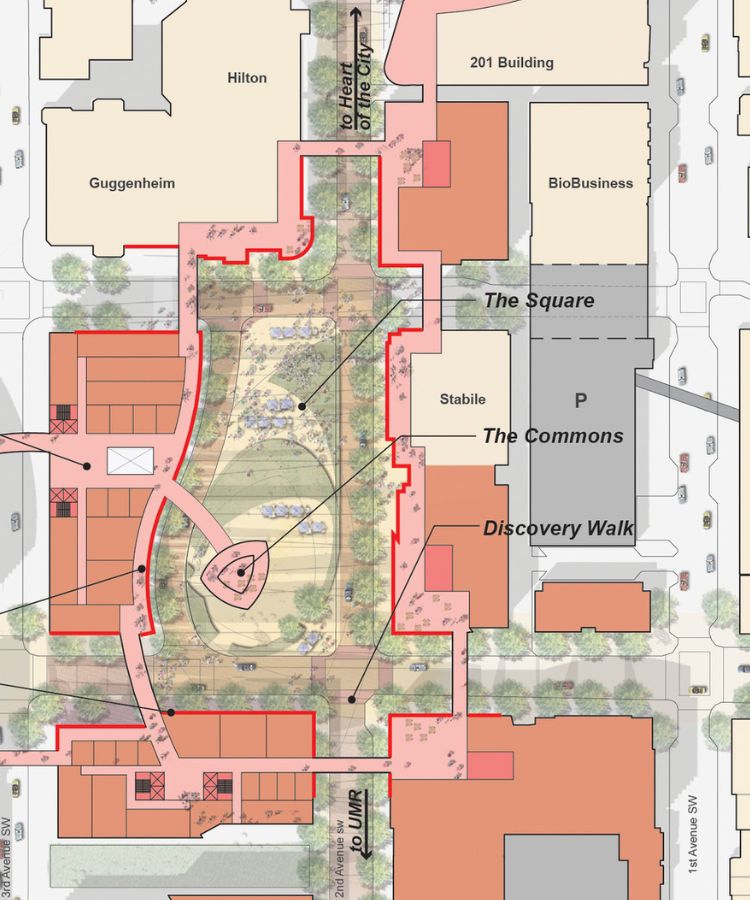
The plan named six districts in Rochester’s square-mile core that were ripe for development, along with improvements to their public realms.