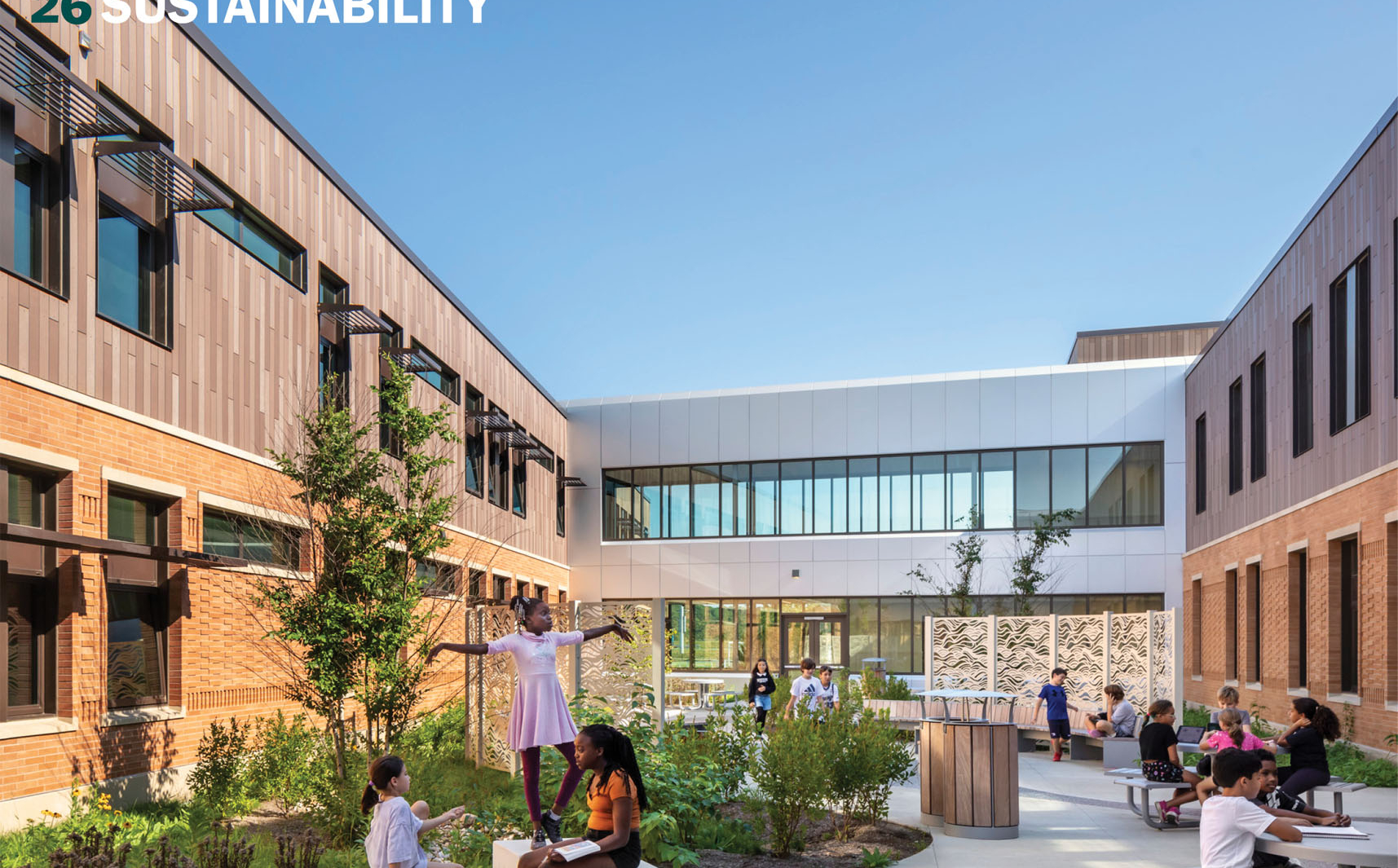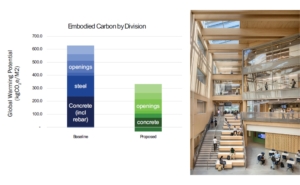
For the computer science laboratories at UMass Amherst, embodied carbon models comparing the global warming potential of a steel and concrete structure versus one employing mass timber showed a dramatic decrease.
Guarin: In an ideal world, all our projects would be mass timber structures, but we are not there yet. So, we are thinking about alternative strategies. For example, multiple techniques can make a concrete structure more sustainable. We can substitute a portion of the cement mix, an ingredient of concrete, with alternatives such as fly ash and slag, which are byproducts of coal production and steel manufacturing. Typically, these choices are cost neutral.
Dirks: We can also reduce the total number of materials we use in a project. This can save embodied carbon as well as cost.
Guarin: The most sustainable material is the one we don’t use.
Dirks: In a recent tenant-improvement fit out, we quantified the number of gypsum partitions and floor finishes that we did not specify compared to a typical project. It was about a 40-percent reduction overall in the space’s embodied-carbon footprint.
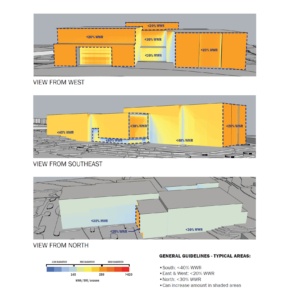
Dirks: Depending on the building type, architectural strategies can have different levels of impact on the reduction of energy consumption. What other strategies can be used to achieve a sustainable building?
Guarin: True. Certain buildings consume more energy than others. Healthcare is one of them. Apartment buildings and student dorms use significantly more hot water than other building types. In these cases, we focus on aspects like glare, daylight, and thermal comfort—not solely on the energy piece—that impact users.
Dirks: Deploying an energy monitoring service to review a client’s energy bills after project completion is another way we can impact energy usage and costs. It has helped us validate what is working, and in some cases, it has helped us troubleshoot problems that have saved clients significant money on building operations that may otherwise have gone unnoticed.
Guarin: Our modeling and monitoring efforts are critically important, but there is more to good sustainable design than energy.
Dirks: We always factor in the wellness of people and planet to ensure we are not making isolated decisions. Our design process helps us verify that our choices are having a positive impact, and it helps us find holistic balance in our design decisions on every project.
For media inquiries, please reach out to: news@perkinseastman.com.