Insights

Hospitality-Informed Office Designs Earn the Commute

As office leasing continues to improve, workplace clients are emulating hotels and resorts to attract and retain employees.
By Pablo Quintana, Associate Principal and Workplace Regional Leader
The biophilic elements of the Tree of Life lounge at an asset management firm in New York embody a key wellness trend.
The biophilic elements of the Tree of Life lounge at an asset management firm in New York embody a key wellness trend. Photographs by Andrew Rugge/© Perkins Eastman

Office space demand has reached its highest total since the first half of 2020 and the sublease market inventory is shrinking significantly, according to a recent report by Cushman & Wakefield. Meanwhile, “the market is also adapting to changing consumer tastes and tenant demands, leading to an increase in renovations, conversions, and demolitions of office space that is no longer competitively viable.”

A new design strategy is emerging amid this market fluctuation: office designs are taking cues from boutique hotels and the hospitality industry to include both informal and formal space types for collaboration and connectivity. While this practice is not entirely new, our tenant and landlord clients have been asking for this approach more frequently, while the concierge services industry is expanding into commercial real estate at the same time, according to Bisnow. Today, the most successful workplaces provide an appealing alternative to the comfort and flexibility of the home office. Nodding to the “work resort” concept, they are human-centric, collaboration-driven, wellness-focused environments that cannot be duplicated at home. In an era of hybrid- and remote-work options, employers want to ensure their offices are worth the commute.
Creating a Cohesive Working, Wellness, and Social Environment
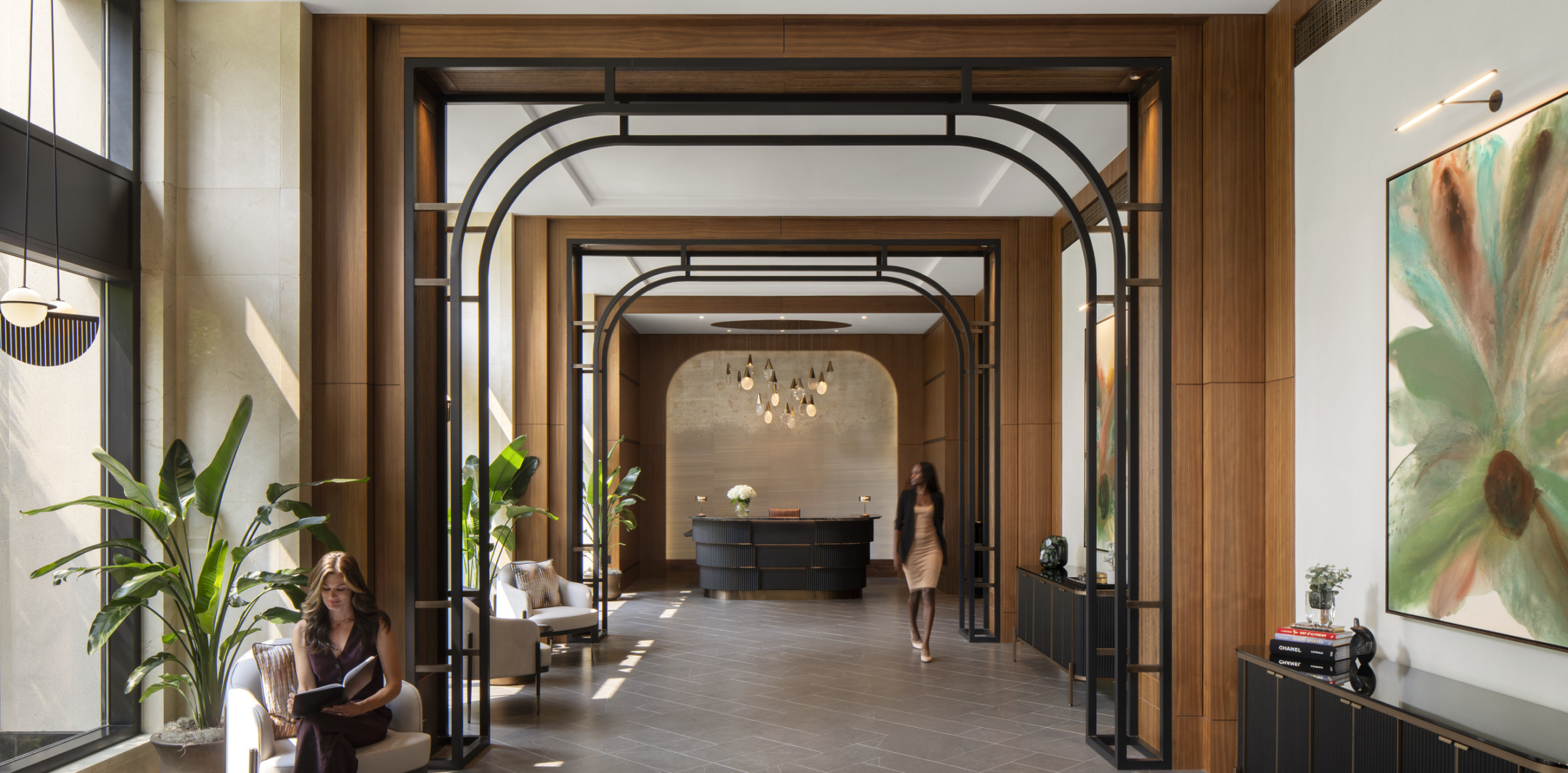
The Great Hall at 1875 K Street in Washington, DC, resembles a hotel lobby more than an office corridor.

The Great Hall at 1875 K Street in Washington, DC, resembles a hotel lobby more than an office corridor. Photographs © Seamus Payne

In-office amenities have become an essential ingredient when planning a new work environment. Long considered perks and add-ons, amenities are now key drivers for talent acquisition and retention because they make the typical workday meaningfully better:

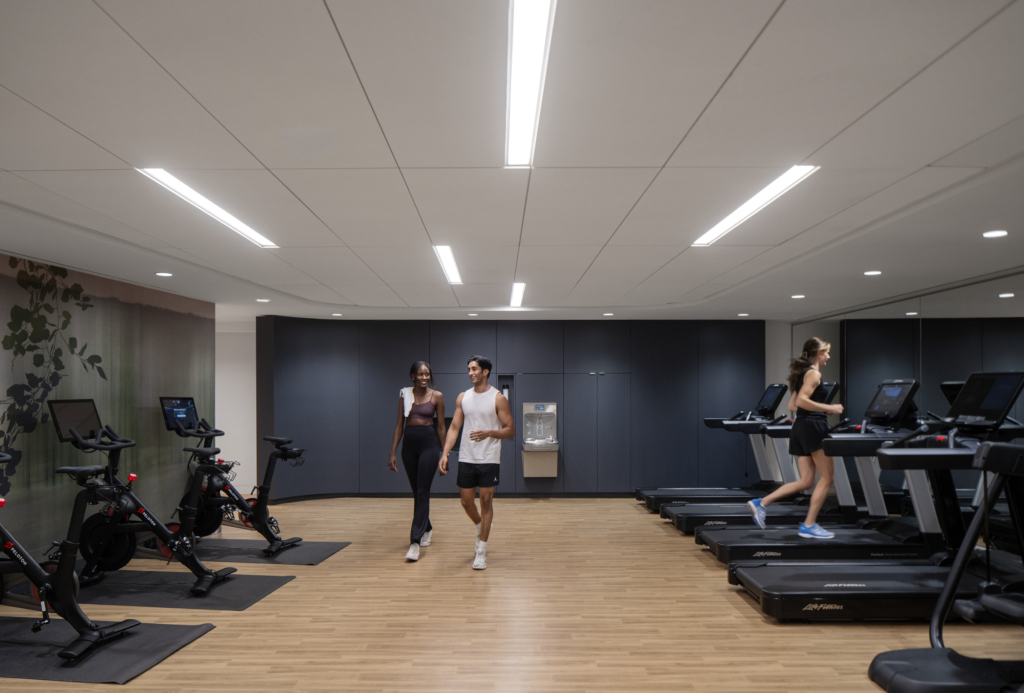
Wellness and fitness options top the list.  When employees can exercise without leaving the building, stress decreases and productivity increases.

Hospitality-Informed Office Designs Are Worth the Commute 1

The in-house gym at 1875 K Street in Washington, DC.

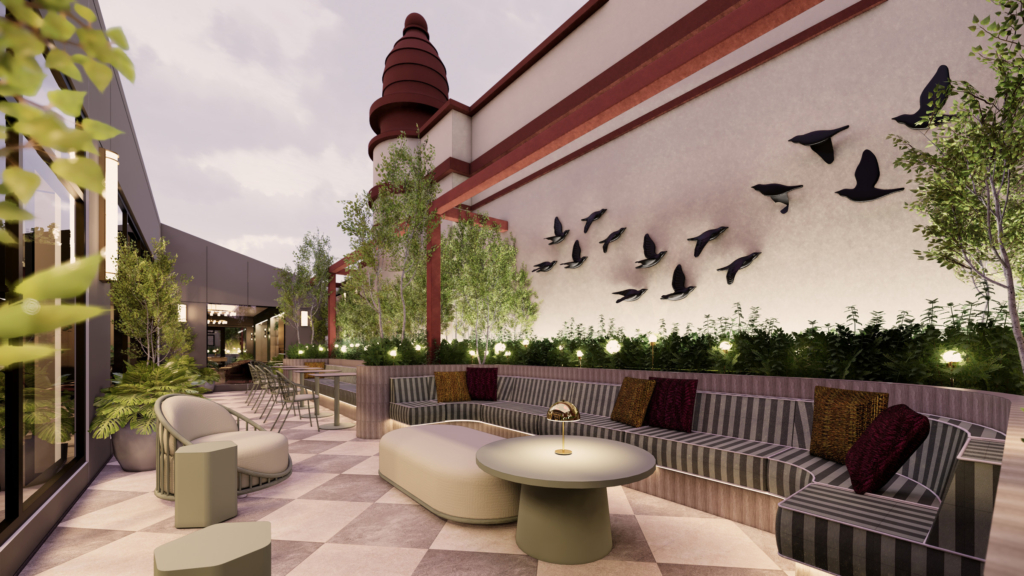
Outdoor spaces offer respite and a place to reset.  Fresh air and sunshine, coupled with open space for quick breaks and informal meetings, can boost morale.

Hospitality-Informed Office Designs Are Worth the Commute 2

A planned roof terrace for the 12th-floor renovation at The Rookery in Chicago, available for all tenants.
Renderings © Perkins Eastman

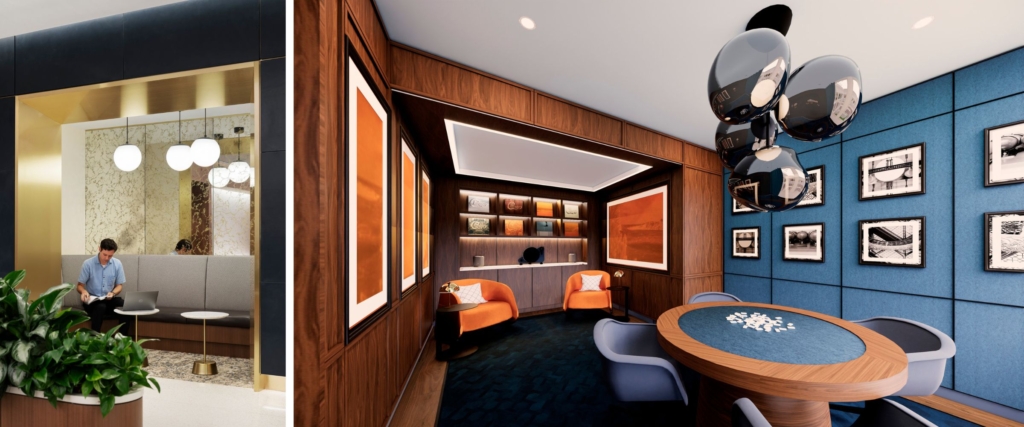
Quiet spaces remain essential in the hybrid era. Open floor plans cannot support the privacy that work-from-home environments can offer. Soft-seating across libraries, enclosed rooms, and quiet lounges allow employees to move between quiet settings and collaborative spaces with ease.

A planned lounge and listening room at The Rookery (left) and a private phone/work booth at 1875 K Street (right).

A planned lounge and listening room at The Rookery (left) and a private phone/work booth at 1875 K Street (right).

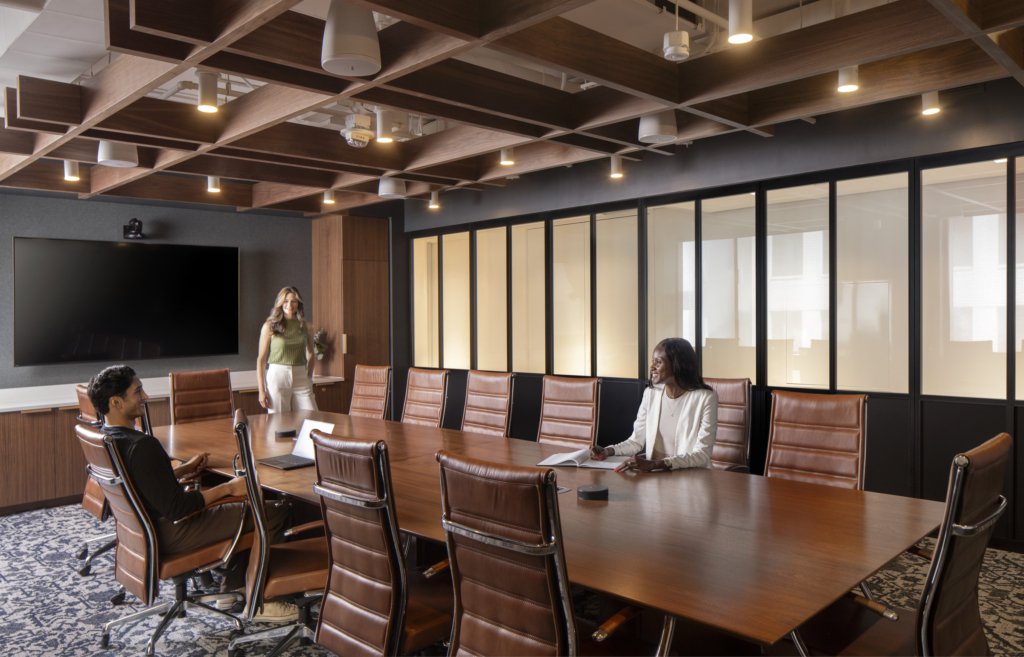
Shared amenity floors offer additional spaces. Many commercial office developers now offer reservable meeting rooms, event space, and collaboration hubs that give tenants more flexibility and allow them to expand beyond their leased space when needed.

A reservable conference room at 1875 K Street.

A reservable conference room at 1875 K Street.

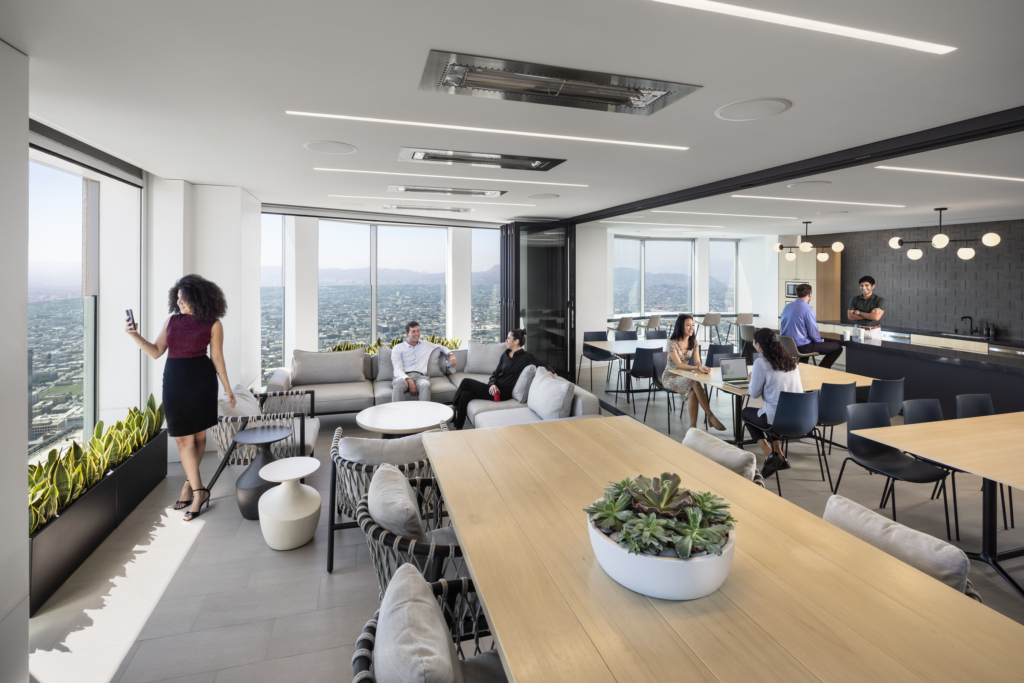
Food and beverage options bring people together. These settings continue to be popular places for social interaction. Just like at home, food brings people together.

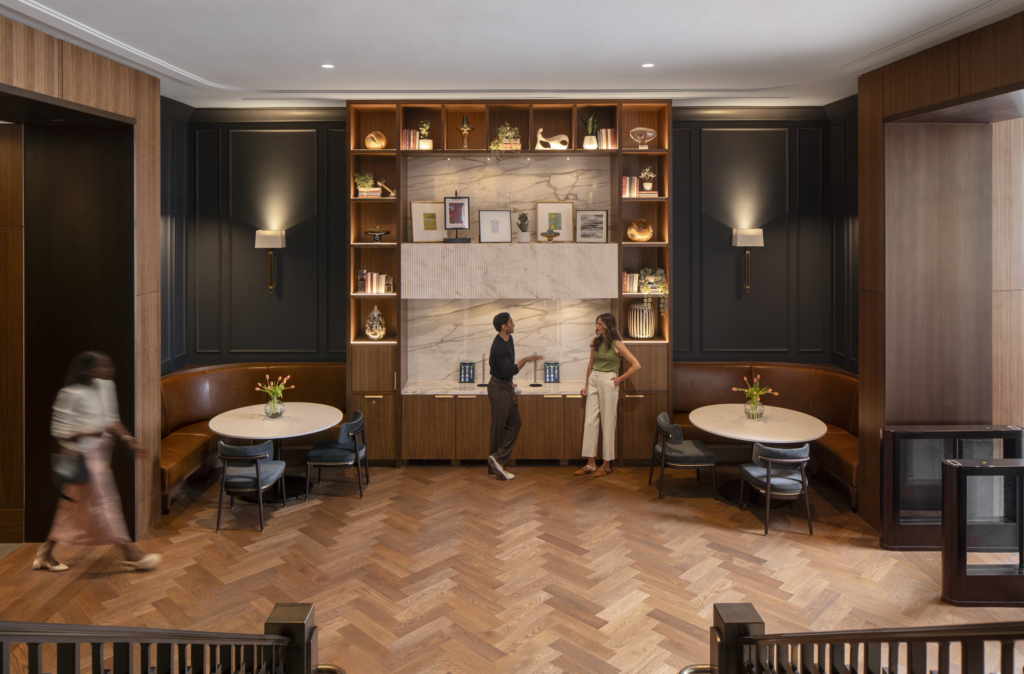
A grab-and-go pantry at an asset management firm in New York.

A grab-and-go pantry at an asset management firm in New York.

Shifting the Paradigm from Efficiency to Effectiveness

To implement this amenity-focused approach, we set aside old planning benchmarks based on staff hierarchy and focus instead on allocating space to support collaboration, creativity, and social interaction. The goal is to shift the paradigm from square-foot efficiency to workplace effectiveness—from container of spaces to tool for performance, collaboration, and retention.

At the planning stage, it is critical to fully understand how the office will be utilized, and by whom, rather than developing a program that assigns square feet purely according to title and seniority or number of staff. This is not a prescription for open plan layouts. On the contrary, it requires a deep understanding of the benefits of in-office work and supports the individuals and teams who are most likely to take advantage of it with variety and choice.

Crafting Office Interiors as a Destination Experience

As the spatial construct of the office is changing, so are its materials, colors, and finishes. With soft tones, deep hues, and natural materials, the design lines are being blurred between home, hospitality, and workplace.

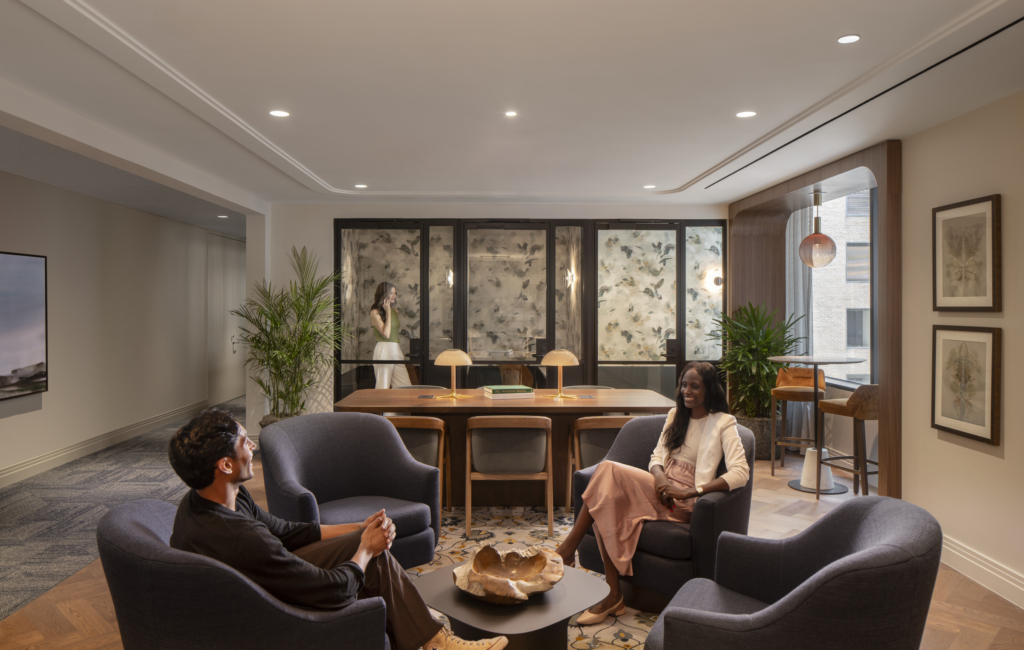
A lounge at 1875 K Street features soft lines and colors.

A lounge at 1875 K Street features soft lines and colors.

The pre-pandemic office did not have to compete with the home office, but times have changed. A new wave of hospitality-driven planning is changing the physical texture and social culture of the workplace. Spaces that are thoughtfully curated for both employee interaction and quiet focus—within a setting steeped in natural light and equipped with lounge areas, barista bars, and outdoor areas—create a powerful sense of place. With these offerings, employees can begin to see the office as an environment designed for them—an investment in their well-being and comfort­—and employers can begin to see the benefits of an engaged and present workforce.

For media inquiries, please reach out to: news@perkinseastman.com.