Insights

Intergenerational Planning and Design Are Key to Successful Communities

Master planning should respond to people’s needs at every stage of life.
By JinHwa Paradowicz, FAIA, LEED AP BD+C, Principal
Swope Health Village
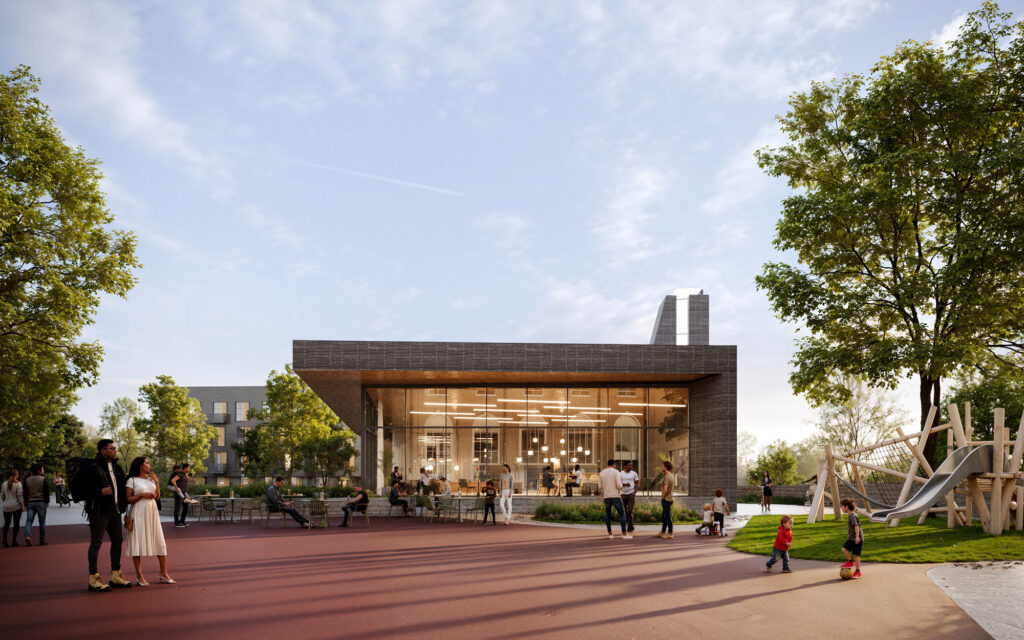
Initially conceived with senior housing and a behavioral health facility, the master plan for Swope Health Village in Kansas City, MO, expanded to include a community center (above, left) and public outdoor gathering spaces to help revive the greater Town Fork Creek neighborhood for all ages. All renderings © Perkins Eastman

The United States’ transformation from one of the most age-integrated societies in the world in the early 20th century to one of the most age-segregated societies today, a shift documented in the Stanford Social Innovation Review, has contributed to a growing epidemic of loneliness, persistent ageism, and the emergence of childcare and elder care deserts. “We’re living in the most age-diverse time in human history,” Eunice Nichols, the co-CEO of CoGenerate, said on The Atlantic’s “How to Age Up” podcast last year. “We’re simultaneously the most age-segregated by institutions, by infrastructure, by policy. It’s like everything in our lives is designed to separate us.”

How can design and programming begin to repair the age divide? The answer lies in our profession’s approach to master planning at every scale. We must advance placemaking as a foundational strategy for rebuilding meaningful connections across generations.

Master planning encompasses many design considerations, including community context and historic patterns, societal impact, infrastructure, and economic drivers. Yet one critical dimension has been overlooked in the United States: intergenerational connection.

Plans for Aging

The nation’s median age continues to rise, driven by baby boomers, decreasing birth rates, and increased longevity. Older adults comprise a rapidly expanding demographic, prompting cities and municipalities to confront a new imperative: creating environments that serve the sometimes conflicting needs of today’s inhabitants and multiple generations to come. Intergenerational master planning is emerging as a holistic, future-oriented approach that weaves social, spatial, and health and wellness strategies into the fabric of communities.
Intergenerational Planning and Design Are Key to Successful Communities

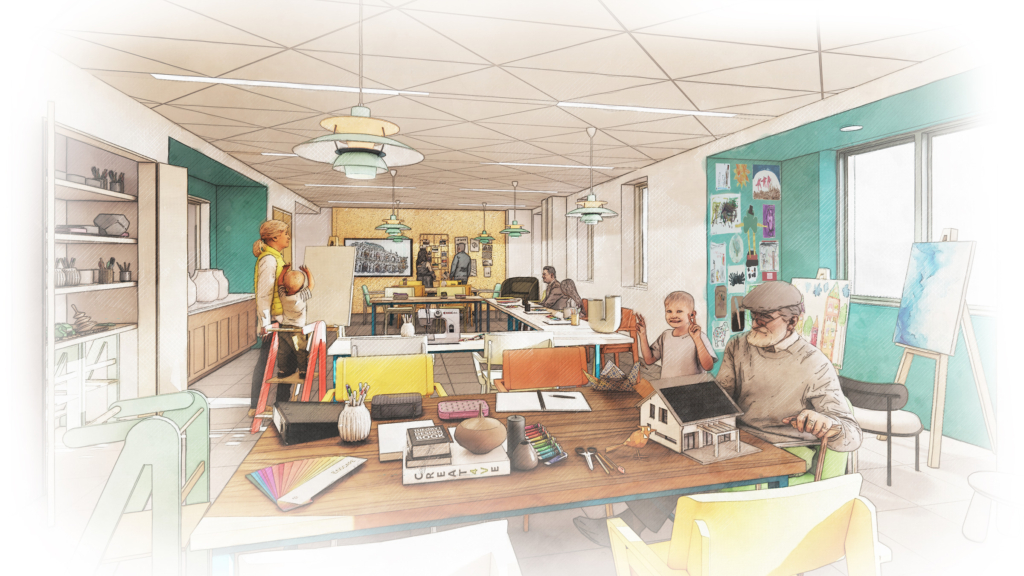
The art room at Vincentian Schenley Gardens, a senior living community in Pittsburgh, was designed
to encourage intergenerational connections.

This framework extends beyond universal or age-friendly design. It positions architecture and urban planning within a broader cultural continuum, ensuring places remain relevant and resilient across lifespans.

States are recognizing this shift as well. Many are adopting Multisector Plans for Aging that align state and local policies to create community-level infrastructure that encourages healthy, active, and connected living for older adults and caregivers. These initiatives address coordinated efforts in housing, healthcare, transportation, and social determinants of health.

This is a pivotal moment for the design industry. An aging population calls for deeper inquiry into how design choices for senior living developments can intentionally foster cross-generational interaction. The interior master plan for the Vincentian Schenley Gardens senior living community in Pittsburgh, for example, includes many opportunities for residents to interact with younger age groups. The design includes an art room where children at an adjacent preschool can work on projects with older volunteers, a public café, library, and multimedia theater. The development, an extensive renovation of a licensed-care facility in a 10-story building, also offers below-market rent to students in their senior year at nearby Chatham University in exchange for service hours to residents.

Health Village Becomes a Community Catalyst
Swope Health Village 4

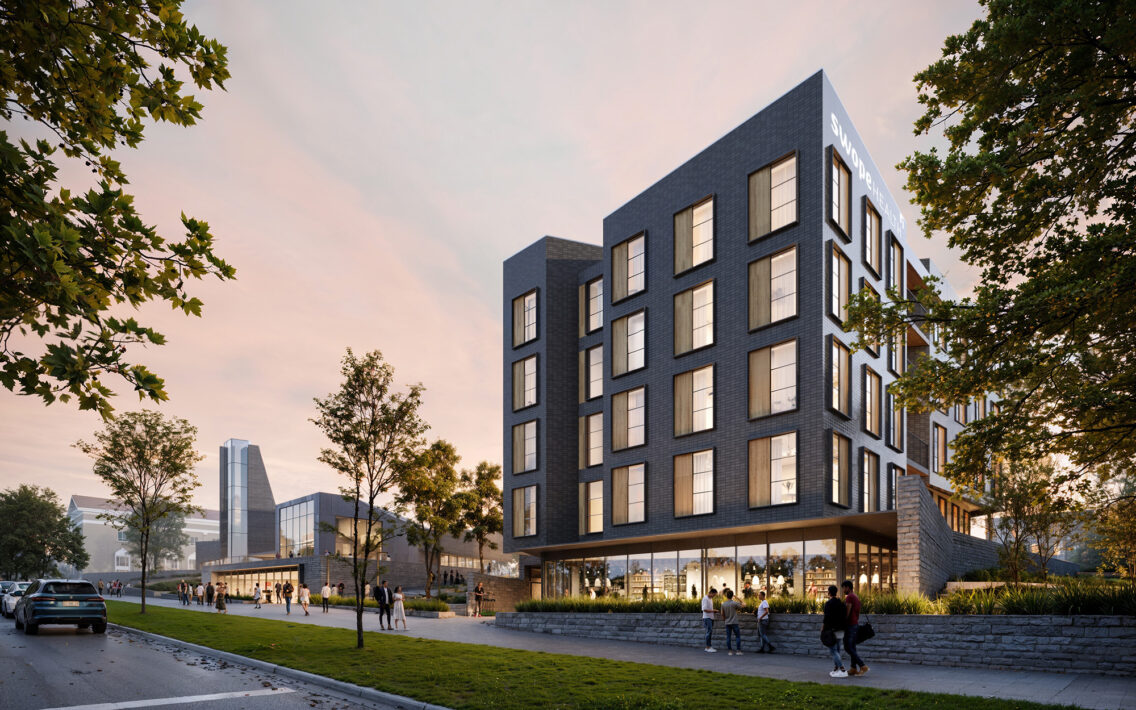
Swope Health Village’s community center provides indoor and outdoor programming for
residents of Town Fork Creek in Kanas City, MO.

Intergenerational efforts are also in the works in Kansas City, MO, where community investment has long been inequitably distributed. Swope Health, a Black-owned, nonprofit healthcare provider founded in 1969, is working to change this trajectory by transforming a deteriorated 12-acre site in Town Fork Creek, a historically redlined Black community. Our client wanted Swope Health Village to provide much-needed behavioral healthcare and senior housing. It quickly became clear, however, that the project presented an opportunity to catalyze new life in the neighborhood with broad sidewalks and safe public spaces.

Through community meetings and visioning sessions, local residents emphasized the need to address broader neighborhood challenges, including the prevalence of “skipped generation” households in which grandparents are raising grandchildren. This dynamic reinforced the case for an intergenerational approach.

Intergenerational Planning and Design Are Key to Successful Communities 5

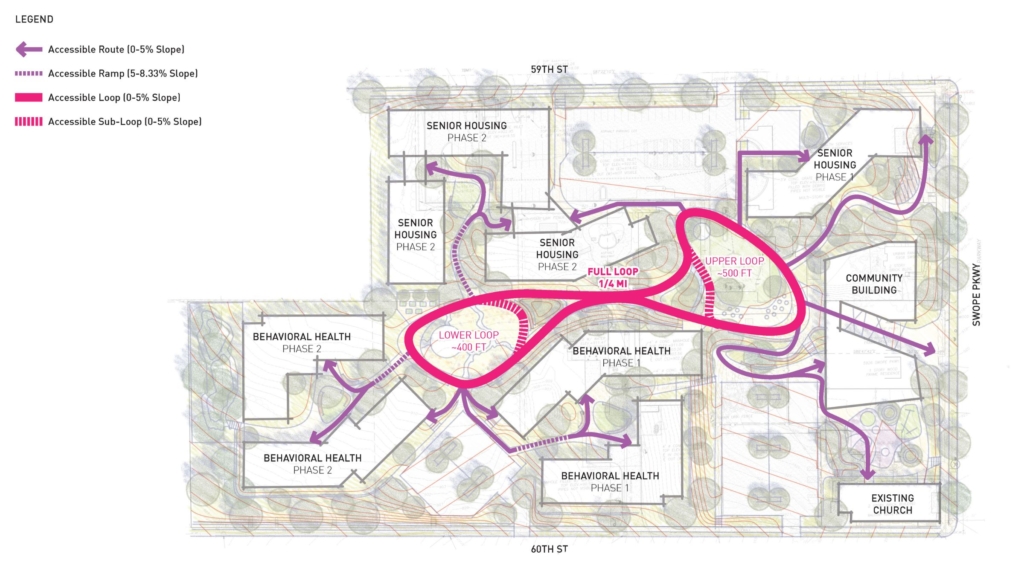
The Swope Health Village campus includes a network of landscaped paths and circulation that enables intergenerational and accessible interaction.

In response, we expanded the Swope Village master plan to include a community center and a public plaza along Swope Boulevard. These spaces will host job training, community outreach, and programming that bring different groups together. A play area, community garden, and walking loop will link key areas of the campus through organic landscaping and accessible pathways, further encouraging connection and activity across ages.

The Perkins Eastman plan has generated meaningful momentum. Swope Health used it to secure unanimous Kansas City Council approval for a $5 million public investment in the project. An additional $7.5 million from the State of Missouri will contribute to the construction of behavioral health housing for 72 residents, addressing critical mental health needs. Design work for this housing component is underway, grounded in the master plan’s vision.

Gathering Momentum for Intergenerational Design
Intergenerational Planning and Design Are Key to Successful Communities 4 Intergenerational Planning and Design Are Key to Successful Communities 3

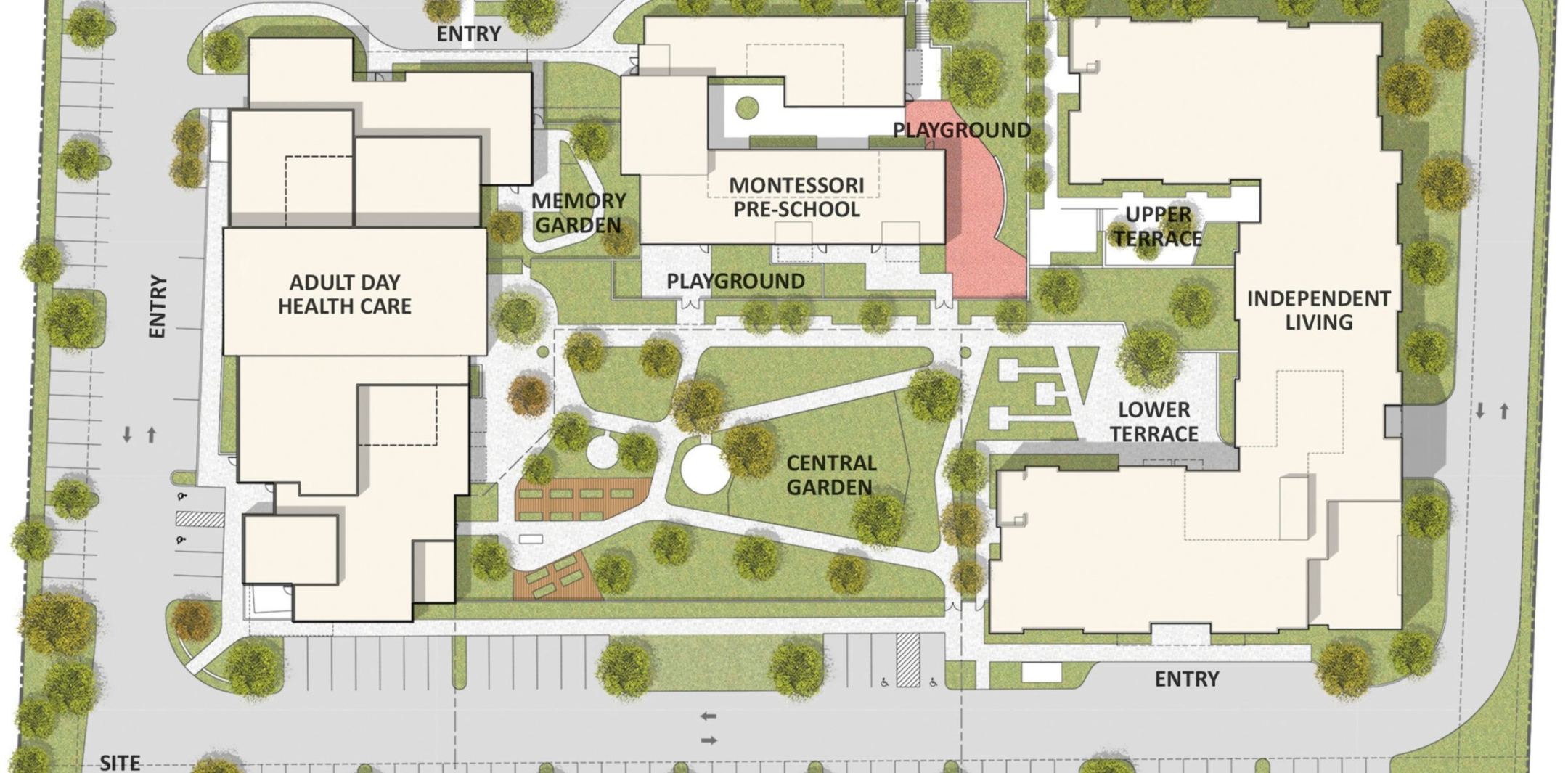
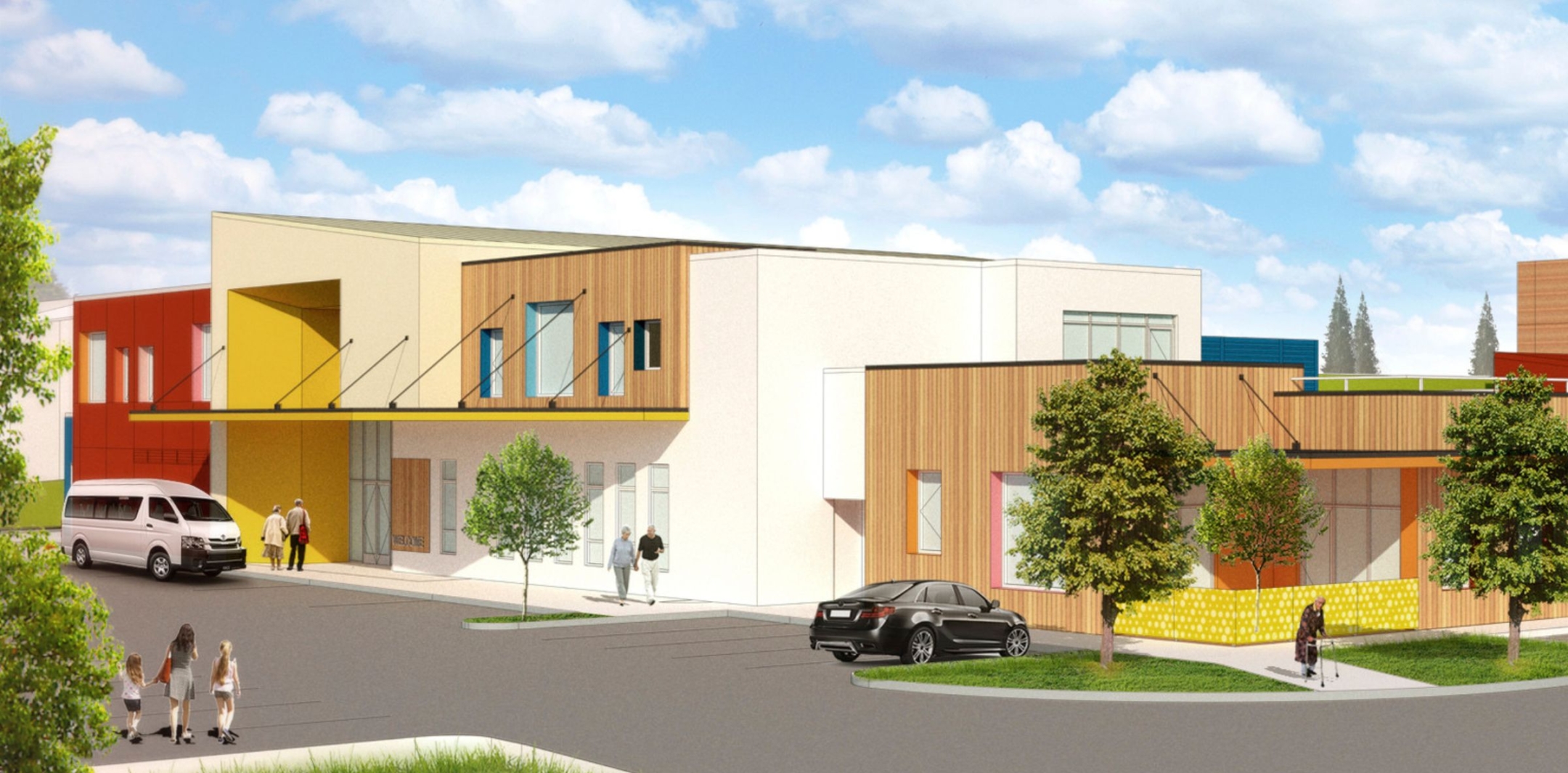
Choice in Aging partnered with Satellite Affordable Housing Associates in Pleasant Hill, CA, to create a multigenerational campus with adult day care, a preschool, and independent living apartments.
Responding to the client’s desire for “stigma busting,” the plan aims to make everyone feel welcome
regardless of age or socioeconomic status.

Clients are also driving the shift toward intentional intergenerational master planning. In one such project, Perkins Eastman is currently leading the master planning and design for Choice in Aging in Pleasant Hill, CA, a nearly 175,000-square-foot campus that co-locates a Montessori school with adult day care and senior housing, creating opportunities for daily interaction across age groups. Having witnessed the delight that emerges when young children and memory care residents engage with one another, the client requested that these programs be housed adjacent to each other with a central memory garden providing opportunities for shared experiences.

The Choice in Aging vision extends our intergenerational planning repertoire. Whether we are envisioning new communities or repositioning existing developments, the goal of our master plans is to create and support tangible connections across community life. At every scale, this pursuit is becoming a powerful driver of design, reinforcing the role of architecture as a catalyst for community, empathy, and common experience. Intergenerational master planning prioritizes shared spaces and layered programs that can evolve with residents from childhood through older adulthood and adapt as societal needs shift.