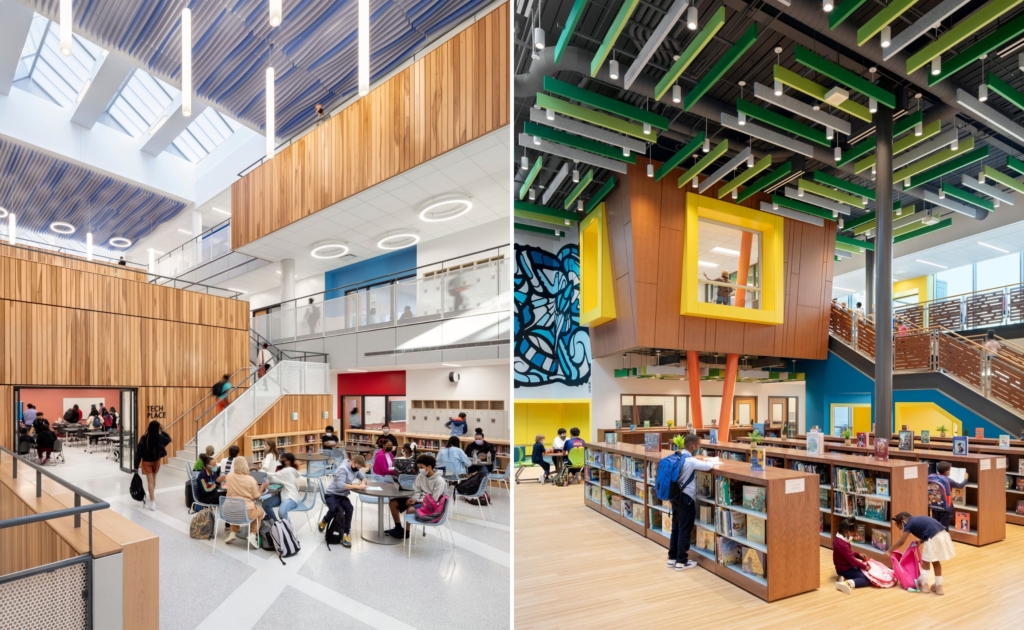
School buildings are the physical foundation for students’ intellectual, social, and emotional development. Given the substantial amount of time children spend in school—more than 7,600 instructional hours on average over their first nine years of education according to the Organisation for Economic Co-operation and Development—intentionality in the design of school facilities serves a critical role in students’ growth, experience, health, and well-being.
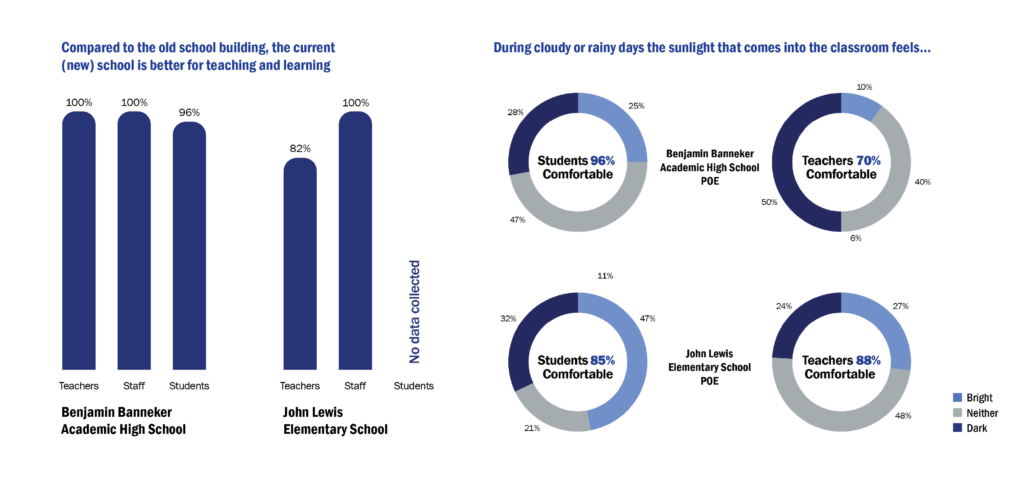
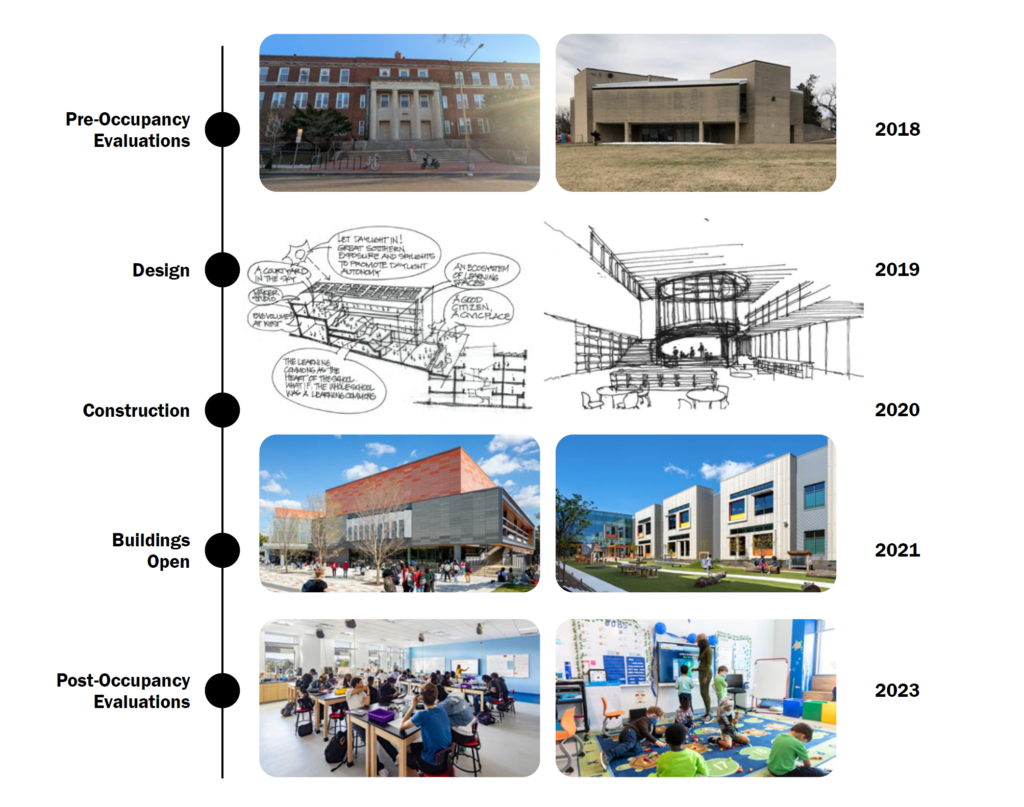
In our Net Positive Education™ (NPE) framework, a supportive learning environment is an important contributor to the health and well-being of children, teachers, staff, and the larger community. This approach leverages the tools of net zero energy (NZE) design, which requires sophisticated analysis to reduce energy usage and integrate renewable energy systems. To document the impact of NPE and NZE, we conducted pre- and post-occupancy evaluations of Benjamin Banneker Academic High School and John Lewis Elementary School, which were both completed in 2021 within the District of Columbia Public Schools’s facility modernization program. In this multiyear study, we assessed how our design strategies impacted school performance and occupants’ teaching and learning experiences, taking into account both building efficiency and the overall educational environment.
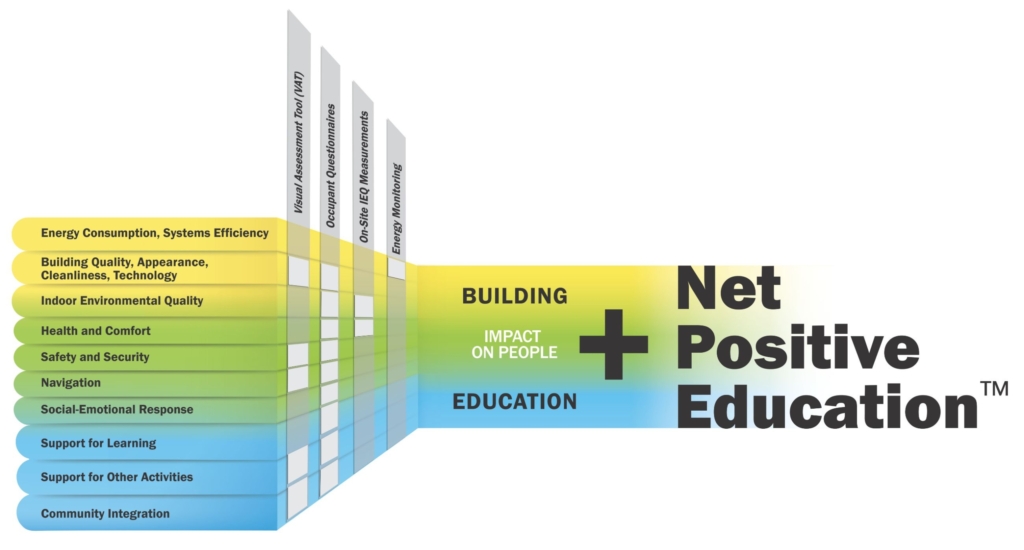
When building design and education work together to create learning environments that positively impact people, the result is Net Positive Education. The framework measures building, education,
and human impact variables (gray bars).