Design Integration
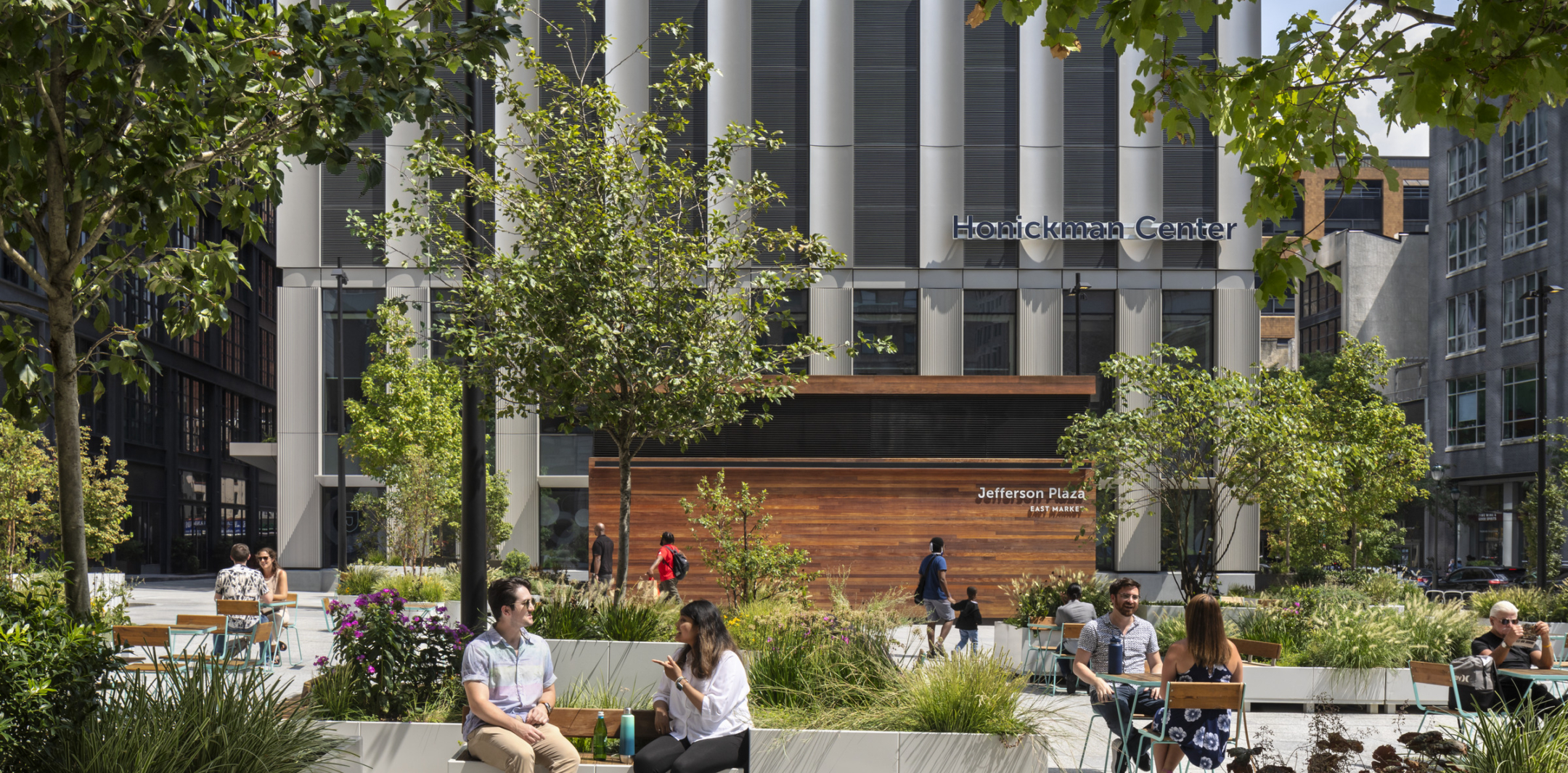
One such project, Jefferson Plaza, offers 20,000 square feet of vibrant, landscaped public space in Philadelphia’s East Market neighborhood. The plaza’s seating, tables, public art, and pavers replaced a parking garage structure—a barrier to street life—but that doesn’t mean the car park is gone. Our design team moved it underground, freeing street-level space for active, human-centered use.
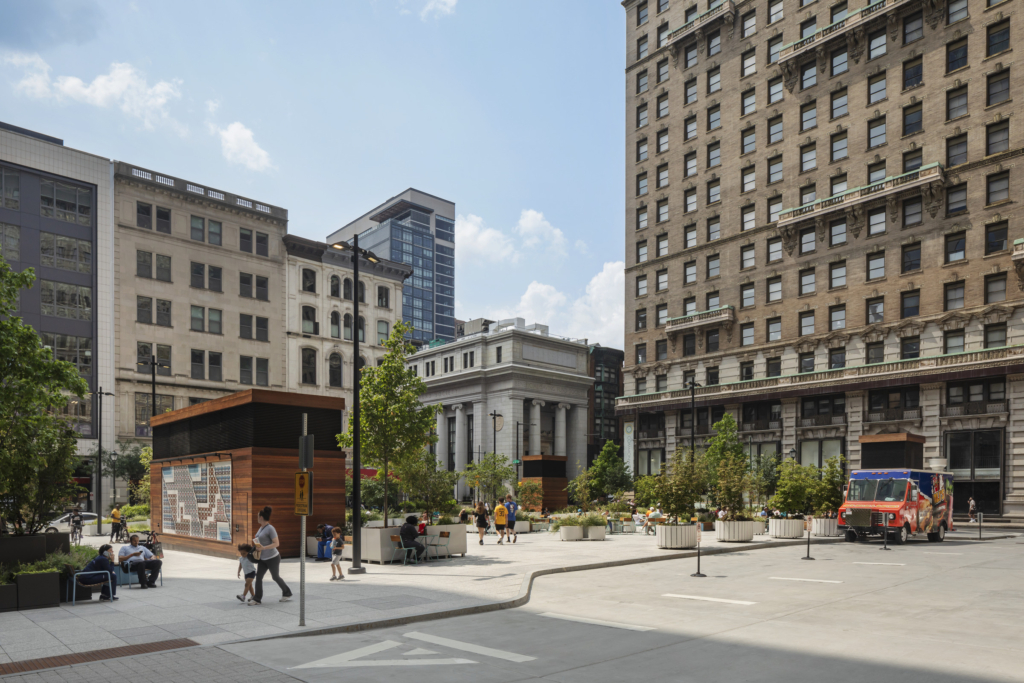
Jefferson Plaza provides a new civic gathering space serviced by food trucks along Chestnut Walk and framed by wood-clad headhouses that integrate public art.
We emphasized integration, turning infrastructure into celebrated features. Three wood-clad headhouses define the plaza’s perimeter, offering warmth and texture while discreetly housing parking garage egress stairs and ventilation shafts. The largest headhouse incorporates a public art wall that anchors the southern end of Chestnut Walk, the pedestrian corridor established by our East Market master plan that activates a full city block with connections between Market and Chestnut Streets. This densification of uses within simple, contemporary forms reflects our approach: combining a deep understanding of urban systems and contemporary technology to accommodate essential services in a welcoming new civic space.
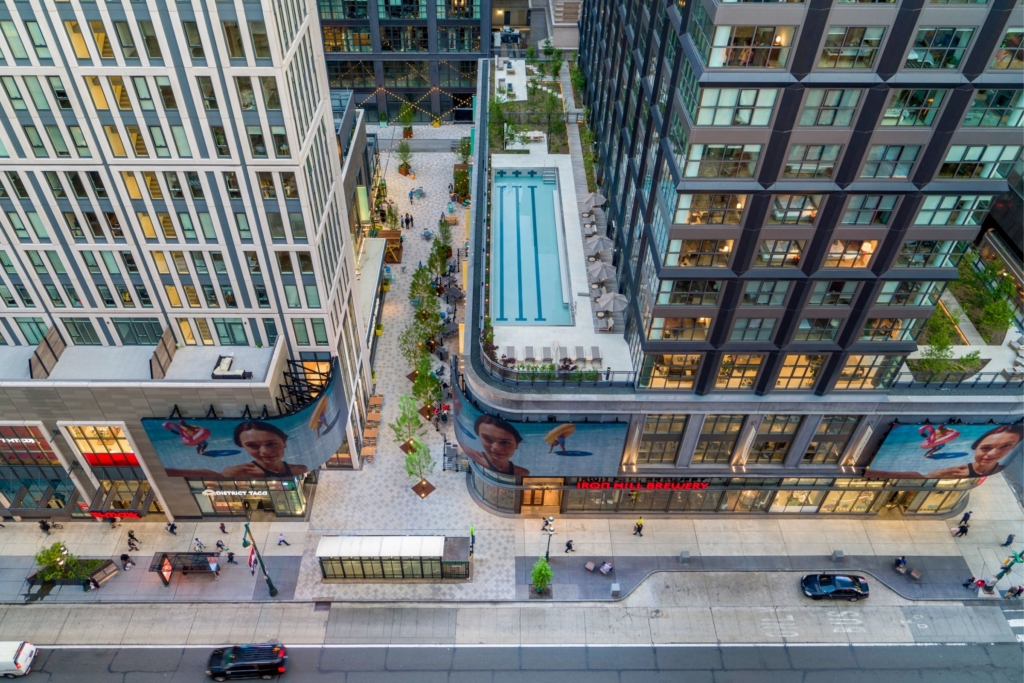
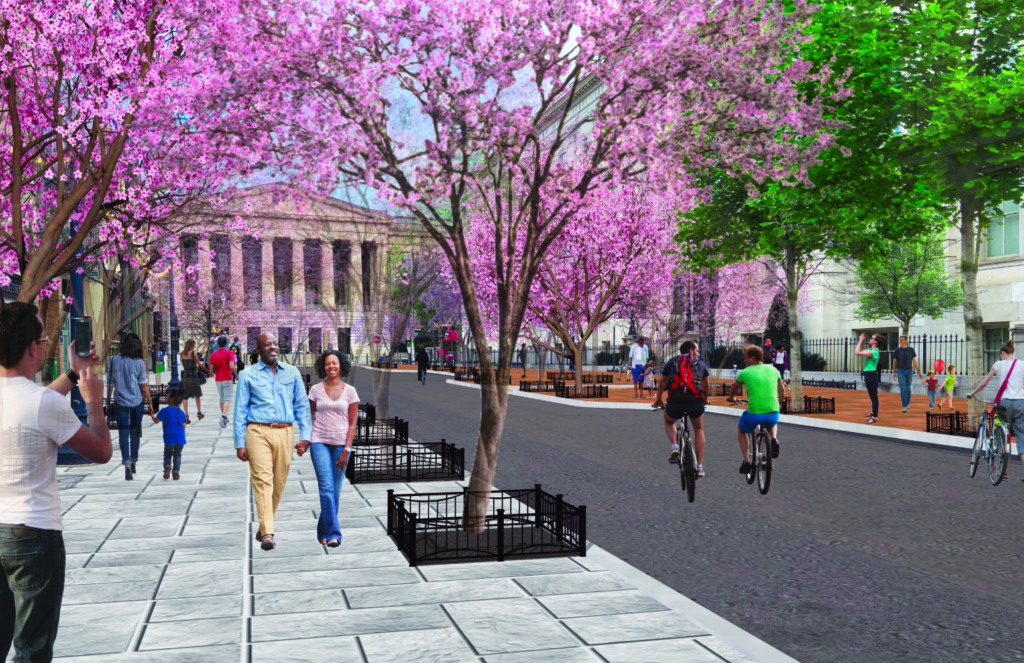
Jefferson Plaza marks the public heart of the East Market master plan, which the Philadelphia Inquirer lauded as “a model for how to do large-scale, mixed-use redevelopment in a city with a colonial-era street grid and a wealth of historic buildings.” Here, residents and visitors enjoy a revitalized district near Philadelphia City Hall. Faced with a block that had fallen into disuse, with outdated retail, vacant offices, and cross streets that were little more than service roads for trash, loading docks, and parking, we carefully allocated public space and set out a long-term strategy for how it would grow and be supported over time. At the core of our plan and inspired by the city’s historic mid-block streets that were originally created for horse-drawn carriages, Chestnut Walk is scaled for pedestrian life.
Much of East Market’s success is invisible, as rigorous planning below ground stitched together a complex network of disparate basements into parking and a new service system in which loading docks, dumpsters, and utility rooms serve the buildings that sit on the block’s six parcels.