Insights

Rethinking the Paradigm for Senior Living

Today's developments are a game changer for older adults who are increasingly active and engaged with their communities.
By Greg Gauthreaux, AIA, Associate Principal
Redefining the Notion of Aging in Place 8
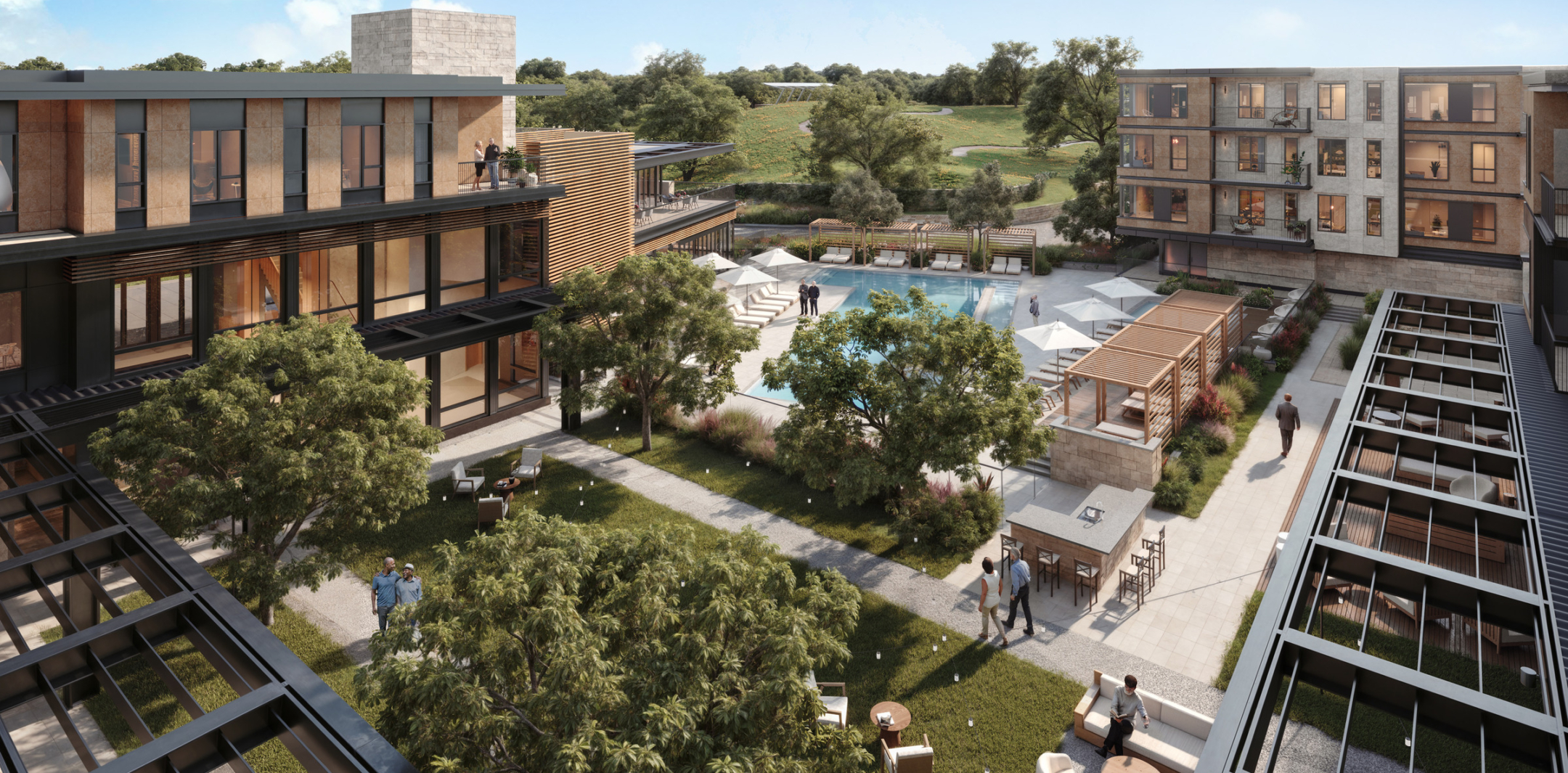
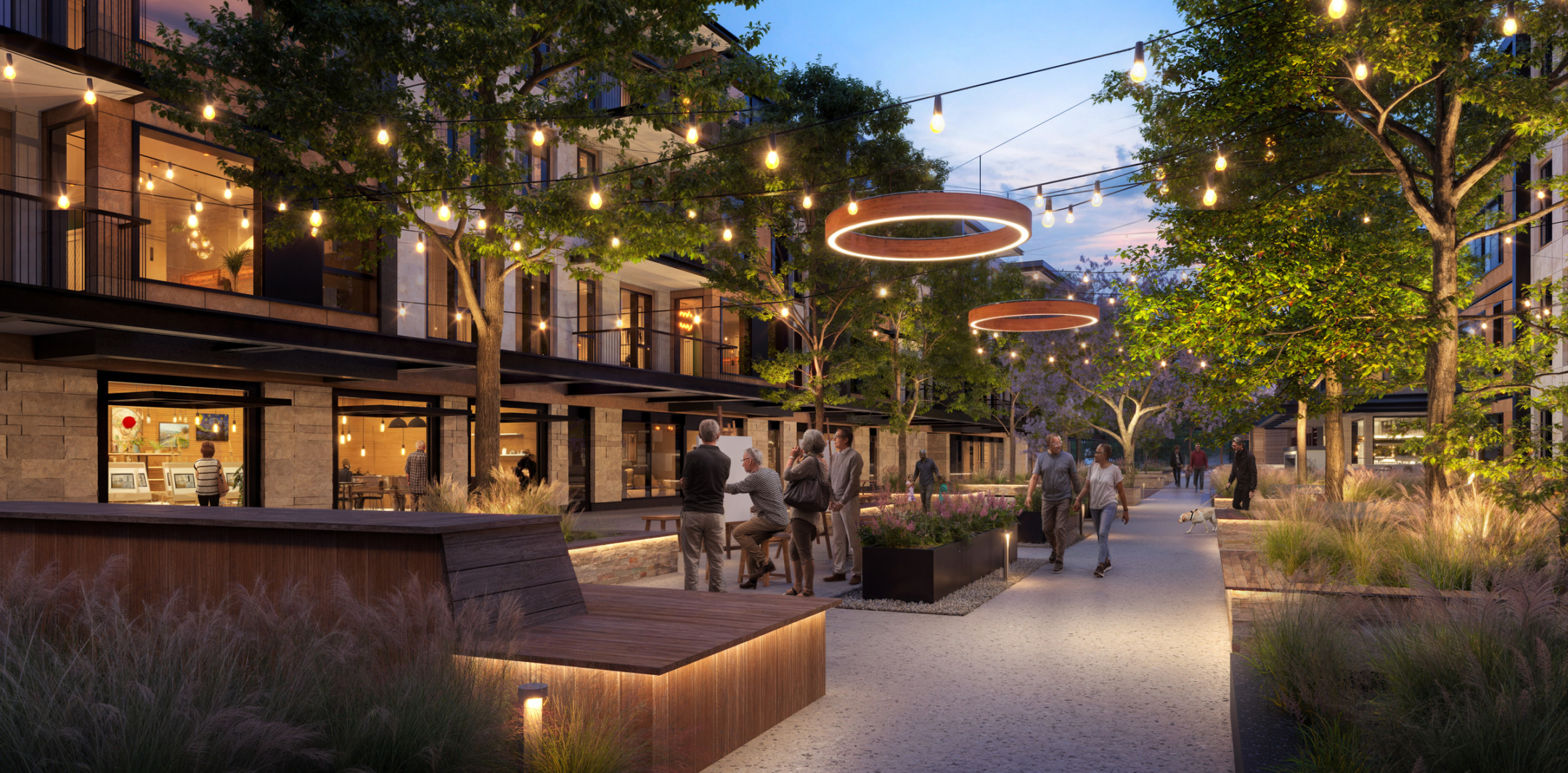
Nestled into the residential neighborhoods of Woodland Hills, CA, Livelle Mulholland, scheduled to open in 2028, offers a pedestrian street of dining and indoor-outdoor programming. Renderings © Perkins Eastman.

Senior living developers face a conundrum: The ranks of older Americans are rapidly increasing, but they are not generating a similarly expanding demand for the developments geared toward them. A recent Pew Research Center survey  found that, of the 93 percent of US adults over 65 who say they currently live in their own home or apartment, 60 percent would prefer in-home care over a move to a senior community or assisted living facility. “Ultimately, we are competing with ‘home,’” says Gretchen Cobb, the CEO for Aventur, which owns the Royal Oaks collection of senior living communities.
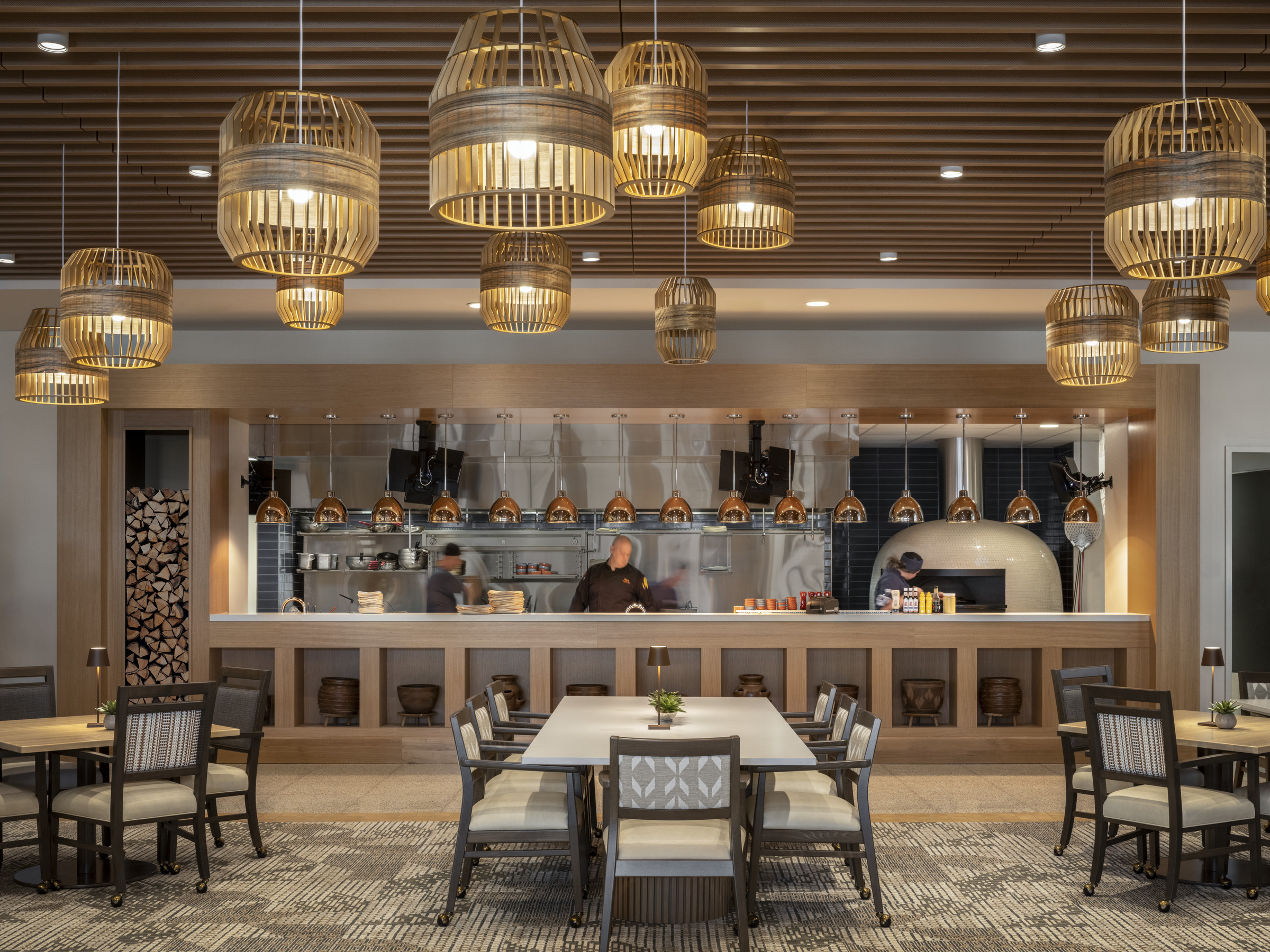
The Indigo Dining Room at Inspirata Pointe at Royal Oaks in Sun City, AZ, a senior living community, features a large window into the kitchen.

The Indigo Kitchen dining room at Inspirata Pointe at Royal Oaks in Sun City, AZ, resembles an urban destination restaurant. Photograph © Mike Kelley

Traditionally, life plan communities have been located on self-contained campuses separate from urban and suburban centers. “For a long time, those of us in senior living knew there was a portion of older adults who wanted to stay nearby, near friends, familiar retail and services, and transit,” says Brad Perkins, Perkins Eastman’s co-founder and chairman. “People want to stay in the immediate area where their church or synagogue is, but they don’t want to do their own gardening or maintenance anymore.”

Our Living studio, a merging of our residential and senior living practices, recognizes that the needs and desires of older adults—a much more active cohort than previous generations—are focused on lifestyle and wellness.
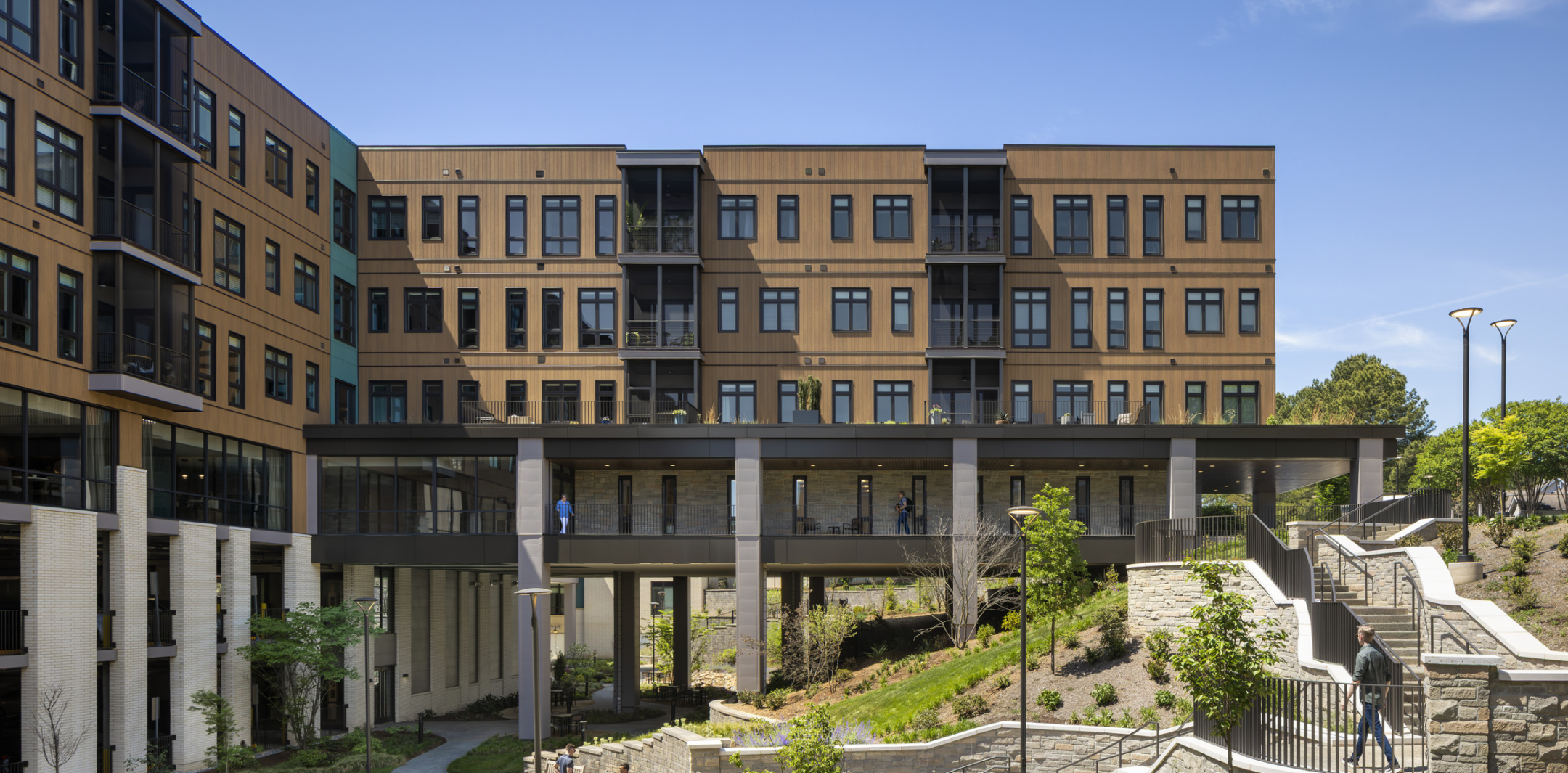
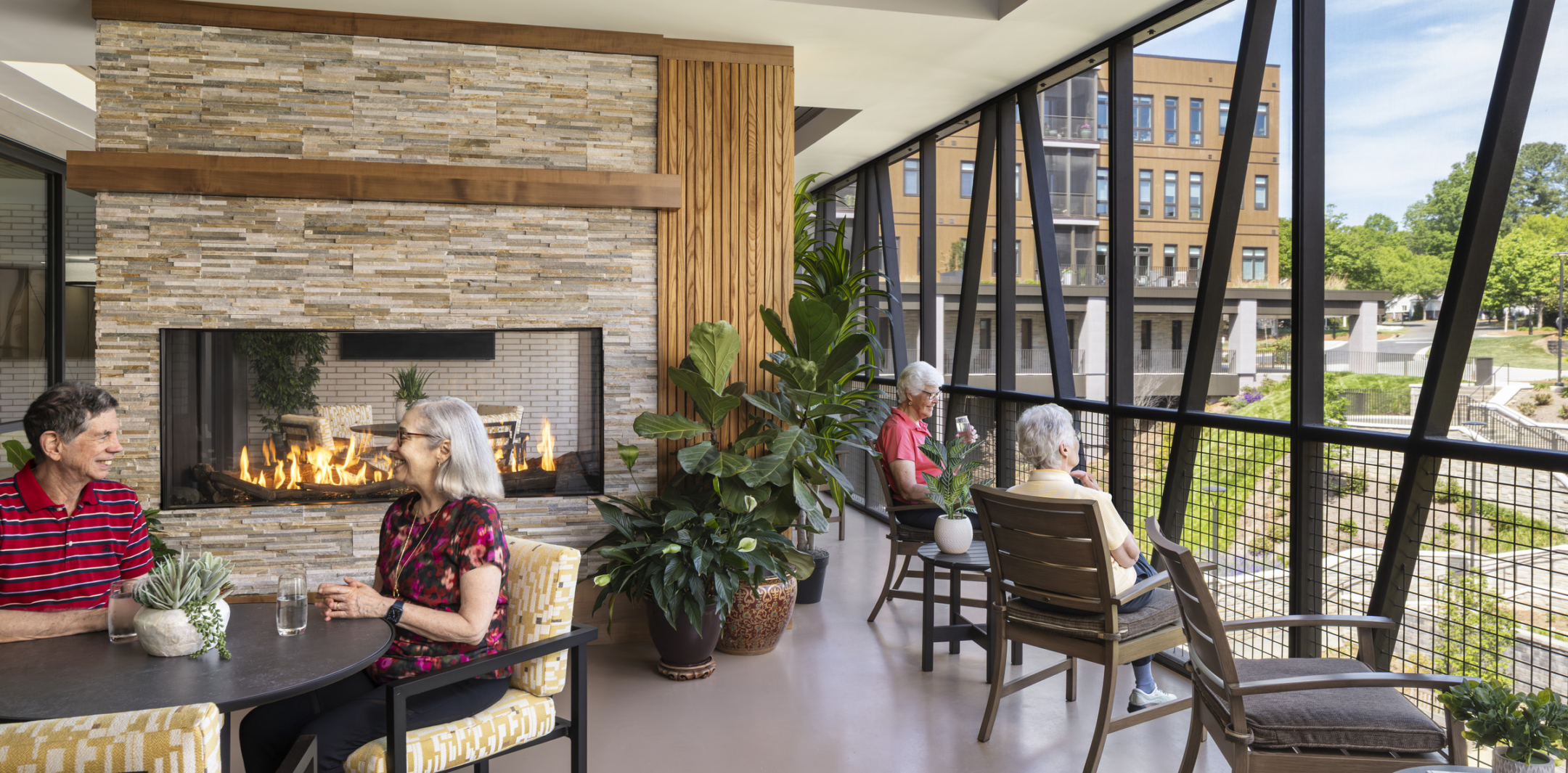
The Forest at Duke in Durham, NC, is evolving its life plan community through integrated independent living and small house care environments designed to support connection, belonging, and long-term well-being. Photographs by Andrew Rugge/© Perkins Eastman

Blurring the Lines Between Multifamily and Senior Living

Many of today’s seniors still work, extending their careers beyond traditional retirement age or pursuing a third act, and they are more physically active and socially engaged than their predecessors. Conceiving ways to support these lifestyle changes in senior living projects “starting from the premise of a more contemporary multifamily residential project,” Seattle Managing Principal Wolf Saar explains. The dining options, for example, resemble restaurants rather than cafeterias; the gym is geared toward fitness, health, and wellness rather than rehab; space is often provided for coworking; and workspaces are included within the living units. “Residents are becoming more discerning,” says Daena Tamborini Padilla, a Principal in the senior living practice. “To expand the market, providers are looking at market-rate competitors for inspiration to attract seniors in to their developments.”

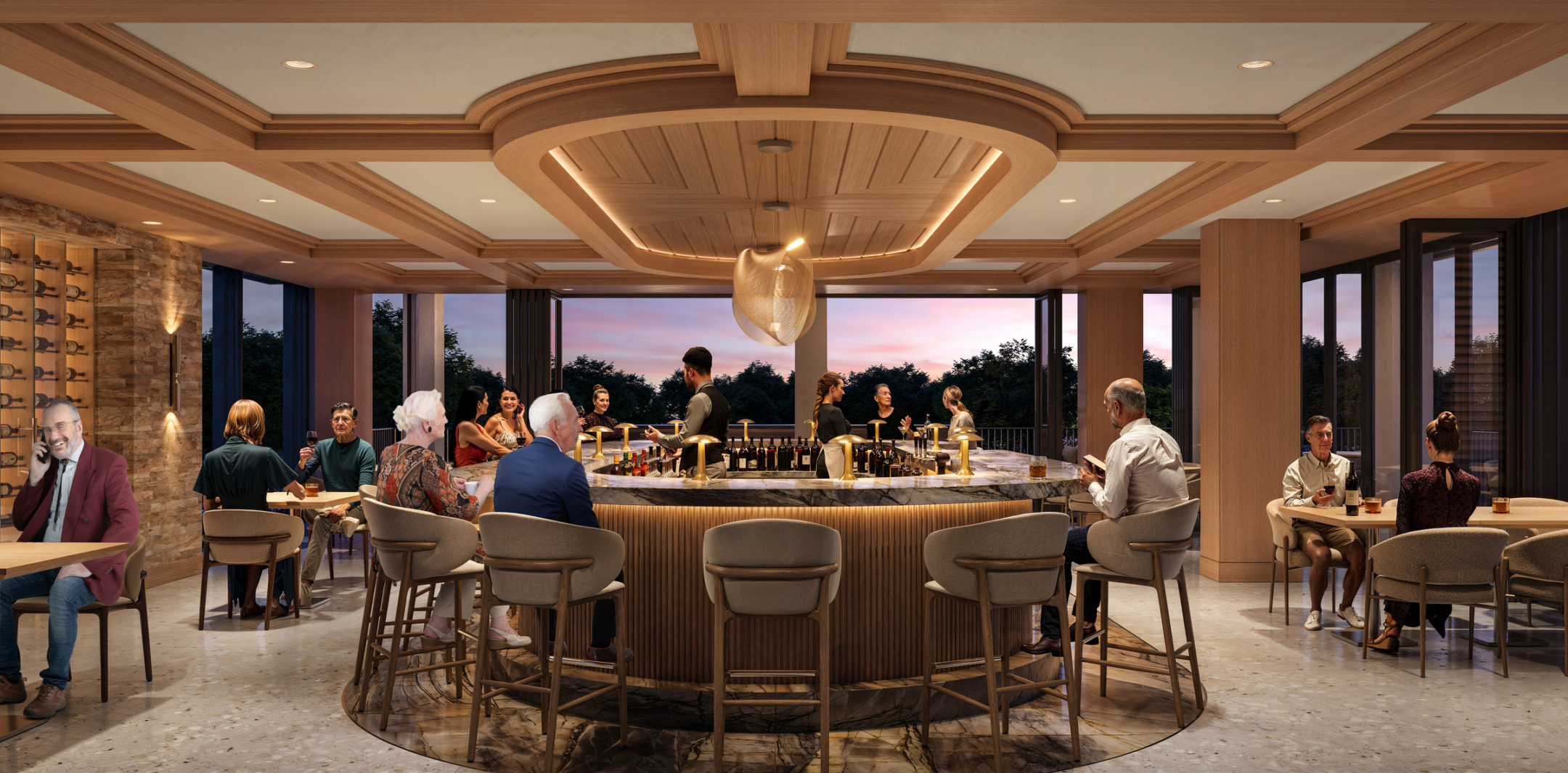
Livelle Mulholland prioritizes wellness, with a resort-style pool, spa and fitness center, and walking trails across its 19-acre site. An indoor-outdoor wine bar (right) also embraces the Southern California lifestyle.

Our Senior Living projects move beyond conventional multifamily thinking by optimizing every decision for lifestyle, accessibility, and the long-term realities of aging in place. In addition to prioritizing market-driven amenities, senior living demands that all spaces be simultaneously designed for resident wellbeing, caregiver workflows, and physical adaptability as needs evolve. Such gestures include increased accessibility and maneuvering clearances, controllers for doors and cabinets, and durable materials and finishes. “How can your community allow your residents to age in place for as long as possible? That’s when we come in,” says Senior Living Practice Leader Alejandro Giraldo.

Blending into Existing Urban and Suburban Neighborhoods
Redefining the Notion of Aging in Place 13

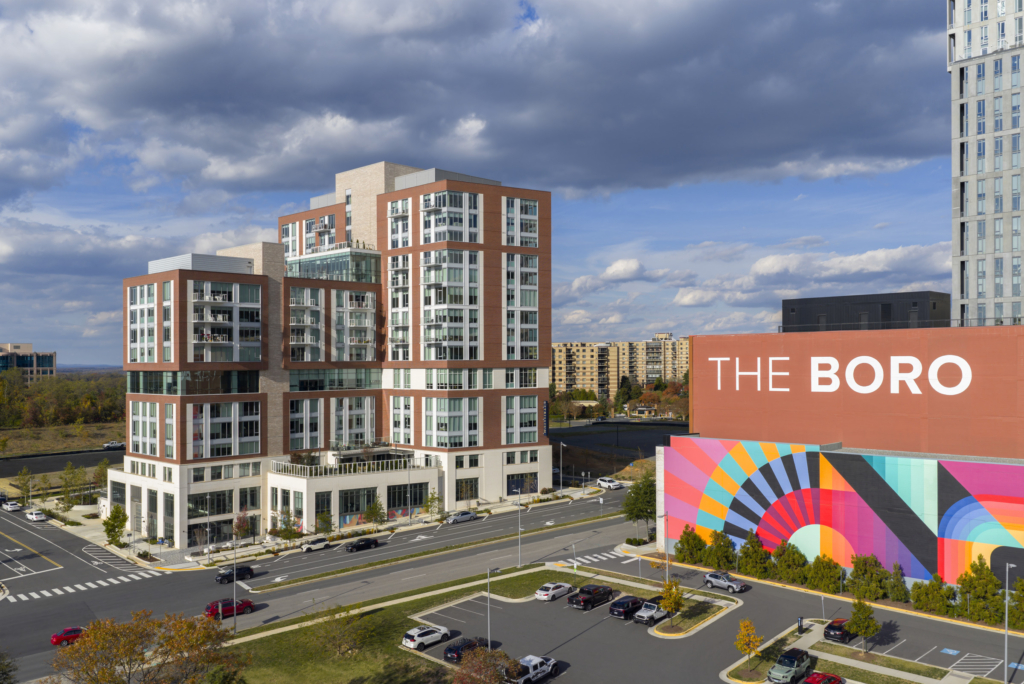
The Trillium Tysons was strategically sited in a fast-growing area around the Boro mixed-use district and the adjacent Tysons Galleria mall in Northern Virginia. Photograph © Joseph Romeo

The Trillium Tysons in Northern Virginia, just outside Washington, DC, is a 15-story building that is connected to a large park at the center of the bustling, mixed-use Boro district and convenient to the area’s luxury shopping mall.  Silverstone Senior Living, a longtime developer of assisted living and memory care communities, built Trillium in response to the seniors’ shift toward lifestyle priorities.

Redefining the Notion of Aging in Place 14

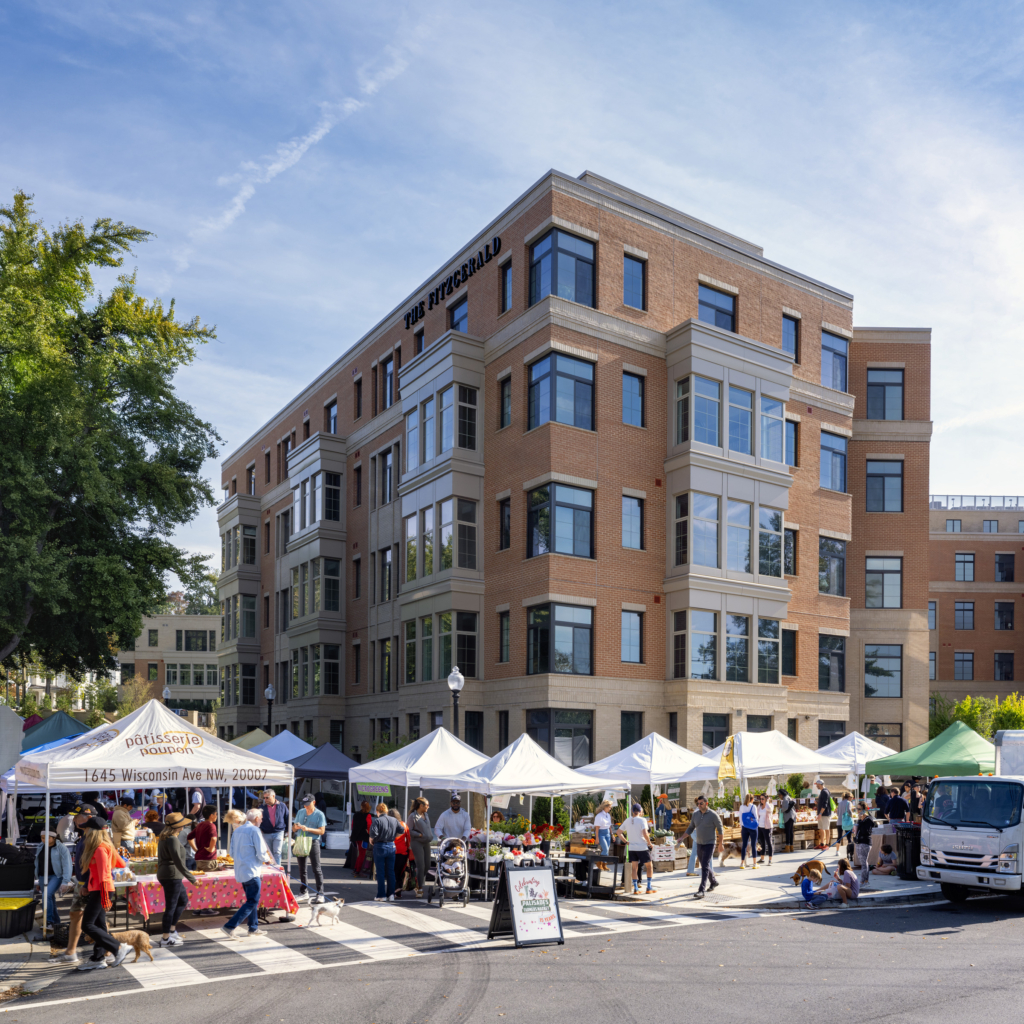
The Fitzgerald at Palisades in Washington, DC, is located in an urban neighborhood with a farmers market, shops, restaurants, and parks. Photograph © Joseph Romeo

Perkins Eastman also designed The Fitzgerald of Palisades in Washington, DC, developed by Trammel Crow with an active lifestyle in mind. Its monthly fees support robust social programming such as regular cocktail hours, cooking demonstrations, cultural outings, and wellness activities. In meeting the market’s desire for active, home-like, in-town environments, Silverstone and Trammel Crow are emblematic of senior living developers who “want to deliver multifamily- or hospitality-inspired projects,” Residential Practice Leader Brett Swiatocha says. At the same time, he adds, “we’re now seeing our multifamily developer clients and potential clients moving into senior living.”

With the population of Americans over 65 growing by 13 percent between 2020 and 2024, according to the US Census Bureau, the key is to appeal to the lifestyle priorities of this new generation of older adults.

For media inquiries, please reach out to: news@perkinseastman.com.