Insights

Sustainable Material Choices, from Facades to Flooring, Benefit People and the Planet

Perkins Eastman’s Materials Action Plan informs design decisions for both user and environmental health.
By Jane Hallinen, NCIDQ, IIDA, LEED Green Associate, WELL AP, Senior Associate,
and Yeri Caceres, WELL AP, LEED AP ID + C
Sustainable Material Choices, from Facades to Flooring, Benefit People and the Planet 1
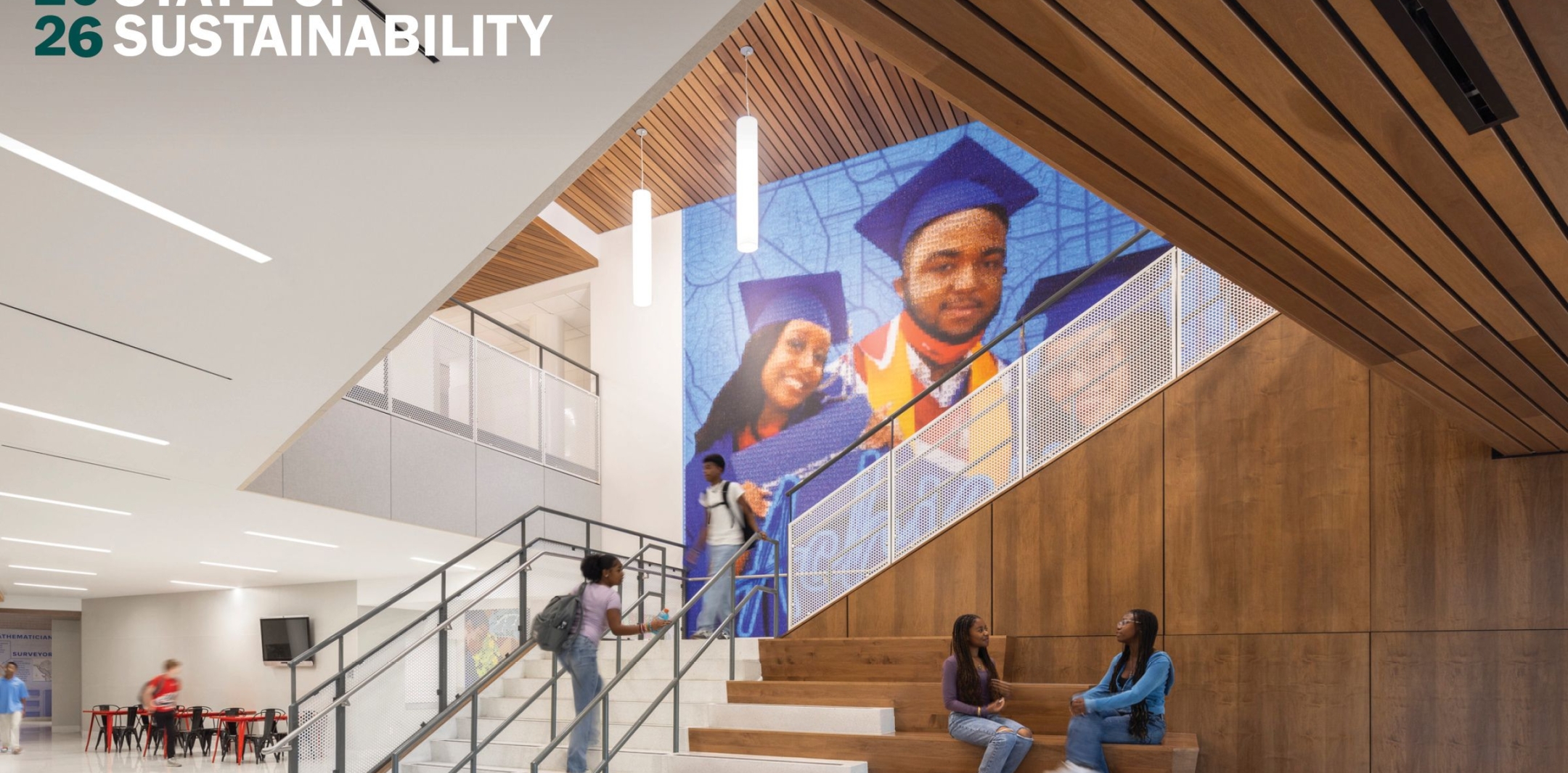
Benjamin Banneker Academic High School in Washington, DC, earned both LEED and WELL Platinum certifications. Photograph © Joseph Romeo

This is the second in a series of posts expanding on our 2026 State of Sustainability.

Building design requires thousands of material choices: exterior wall systems, structural and mechanical systems, glazing, lighting, and interior finishes are just a few.

When it comes to building products, transparency, accountability, and industry alignment are foundational in order to drive meaningful change toward a more sustainable and healthier built environment. Design practitioners, however, continue to face obstacles such as limited disclosure information, supply chain complexity, forced labor, and widespread greenwashing.

To navigate these challenges and embrace our role—and responsibility—as stewards of the built environment, our practice has developed a Materials Action Plan (MAP) for the first time to accompany our annual State of Sustainability report. It is intended to be a living document that will be updated as industry practices and material-production technology evolve, providing clear steps for our design teams to choose the most environmentally friendly materials practicable for each project.

Good Design Is Simple, Informed, Intentional, and Durable

Every design decision and material specification matters, because poor choices lead to poor sustainability outcomes. The MAP is based on the following principles of good design:

  • We strive to simplify the material palette.
Sustainable Material Choices, from Facades to Flooring, Benefit People and the Planet 2

Perkins Eastman’s Pittsburgh studio, designed with minimal structural interventions, is free of nonessential materials. Photograph by Andrew Rugge/© Perkins Eastman

  • We design with each material’s carbon impact in mind.
Sustainable Material Choices, from Facades to Flooring, Benefit People and the Planet 3

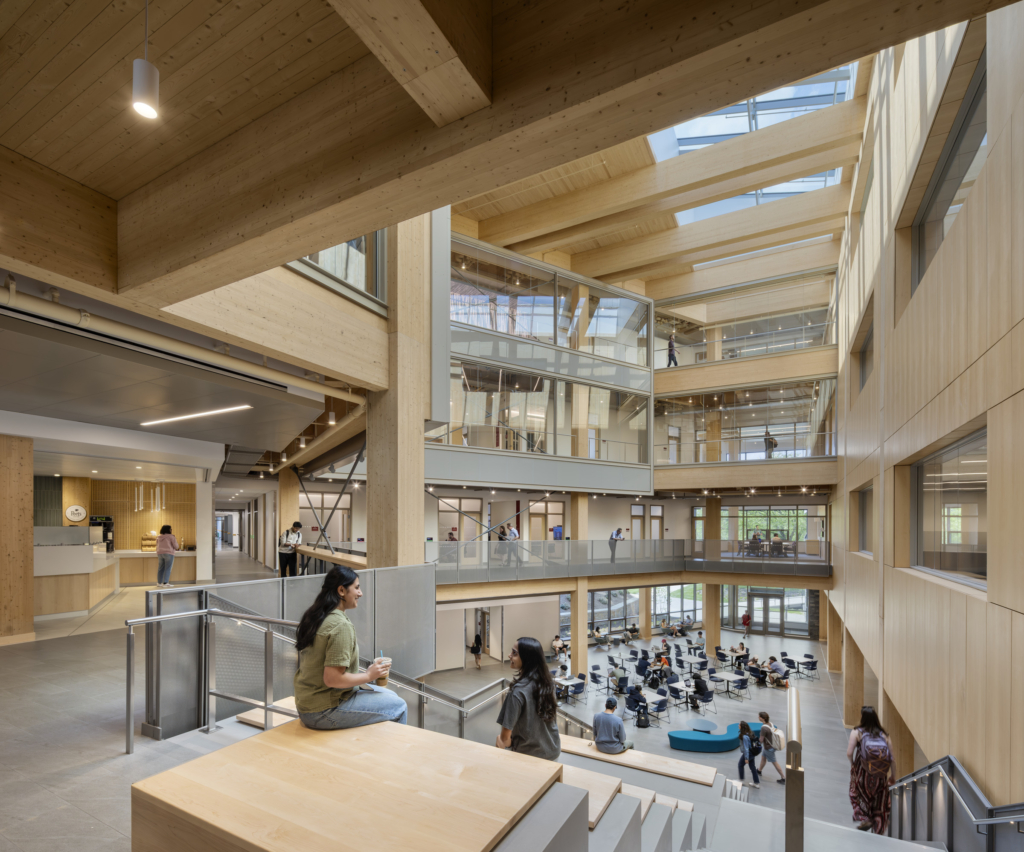
Mass timber offers a 60-percent carbon reduction at the University of Massachusetts-Amherst’s Manning College of Information and Computer Sciences. Photograph by Andrew Rugge/© Perkins Eastman

  • We select materials to meet each project’s aesthetic, functional, and financial goals.
Sustainable Material Choices, from Facades to Flooring, Benefit People and the Planet 4

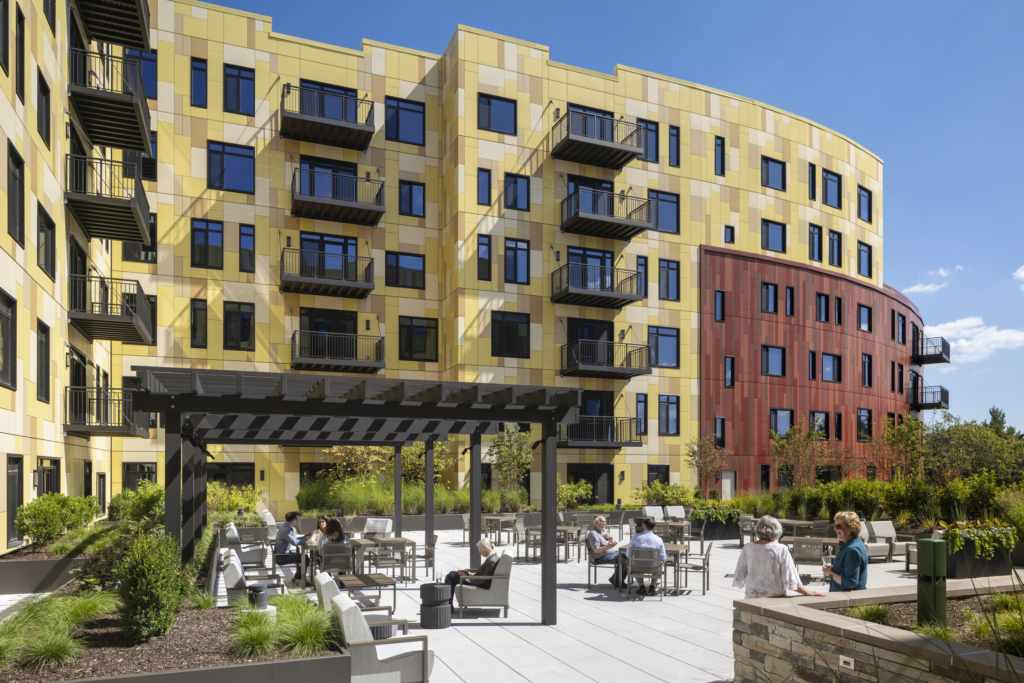
Embodied-carbon calculations informed our choices for the façade at 2Life Communities: Opus Newton in Newton, MA, and window selections were made to Passive House standards.
Photograph by Andrew Rugge/© Perkins Eastman

  • We design the material palette for durability to match the projected project life span. We also consider the recycling possibilities for a building’s materials at the end of its life.
Sustainable Material Choices, from Facades to Flooring, Benefit People and the Planet 5

Long-lasting terrazzo flooring was specified for Benjamin Banneker Academic High School in Washington, DC. Photograph © Joseph Romeo

Good Design Decisions Inform Smarter Material Selection

Sustainable Material Choices, from Facades to Flooring, Benefit People and the Planet 6

After good design principles have been considered, we move on to the process of smarter material selection:

  • Provenance: We consider reused, repurposed, and salvaged materials before opting for new products.
  • Transparency: We prioritize materials that offer transparent documentation, because we need data to inform our decisions.
  • Optimization: We avoid key classes of chemicals, focus our efforts on high-touch and high-quantity materials, and select the best products in line with material-health considerations.
  • Follow through: We improve our practices by tracking our project material data under the AIA 2030 Commitment climate strategy and reporting it annually under our AIA Materials Pledge.
Smarter Materials Action Plan

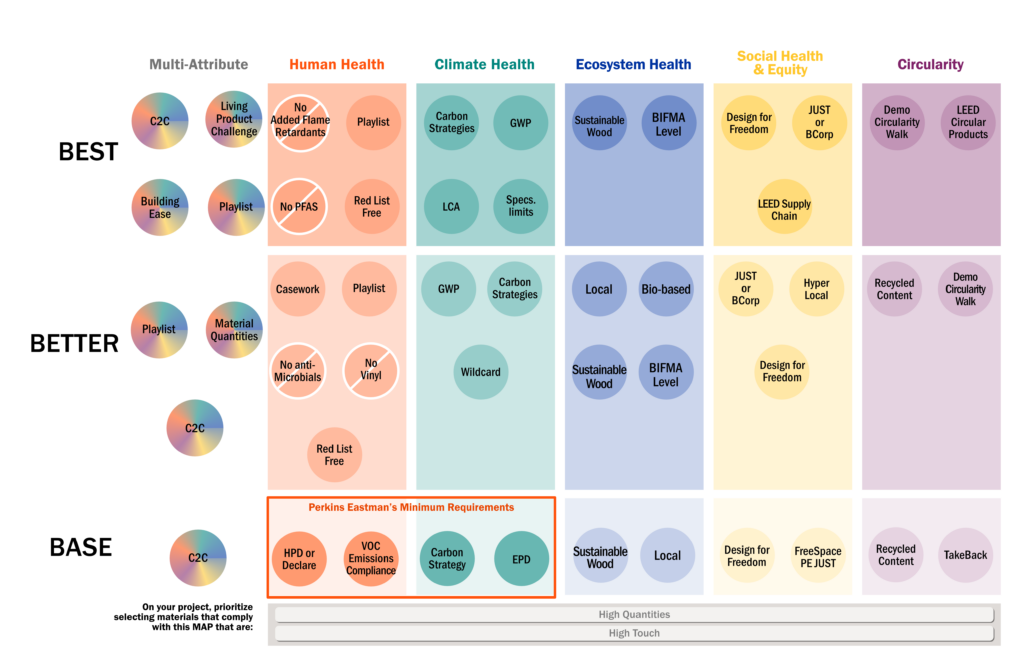
Our MAP aligns with the five impact categories of the Common Materials Framework, a shared language for product sustainability created by mindful MATERIALS. We then replicate the strategies in those categories and group them into tiers of Base, Better, and Best. This allows project team members to use this framework for all project types and scales.

Sustainable Material Choices, from Facades to Flooring, Benefit People and the Planet 7

Starting in 2026, Perkins Eastman requires projects to meet a baseline of mandatory thresholds,
which are outlined in orange.

Once the minimum requirements are met, we ask project teams to outline strategies in each column and tier or in any combination that best aligns with client or project sustainability goals.

The Materials Action Plan in Action

Material health, sustainable product sourcing, and efficient systems have guided our design choices for two workplaces on the East Coast: The Federal Home Loan Bank in Pittsburgh and the new headquarters for the Society for Science in Washington, DC.

Sustainable Material Choices, from Facades to Flooring, Benefit People and the Planet 8

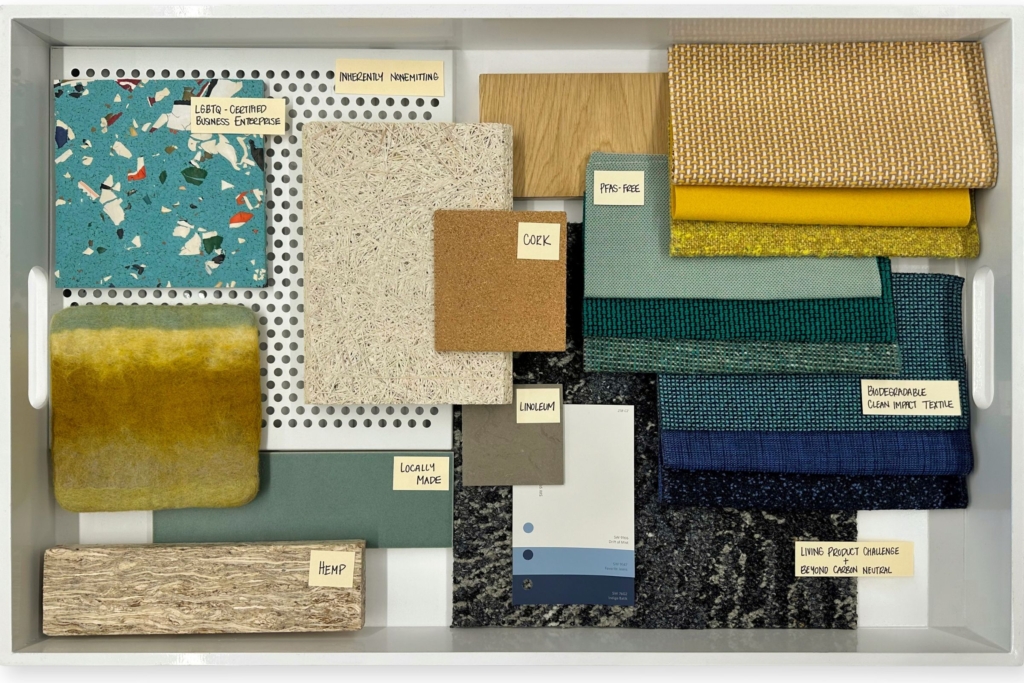
The Federal Home Loan Bank of Pittsburgh interiors include a locally sourced accent table and carpet produced through renewable energy that features biophilic patterns. Photograph by Andrew Rugge/© Perkins Eastman

The design team for The Federal Home Loan Bank of Pittsburgh’s interiors chose bio-based wood flooring, sustainably certified commercial furnishings, “B Corp” vendors that meet rigorous standards of social and environmental performance, and products with Declare labels, at-a-glance disclosures of their sourcing and manufacturing information.

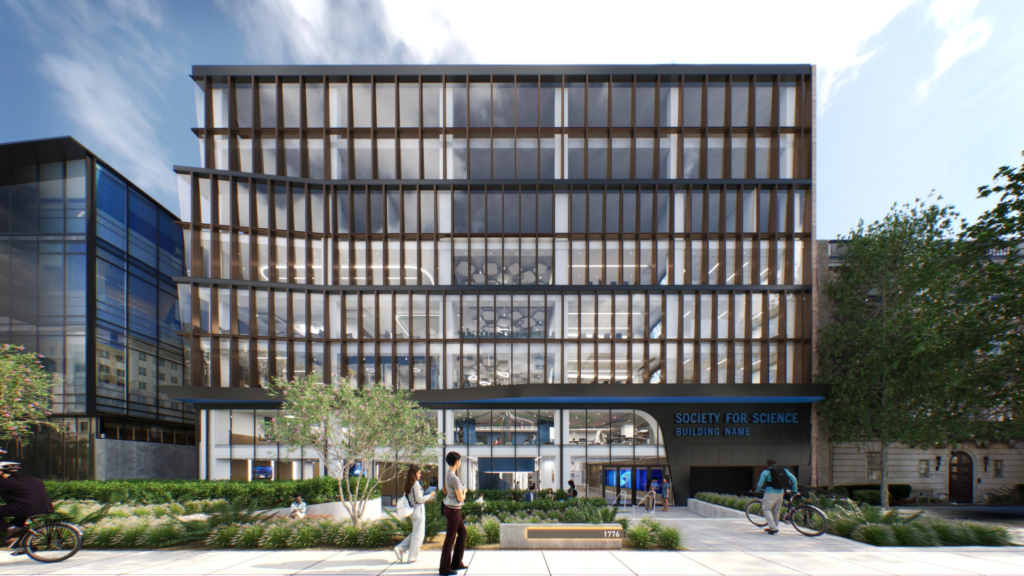
The design for the Society for Science’s new headquarters emphasizes material health, sustainable sourcing, and product transparency through the selection of materials with environmental and health disclosures.

Sustainable Material Choices, from Facades to Flooring, Benefit People and the Planet 9

Healthy materials choices start with the reuse of an existing building for the Society for Science headquarters, set to open in 2027. Rendering © Perkins Eastman

The building’s new exterior cladding includes metal with Declare labeling and Cradle to Cradle glazing that supports material health, is recyclable, and is free of hazardous chemicals. Its HVAC systems use alternative refrigerants with lower global-warming potential than the harmful hydrofluorocarbons that are traditionally used in commercial air conditioning. The landscaping, furthermore, incorporates sustainable native plantings.

Prioritizing Industry Partnerships and Product Transparency

We are expanding our project team’s access to vetted green-product research through partnerships with Material Bank, a one-stop-shop for material sampling with carbon-neutral shipping, and BuildingEase, a tech platform for research, procurement, and data exchange on sustainable materials.

We are also strengthening our physical material libraries through the efforts of our in-house Library Steering Committee, which is standardizing review criteria and policies across our offices. In parallel, we are updating specifications to include clear material health and sustainability standards directly within our project documentation. We continue to require transparency and documentation from manufacturers to address industry concerns regarding ingredients, supply chain, and workforce, knowing that industry-wide change can only occur through our close collaboration and aligned goals for a healthier planet.

For media inquiries, please reach out to: news@perkinseastman.com.