Insights

The Proliferation of AI Reinforces the Need for Architectural Sketching by Hand

The hand remains the original and best “digital” tool available to architects.
By Mike Kane, Senior Associate and Visualization Director
The Proliferation of AI Reinforces the Need for Sketching by Hand
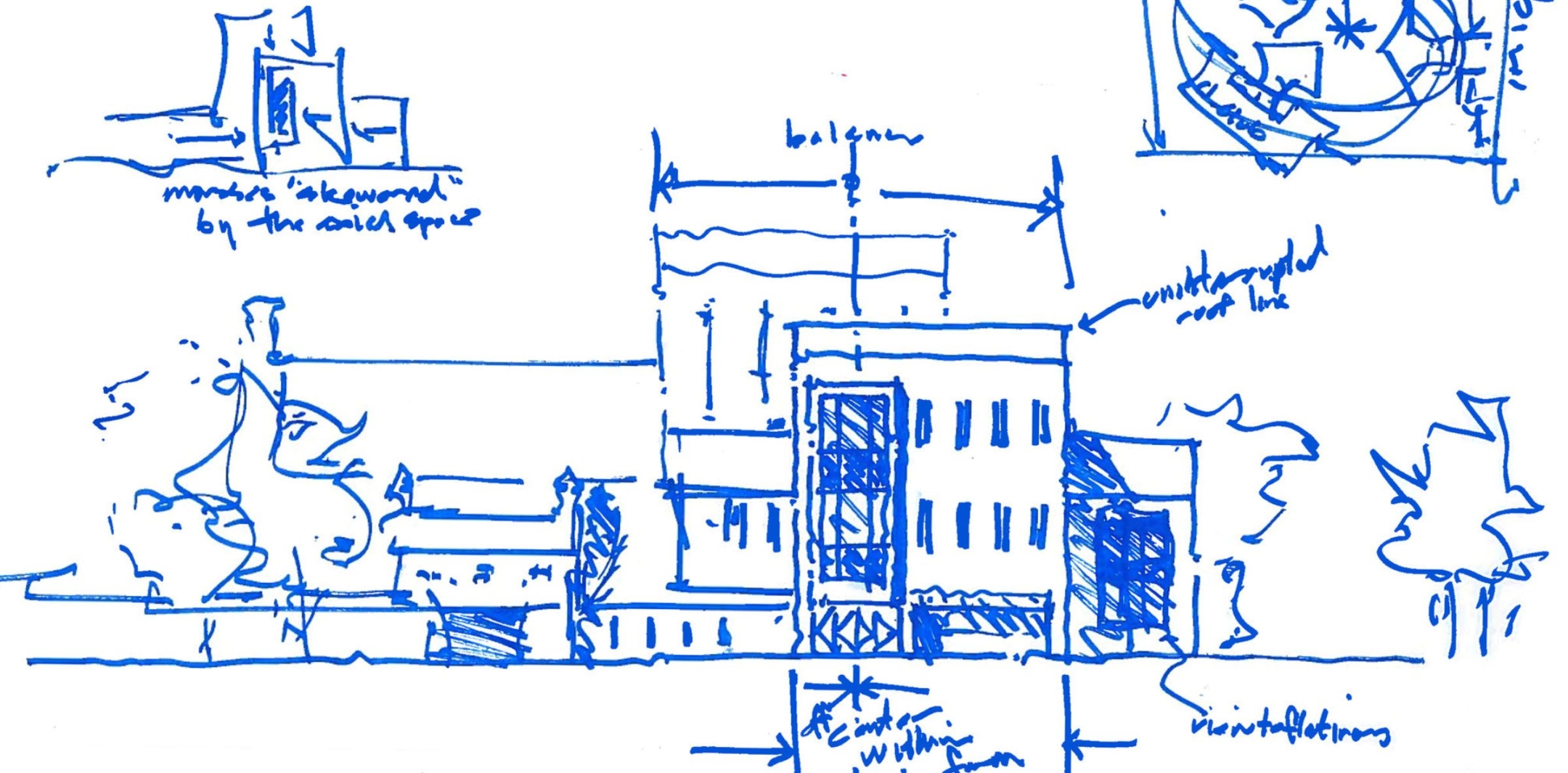
Hand-drawn sketches by our staff members are fundamental to the digital design work that follows. All sketches and graphics © Perkins Eastman

Architectural practices are busy building technology stacks that can contain hundreds of software applications, including design modeling, specifications, simulation, and presentation graphics. Firms’ adoption of AI-assisted design platforms is growing too. In environments where outcomes are programmed in zeros and ones, the drafting board could be considered obsolete. Not so. Design architects retain an asset that bests any digital technology: sketching by hand.

The Proliferation of AI Reinforces the Need for Sketching by Hand 3

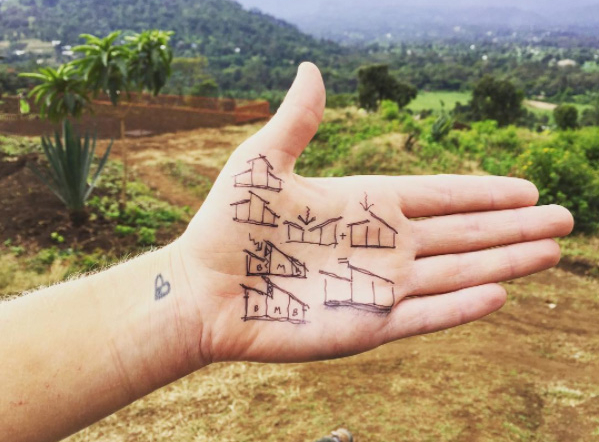
Concept sketches for a former colleague’s self-build project in Arusha, Tanzania, are conveyed via the original digital practice.
Photograph Courtesy Mike Kane

As our visualization director, I spend my days almost entirely in the digital realm, as do my colleagues, creating visual documentation for our design teams and advocating for the evaluation and adoption of new tools, including some powered by AI.

The software we have at our fingertips allows us to create striking three-dimensional imagery with increasing greater speed and efficiency. Until recently, digital visualization was mostly outsourced to specialty studios, but now we can create high-quality imagery in-house. However, our personal connection to project concepts can get lost in the process. To reconnect, our designers constantly revert to the primordial design tool: drawing by hand. That’s why we are planning a series of firmwide sketching workshops this year featuring dozens of our talented practitioners. The goal is to deepen our culture of conceptualizing, exploring, explaining, and problem-solving with pencil and paper.

AI-generated sketches, watercolors, and other imagery may mimic the work of the hand, but the engines that create them are susceptible to what have become known as hallucinations, adding details that are either out of place or entirely nonsensical. This makes honing our own skills ever more essential.
The Proliferation of AI Reinforces the Need for Sketching by Hand 2

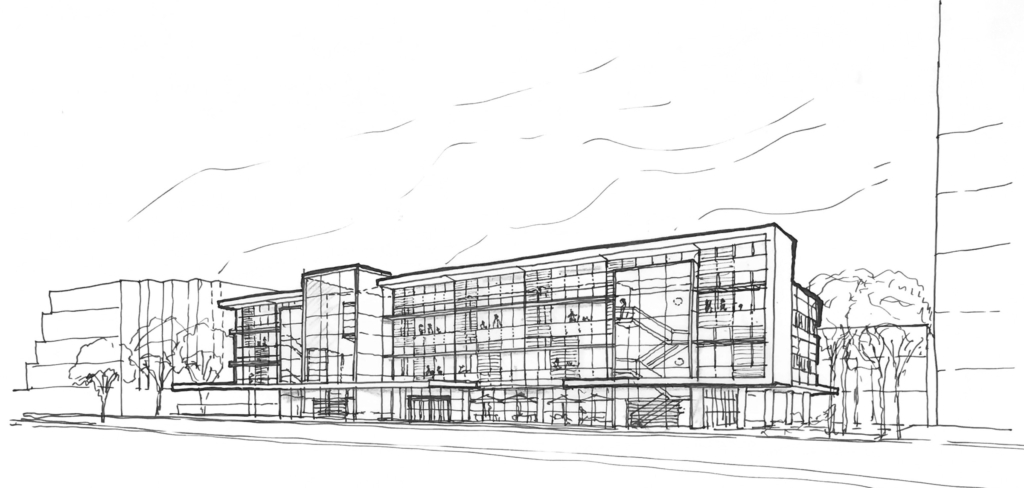
An early design sketch by Associate Principal Sina Yerushalmi shows options for the size, shape, and character of a proposed building for Providence St. John’s Health Center South Campus master plan in Santa Monica, CA.
 

In Praise of the Sketchbook

Hand sketching remains a crucial skill for architects in this environment. When someone is drawing from life, a direct connection between hand, eye, and brain develops. No matter the style, the act of drawing requires the designer to know their subject (whether a person, building, or landscape), relate it to its context, understand how it reacts to light, and how light reacts to it. By continually analyzing and seeking to comprehend the size and shape of the world around them, architects develop the ability to visualize the built form of design solutions. Le Corbusier famously characterized architecture as “the masterly, correct, and magnificent play of masses brought together in light.” The habit of drawing enables architects to see that play in their minds and commit it to paper. In the earliest stage of the design process, digital tools lack the necessary immediacy to respond to this type of iteration. They may even impede the creative flow.

The Proliferation of AI Reinforces the Need for Sketching by Hand 4

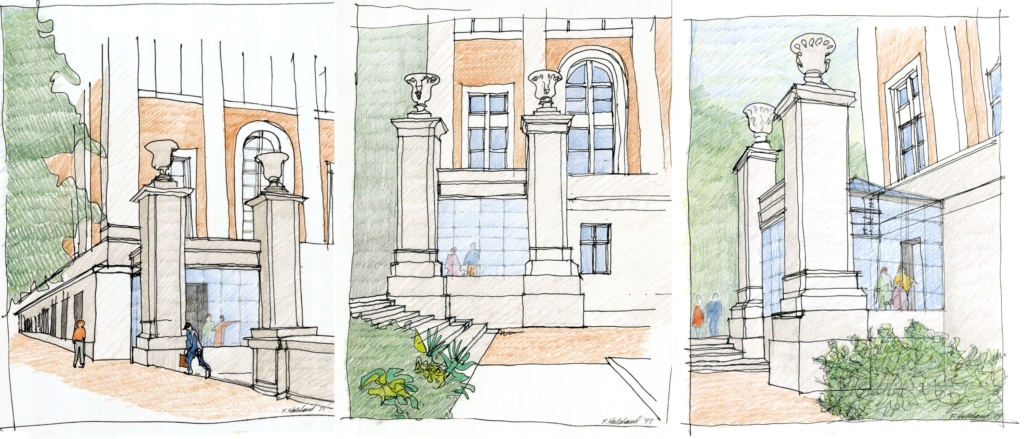
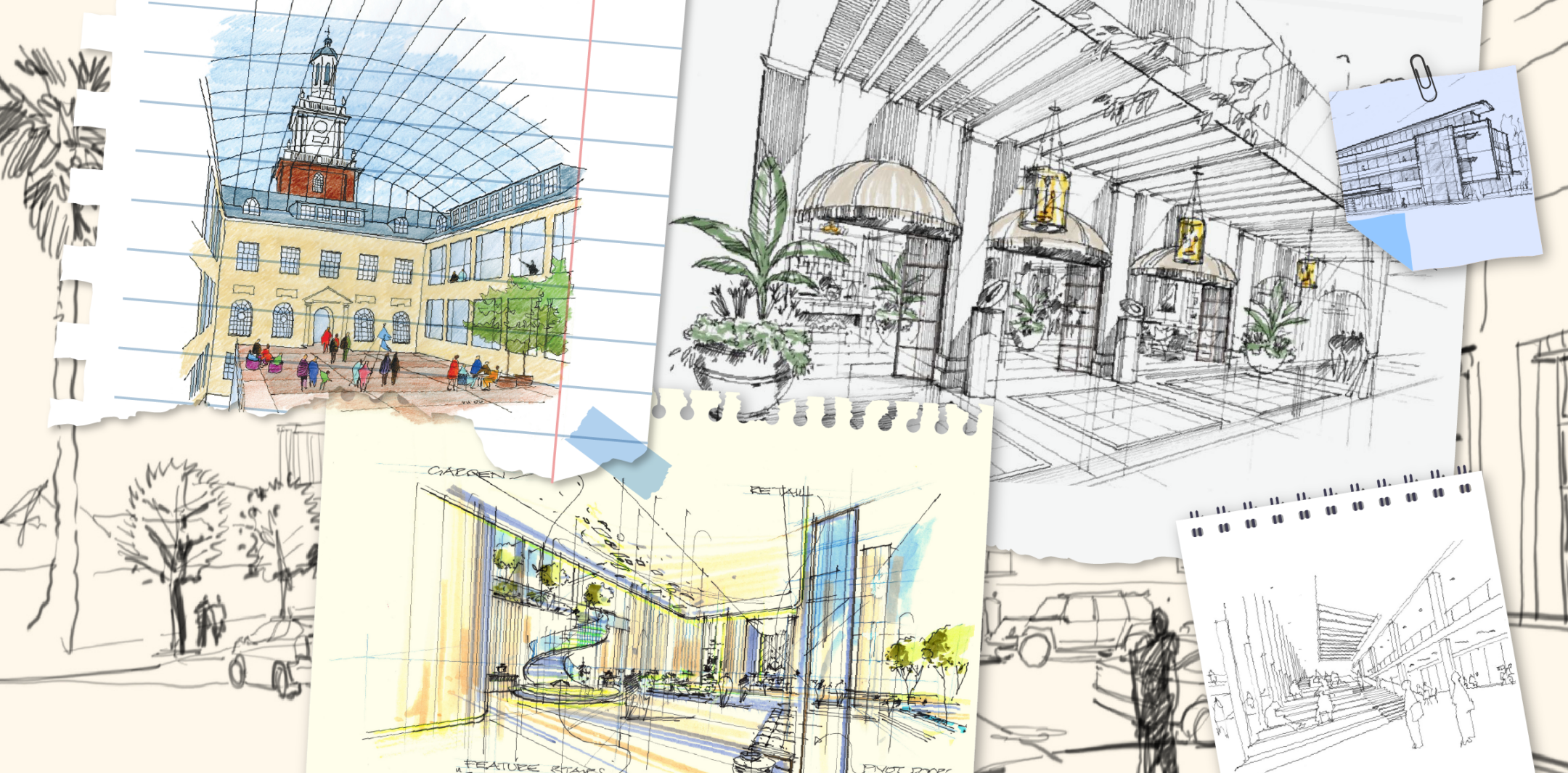
Principal Frances Halsband’s design sketches offer experiential views of a glass-enclosed entry pavilion at
Columbia University’s Hamilton Hall in New York.

Digital tools are foundational to our practice. But we must not allow them to morph into anything other than tools; designers provide the creative spark for our projects. Drawing is thinking aloud in a way that is visible and coherent, and it results in a physical artifact. Even if one ends up with a wastepaper basket full of crumpled tracing paper covered in spidery lines, each of those marks had a purpose. Sketching iteratively will always remain more immediate than programming those iterations through a computer.

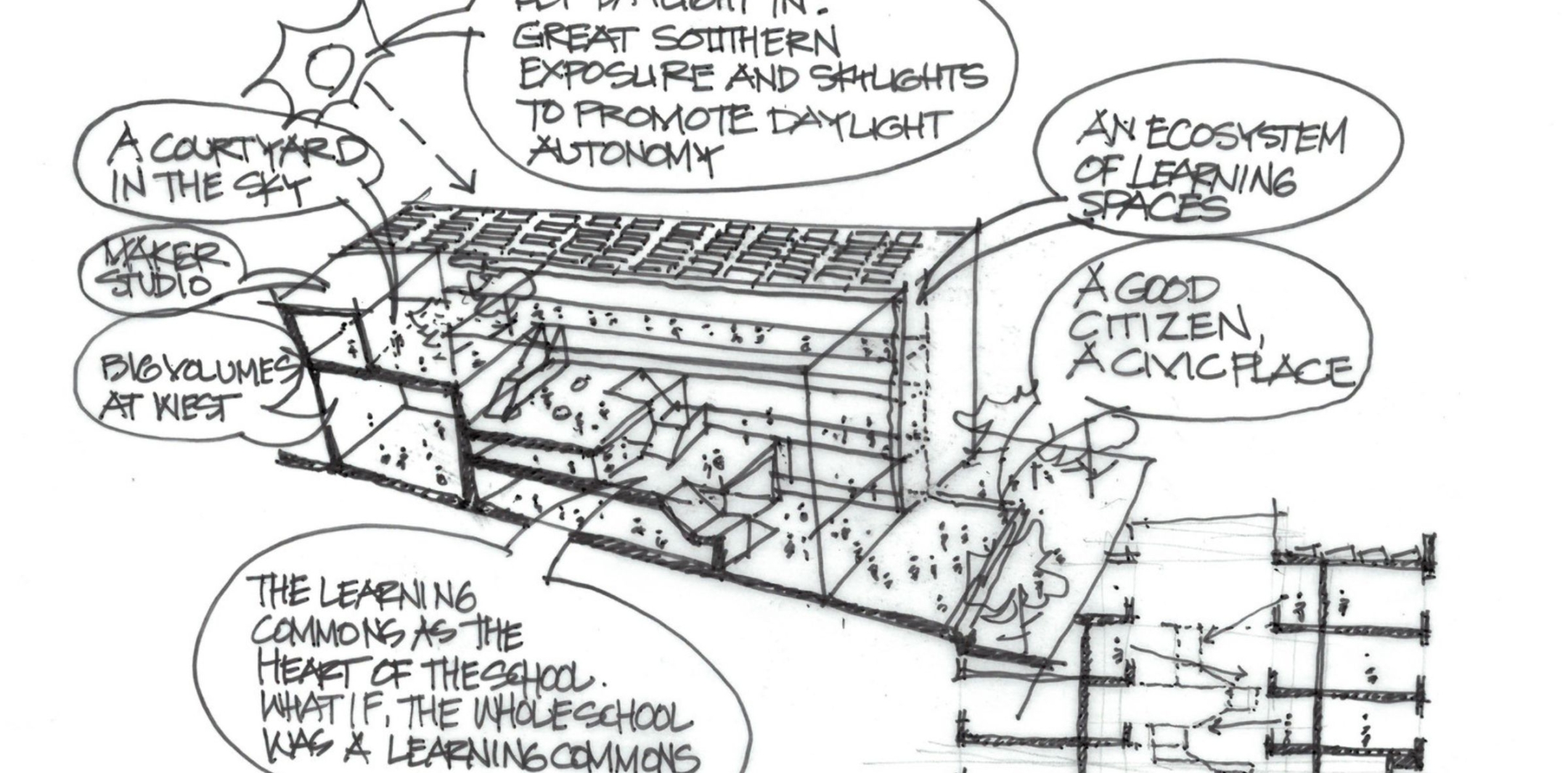
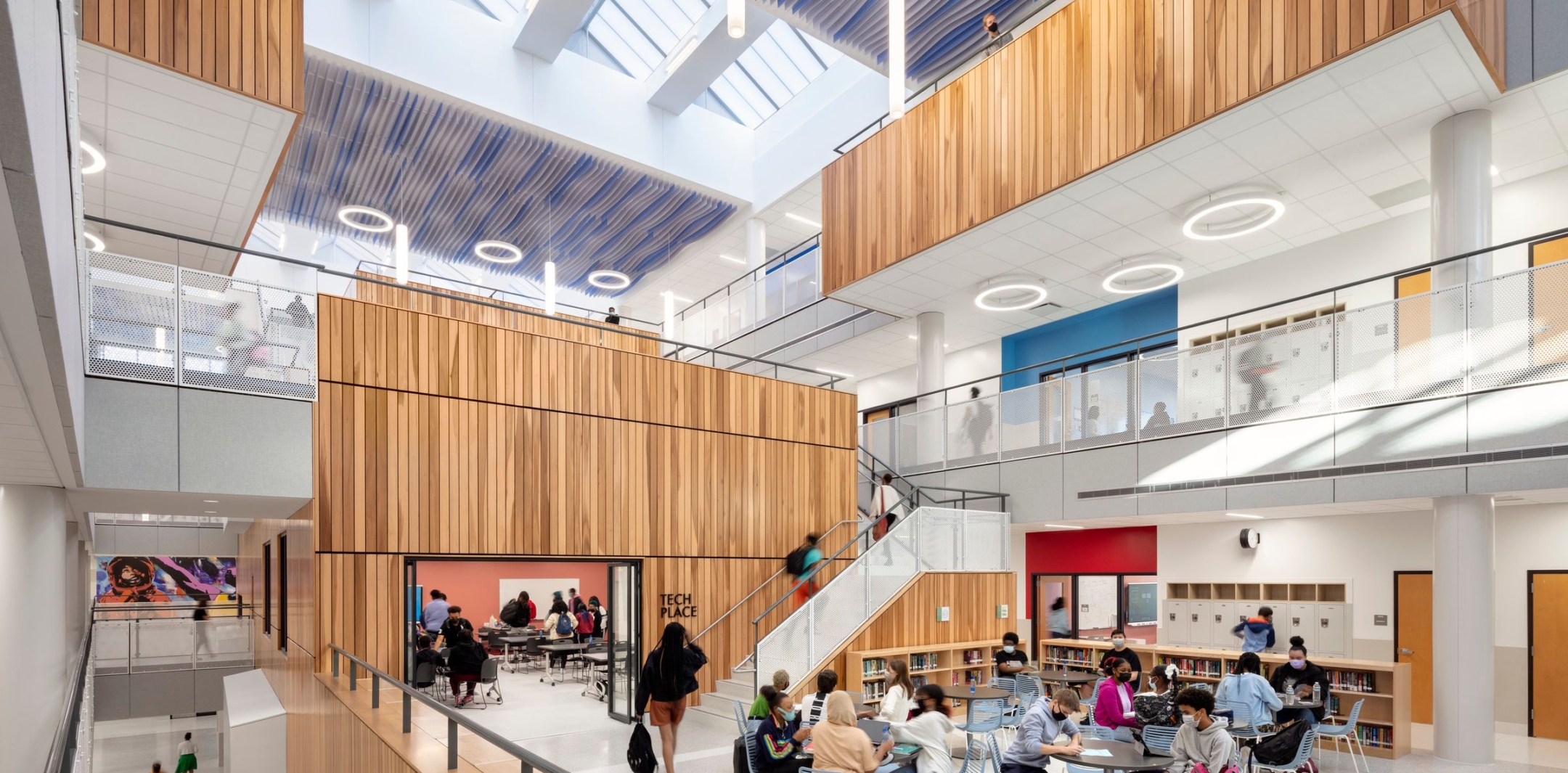
The finished building embodies the concepts illustrated in Principal Omar Caldéron Santiago’s early design sketch of Benjamin Banneker Academic High School in Washington, DC. Photograph © Joseph Romeo


A Group Effort

Drawing can be slow and meditative, even therapeutic. Paradoxically, it remains the most rapid and efficient way to design. When working with clients and stakeholders, it is both fast and inclusive to sketch out ideas. Comments and suggestions can be adopted just by overlaying another sheet of trace. Everyone feels more involved in the process.

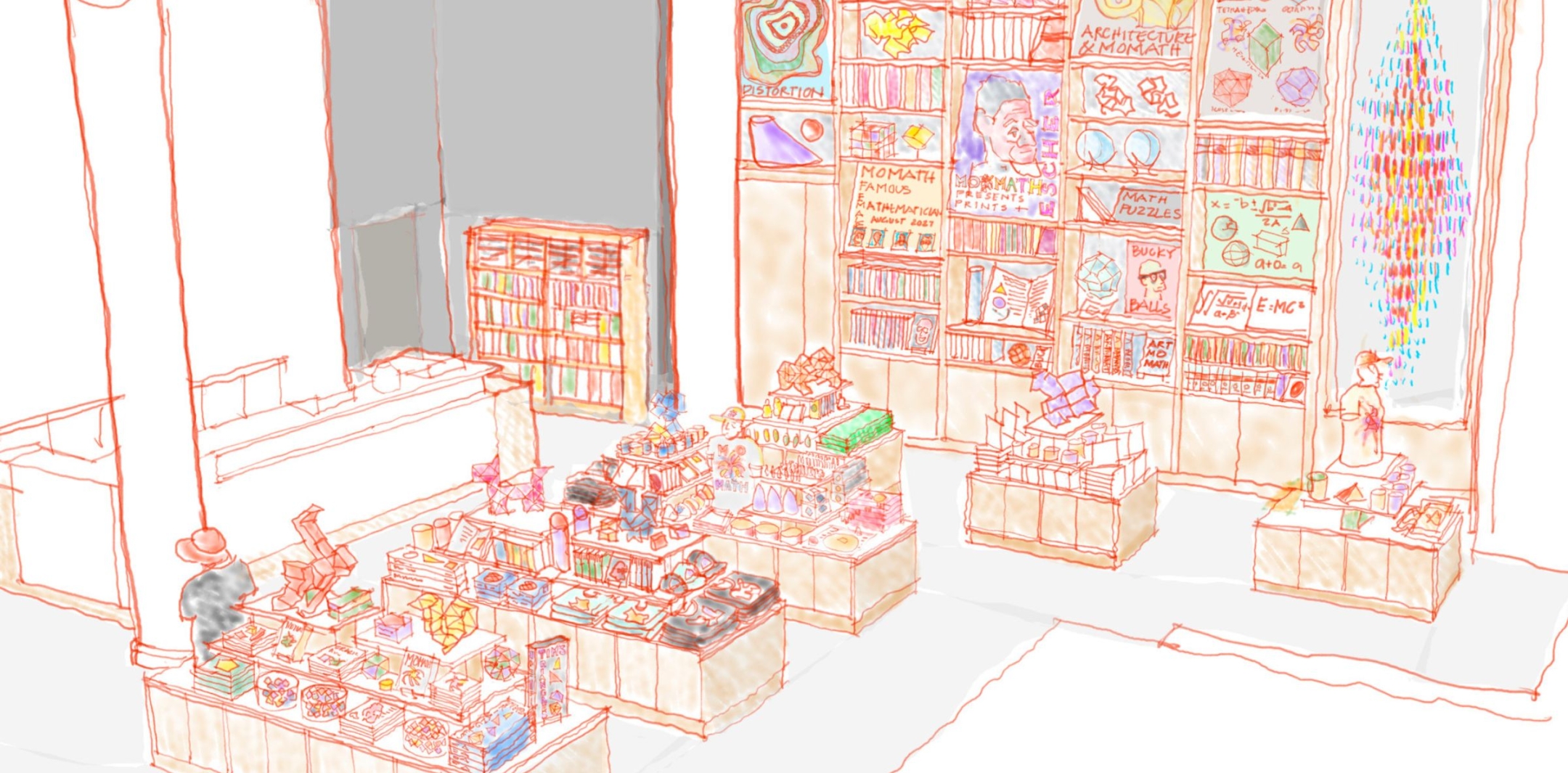
The sketch of the National Museum of Mathematics gift shop by Co-CEO and Executive Director Nick Leahy helped the client understand the intent of the space before proceeding with the design.
Photograph by Andrew Rugge/© Perkins Eastman


The Warner Imig Music Building at the University of Colorado, Boulder is a faithful realization of Principal Alberto Cavallero’s early concept sketch. Photograph © Paul Brokering

A design team can rapidly formulate a plan by collaborating over a sketch, which becomes the guiding inspiration for the project. They can then use AI and software applications to scan, digitize, and scale its dimensions while remaining true to the spirit of the original drawing.

Human by Design

There is much talk these days of an analog renaissance across many forms of craft. It is true that, both in education and in practice, the digital revolution has changed our relationship with the art of drawing, but it has always been a central part of our design process. As digital tools become nimbler and more customizable and AI loses its novelty to become commonplace, we are redoubling our efforts to reinforce the human qualities that define our practice. Sketching is fundamental to how we achieve that goal.

For media inquiries, please reach out to: news@perkinseastman.com.