Insights

Transforming Memory Care Design through Technology

Innovation is expanding from safety measures to quality-of-life enhancement.
By John Shoesmith, FAIA, Architect AIBC, EDAC, Principal
Transforming Memory Care through Technology
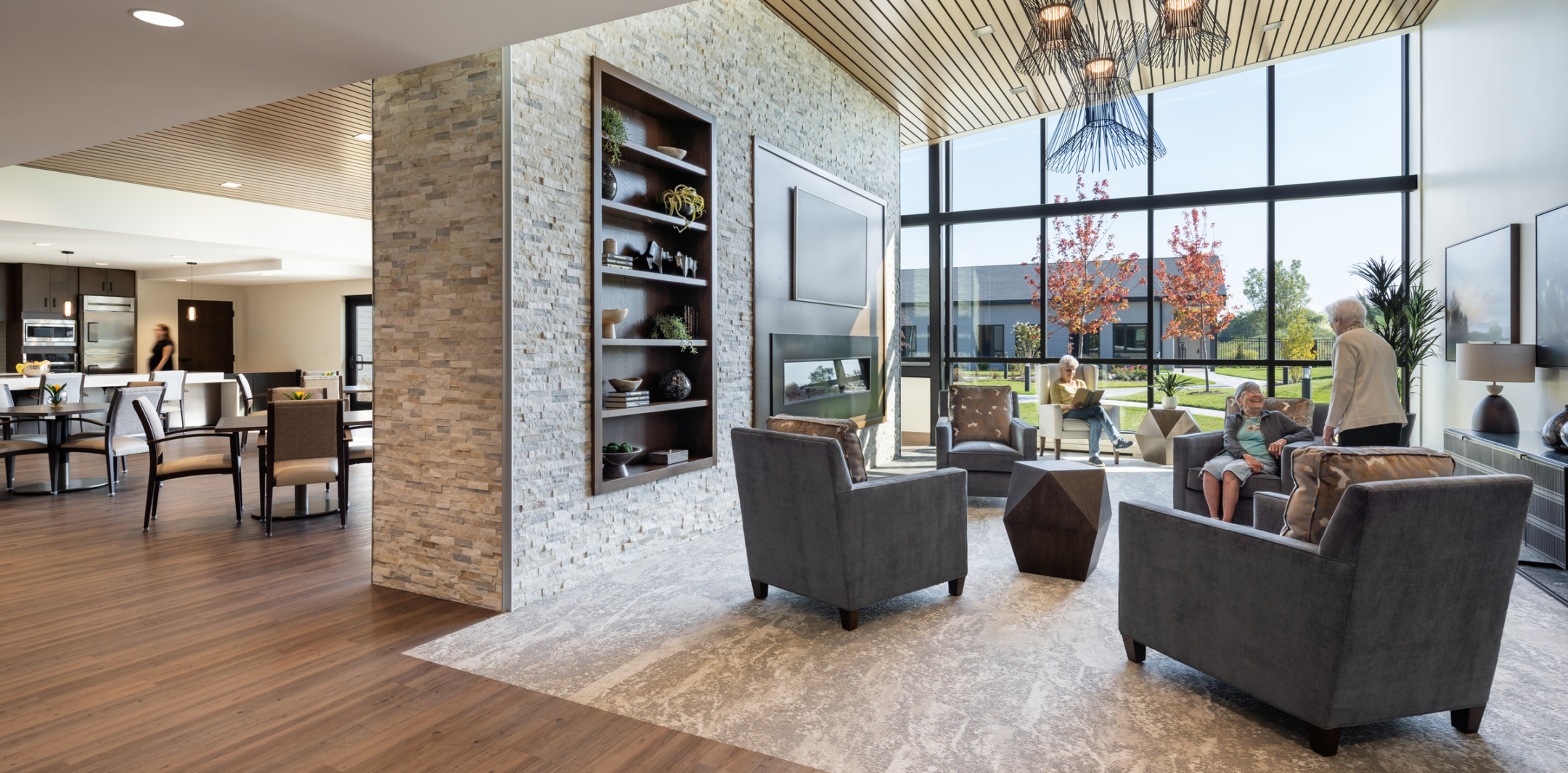
Perkins Eastman’s new Ancora Memory Care building on the Franciscan Ministries campus in Homer Glen, IL, includes soaring window walls that bring daylight deep into the interior, an effort to help regulate residents’ circadian rhythms. Ancora photographs © Angie McMonigal

In memory care environments, technological advancements have long focused on safety in the form of wander management, emergency response, and keypad door-locking mechanisms. Today, person-centered technologies are prioritizing and improving the daily lives and experiences of people with dementia. Perkins Eastman is leveraging lighting, sound, predictive monitoring, and enabling applications to increase physical and emotional comfort, in addition to safety measures, for residents of care communities.

Circadian Lighting for Sleep-Wake Cycle Support

People with dementia often struggle with disruptions to their natural sleep-wake cycle, contributing to their agitation and confusion as the day progresses. Circadian lighting strategies are based on our bodies’ own internal 24-hour rhythm, which is heavily influenced by the changing light we experience throughout the day.

Regular exposure to circadian lighting may improve sleep and reduce depression and agitation. By incorporating larger windows in the common areas of assisted living and memory care communities, we enable residents to experience the day’s natural light cycle in the spaces where they spend most of their waking hours.

Transforming Memory Care through Technology 1

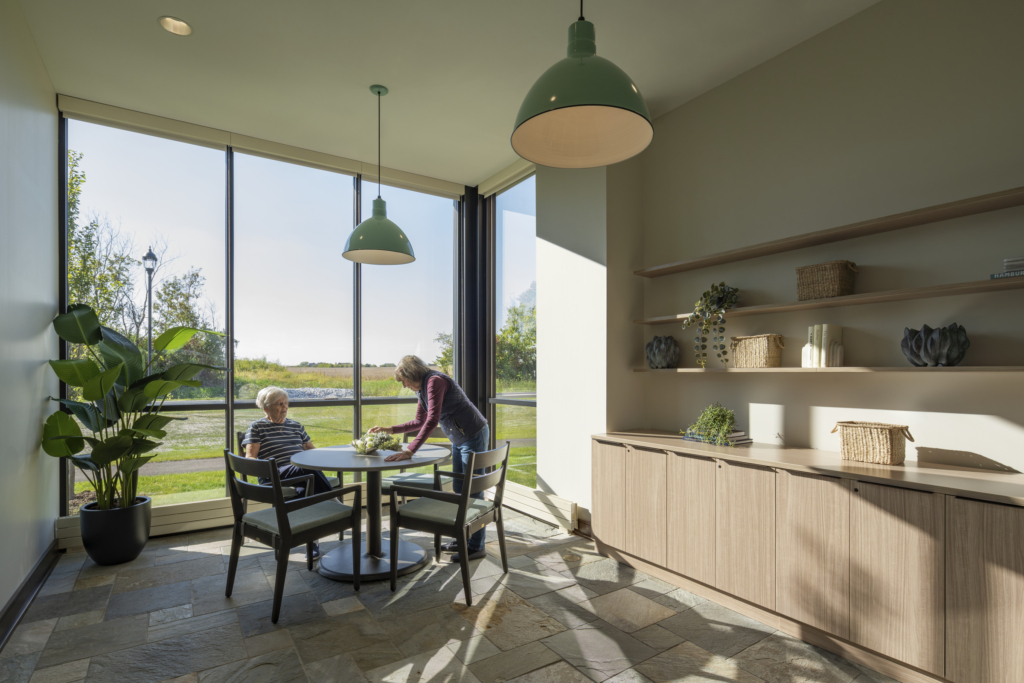
A light-filled garden room at Ancora Memory Care on the Franciscan Ministries campus brings the outdoors inside.

With the aid of adjustable artificial light, natural circadian rhythms can be extended deep into interior spaces. By changing in intensity and color throughout the day to mirror natural daylight, these systems reinforce residents’ circadian cycles, enhancing sleep quality and easing behavioral symptoms. The technology is likewise helpful for caregivers who work 12-hour shifts, which can affect their day-to-night orientation.

Transforming Memory Care through Technology 2

The intensity and color of artificial light can be programmed to mimic natural light throughout the day.
Image © Tiero/stock.adobe.com

Sonic Sleep Treatment for Restorative Rest

Another form of non-pharmacological sleep therapy is sonic sleep treatment—one of the newest technologies to demonstrate improved outcomes for people with dementia.

“Sleep as a challenge for people with dementia is really well known, but [that notion] has become status quo” rather than something to be addressed, says Jeff McSpadden, the co-founder and CEO of Composure, whose Sound Blanket app is designed for aging adults and their caregivers. By integrating internet-connected speakers in both shared and private spaces, the app can deliver customized sound treatments to support restorative sleep, cue bedtime, and ease the transition from wakefulness to sleep.

Silent-Mode Signaling for Emergency Notifications

Sound can be soothing, but it can also be disorienting. Memory care residents often cannot connect the sound of overhead paging or a fire alarm with the intended action, such as following directions or evacuating. Instead, the sudden, high-decibel noise can cause agitation, fear, or resistance because it is not understood. To reduce such responses, we have, for example, negotiated the removal of fire-alarm horns in resident areas of personal care homes and assisted living memory care communities, replacing them with alternative notification methods such as nurse-call devices so staff can respond appropriately without causing unnecessary stress for residents.

Predictive Monitoring for Customized Care

Technology is also being used to identify potential dangers before they occur. Predictive monitoring allows staff to customize care plans based on each person’s unique needs and preferences. Integrating this type of technology will become as common in design conversations as window placement and lighting systems.

We are currently working with Baycrest in Toronto, a residential care provider and research pioneer in innovations that meet the changing needs of those living with dementia. They have employed bed monitors that track sleep patterns and movement to produce real-time data that could prompt staff to intervene before a fall, for example. The nonprofit has also installed toilet-seat monitors that passively track clues in waste that could detect potential changes in a resident’s health status. Debra Conway-Chung, Baycrest’s director of residential and community programs, believes predictive monitoring allows caregivers to provide individualized care that supports residents’ autonomy and privacy.
Enabling Technologies for Daily Activities
Transforming Memory Care through Technology 3

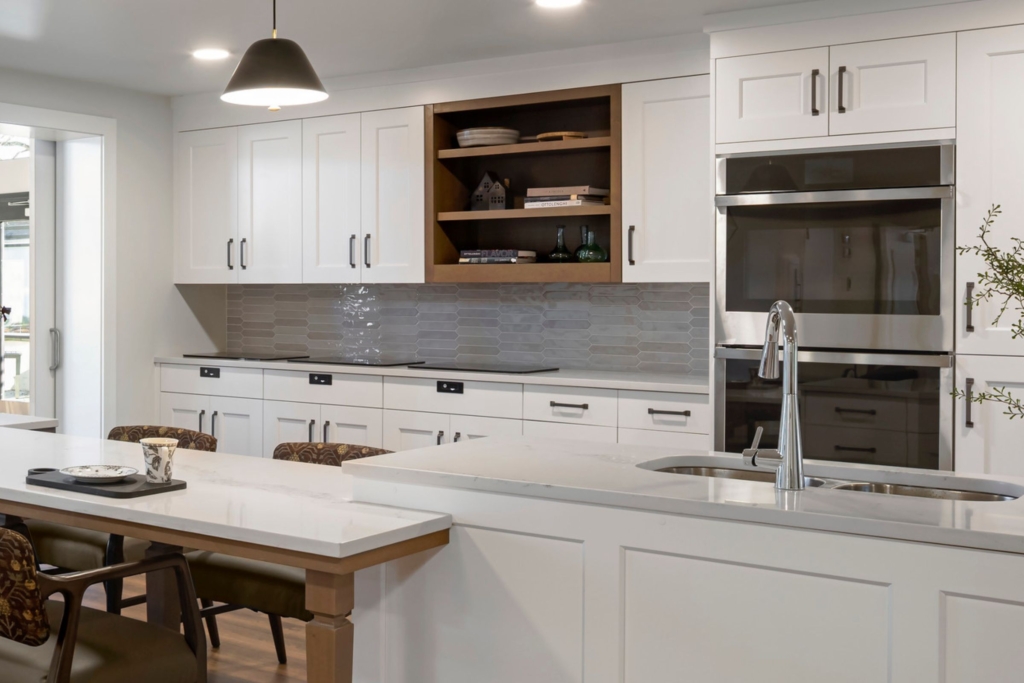
The kitchen at Josephine Memory Care in Stanwood, WA, was designed with induction cooktops and ovens that are controlled by a timing switch. Photograph © Cleary O’Farrell Photography

Enabling technologies help people with dementia maintain familiar daily routines, including cooking. Open kitchens are common in person-centered dementia care, but they require solutions that allow residents to use them safely. Induction cooktops, for example, heat cookware directly using electromagnetism, so the surfaces stay cool to the touch. Wall ovens can be fitted with key-activated timers that provide power for a set period. These technologies let residents participate in kitchen activities, supporting independence and daily engagement.

When recommending technology-based strategies to providers who care for people with dementia, we consider consent, privacy, and viability as residents’ cognitive abilities change. Taking these factors into account ensures that we are meaningfully supporting residents while promoting their safety, dignity, and quality of life. As these innovations evolve and improve, we continue to work with our memory-care clients to incorporate them in ways that give residents a greater sense of normalcy and well-being.

For media inquiries, please reach out to: news@perkinseastman.com