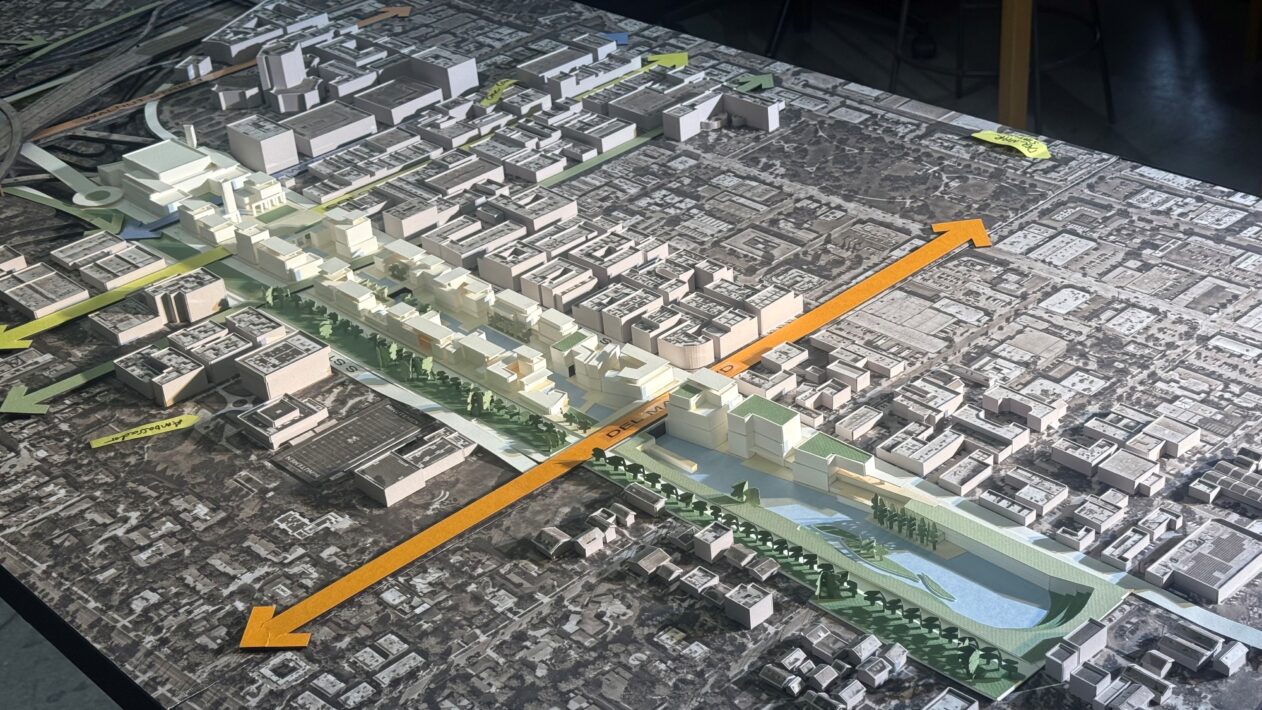
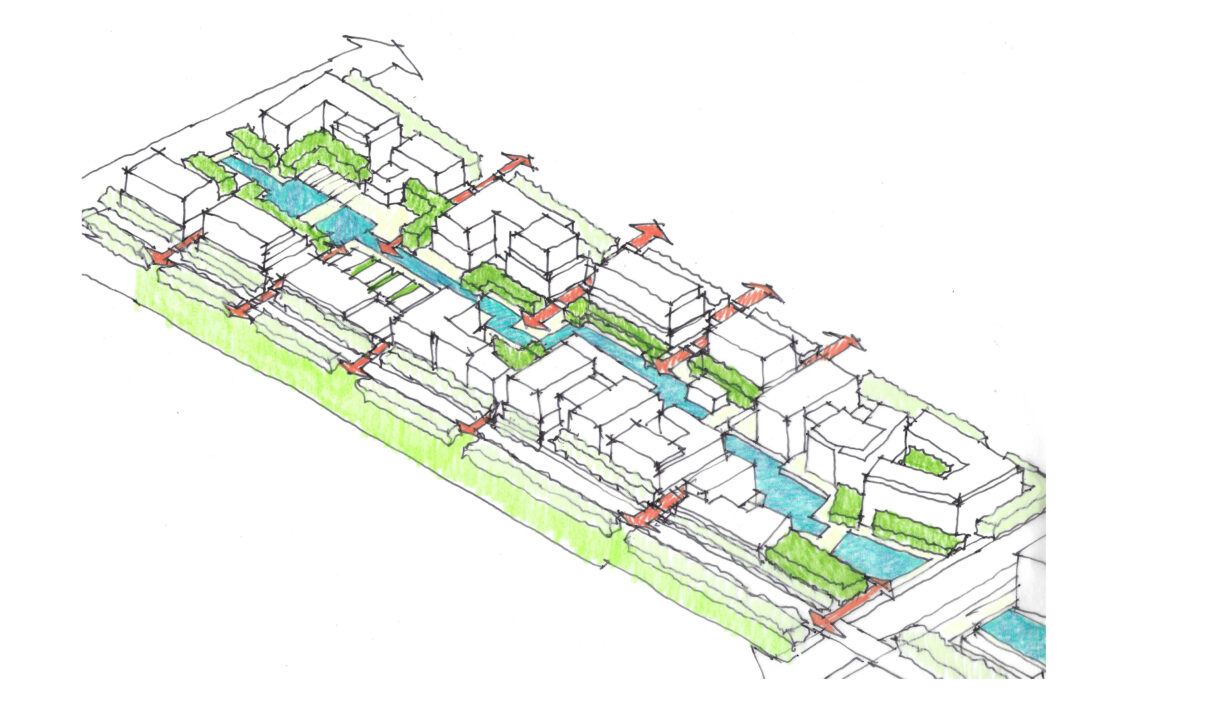
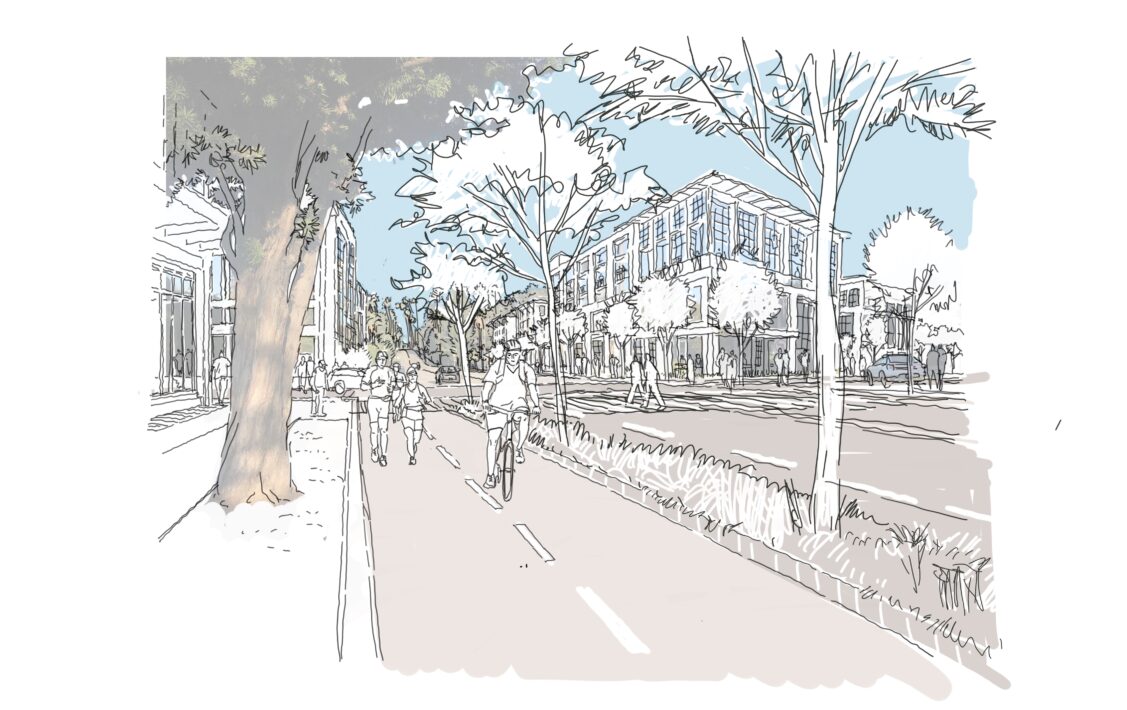
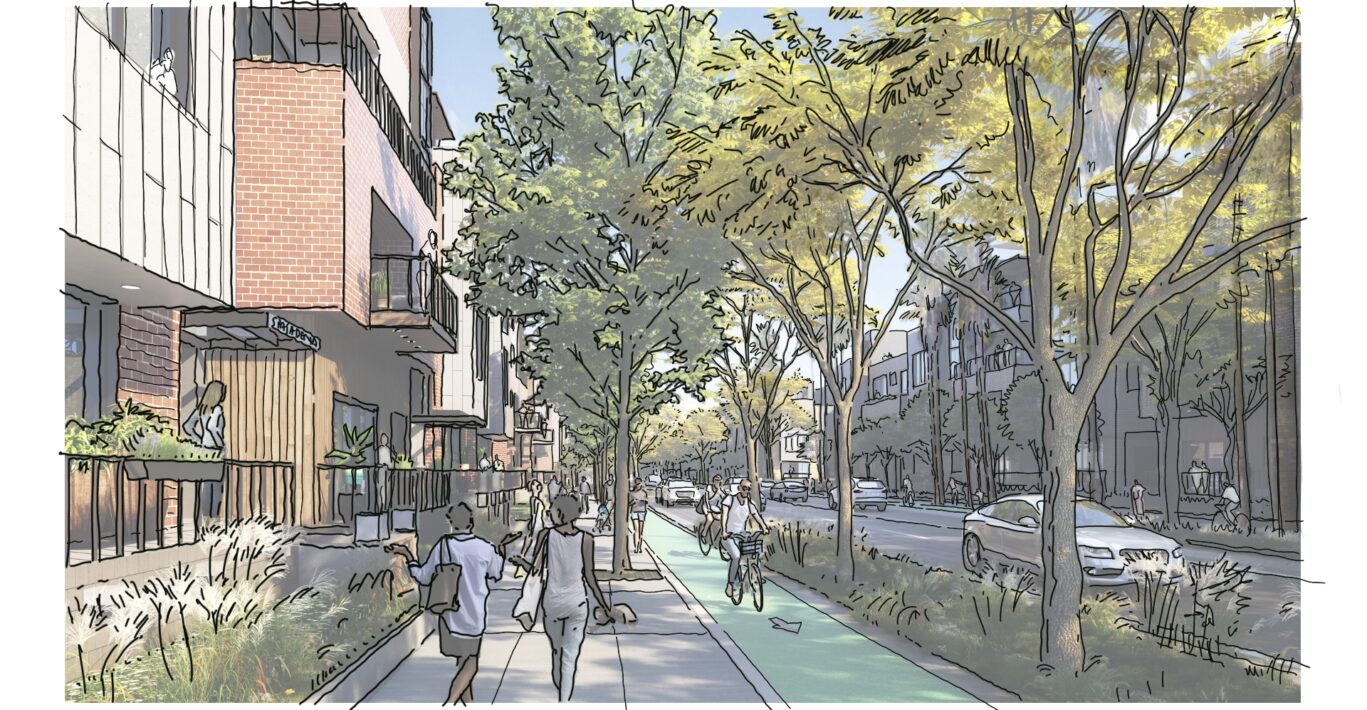
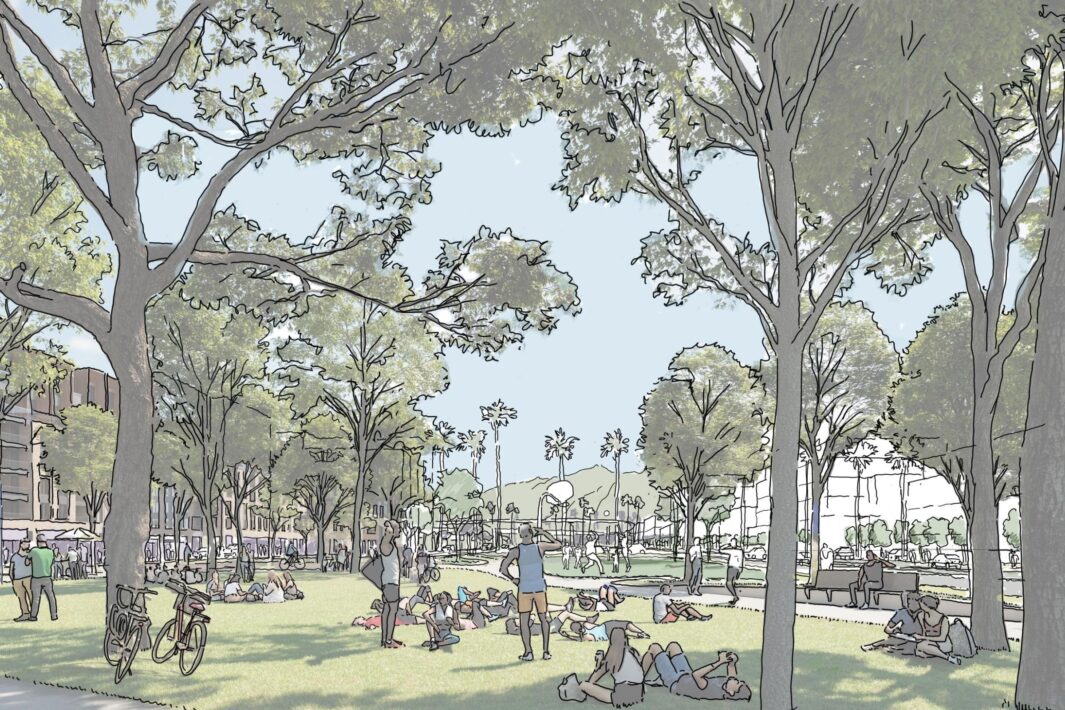
Perkins Eastman is leading a multi-disciplinary team to establish a visionary plan to transform a 50-acre strip of road at the heart of historic Pasadena. Caltrans, the state transportation agency, returned the property to the city after more than 50 years of unsuccessfully attempting to complete the SR710 freeway. The plan calls for decoupling the stub end of the freeway from the regional circulation and reconnecting this strip to the local street grid by adding new bikeways, greenways, paseos, and urban gardens to heal the city’s divided urban fabric. The planning and design effort includes multiple work streams, including;
- Data collection and mapping
- Establishing a restorative justice framework
- Economic analysis
- Land use and place-making
- Resiliency and sustainability
A robust community outreach program includes public agency and focused stakeholder reviews as well as public workshops and open-house meetings. The emerging neighborhood plan identifies multiple sub-districts defined by special places with an emphasis on establishing a rich and varied public realm. Existing primary streets and boulevards will be redesigned as thoroughfares with a pedestrian focus, radically transforming what has today become an car-dominated environment of wide, inhospitable streets and on/off ramps serving the freeway system. The plan also calls for a balance of housing and well-paying job creation opportunities that will complement the robust retail uses that already exist in Old Pasadena. Additionally, a compelling framework of open spaces will enhance the city’s historically rich environment of urban parks, paseos, and the arroyo, providing opportunities to reconnect and stitch together neighborhoods that have been separated by the freeway construction since the early 1970s. Our ongoing work will result in the entitlement of the land and identify implementation pathways for a variety of public-private partnerships for future development.
The transformation of the 710 “stub” offers a once-in-a-generation opportunity to establish a climate-positive neighborhood built for a carbon-neutral future. A vital showcase for the City of Pasadena’s Climate Action Plan (CAP), the vision plan serves as a real-world laboratory for delivering on ambitious commitments, including 100% carbon-free electricity by 2030. By adopting a district-scale approach, the vision plan leverages the 50-acre site to pilot shared energy systems and innovative water management that would be impossible to achieve in isolated developments. It stands as a powerful demonstration of how environmental policy can be translated into measurable, place-based outcomes that foster a healthier, more equitable community for generations to come.
Pasadena faces a future of increasingly frequent heatwaves and drought, challenges often amplified in urban environments. The vision plan addresses these risks head-on, transforming 50 acres of hardscape into a climate-responsive, resilient neighborhood. The plan proactively tackles urban heat through expansive tree canopies and lush greenways that naturally cool the city, while “sponge city” strategies like stormwater capture and groundwater recharge turn streets into a tool for water security. At its core, the project is a resilient sanctuary designed to prioritize human health. By blending nature with high-performance design, the plan creates a public realm that supports both mental and physical well-being, ensuring the community is deeply rooted in long-term vitality.