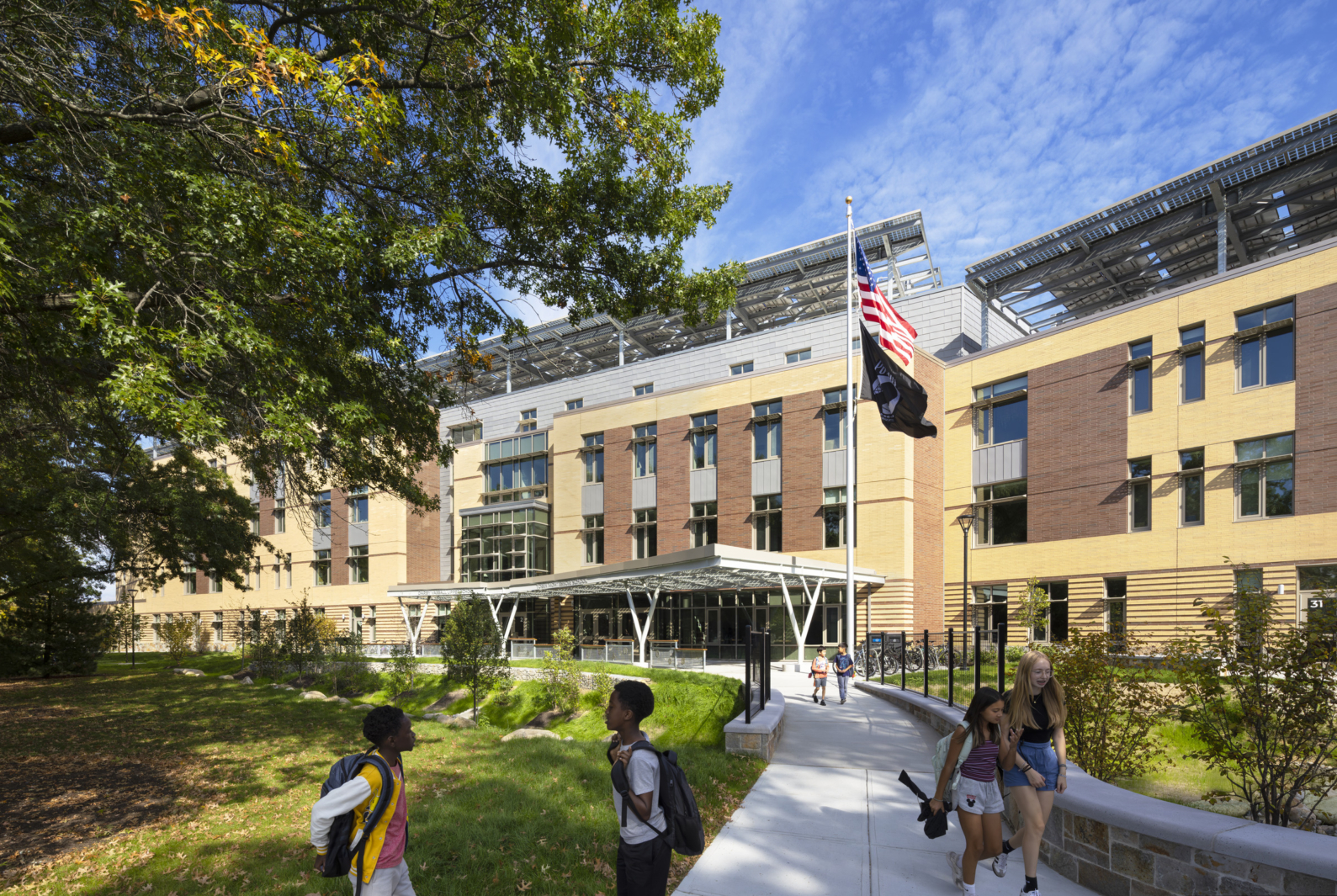
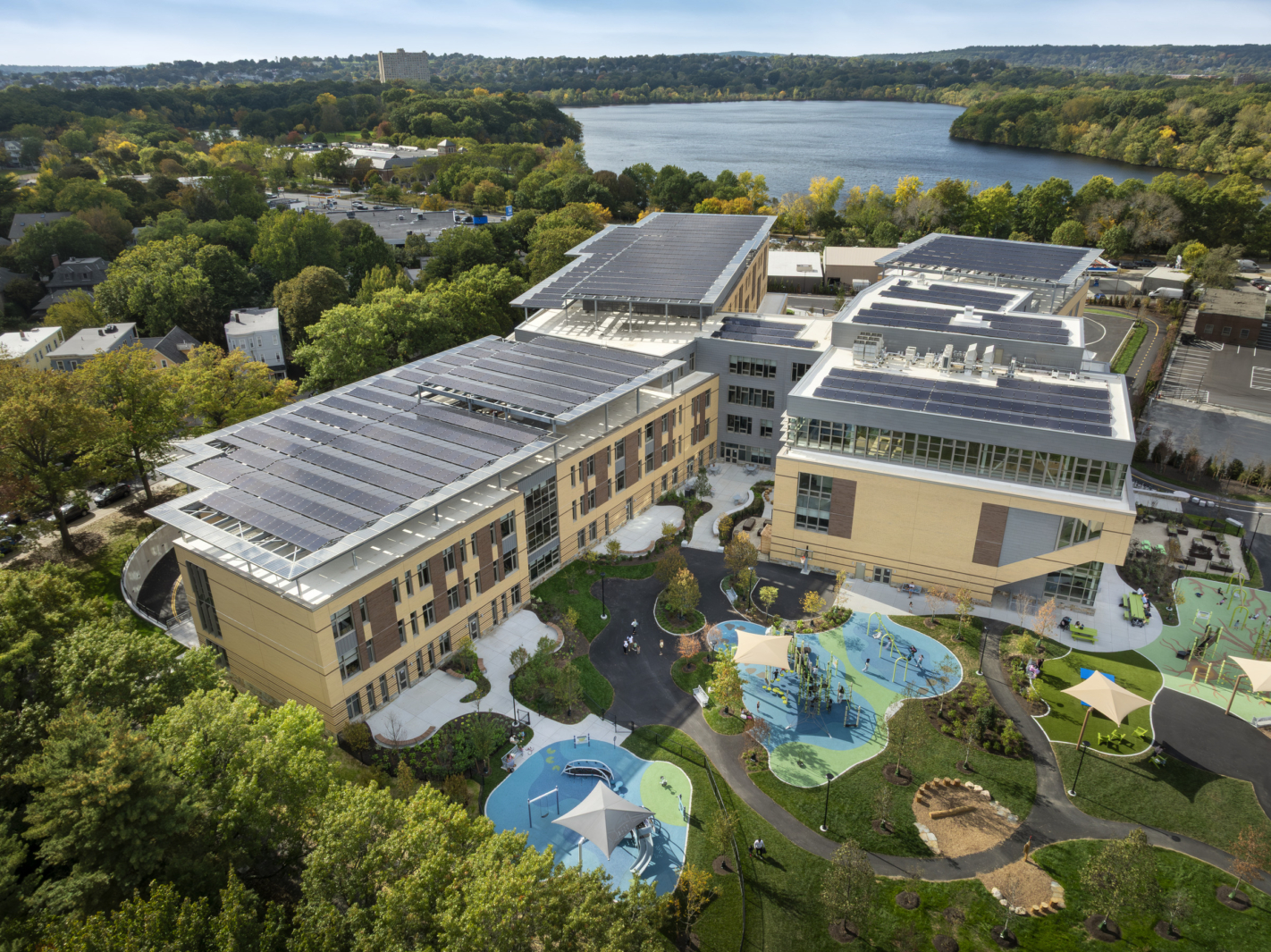
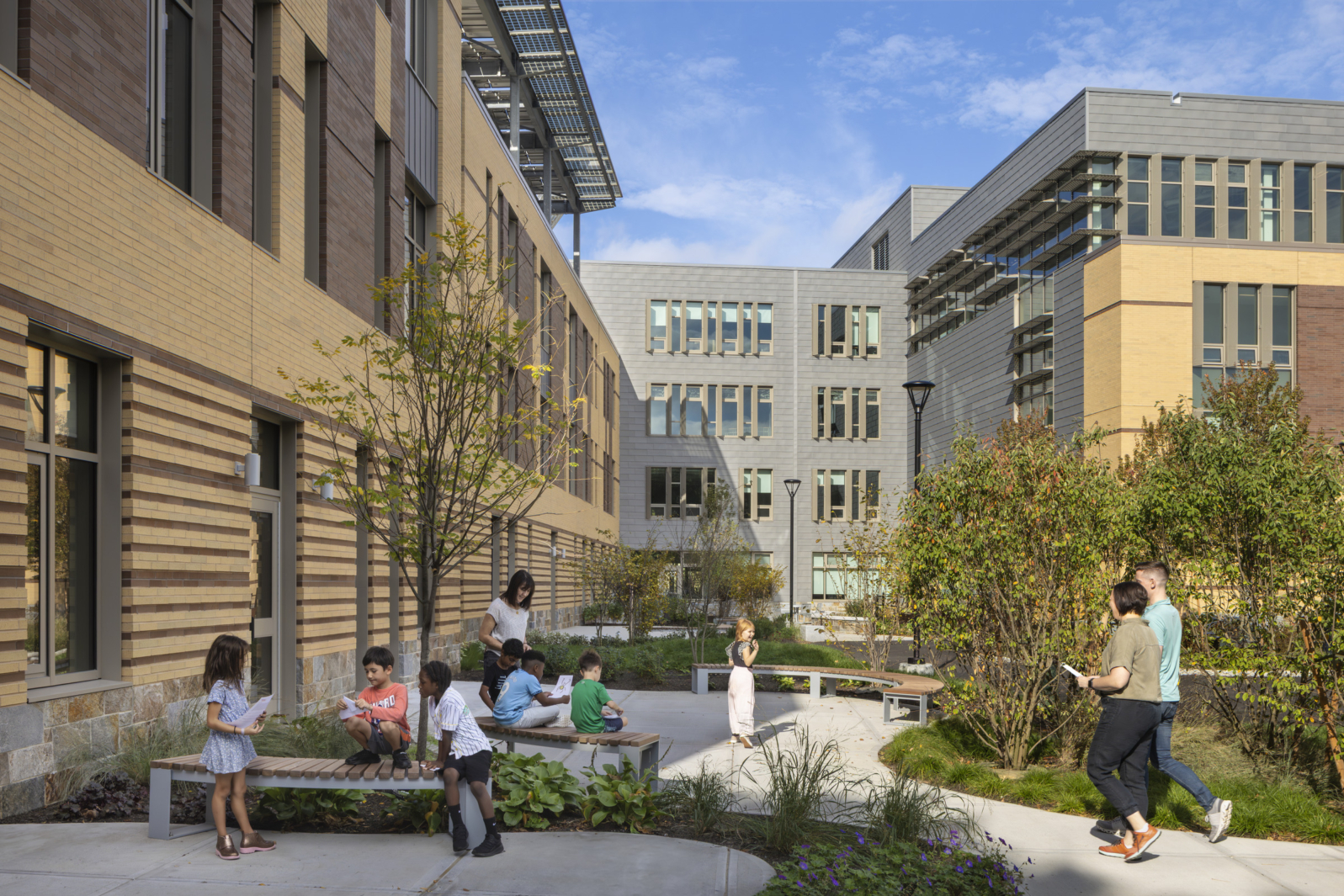
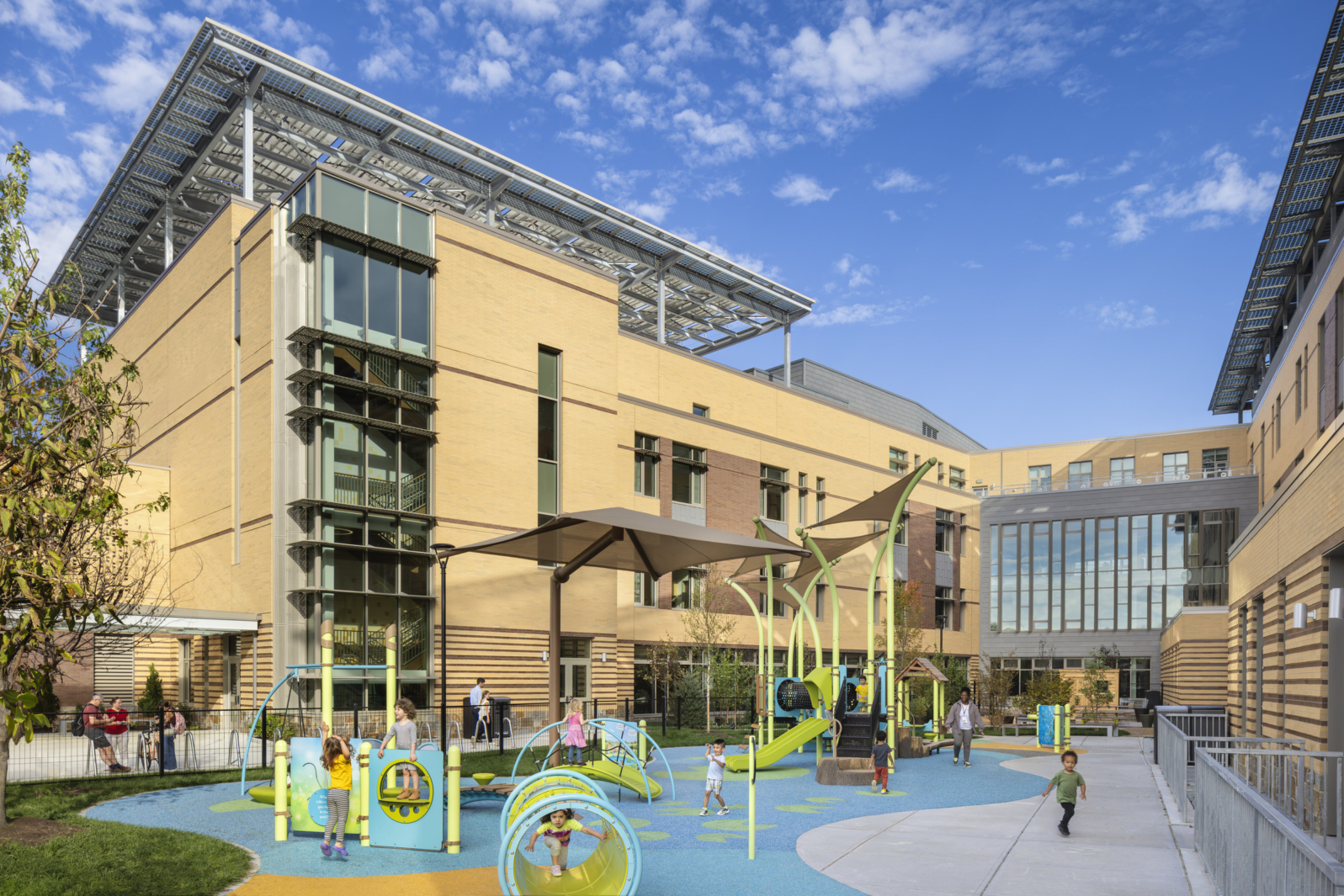
The Tobin Montessori and Darby Vassall Upper Schools Complex unites two public schools and three early-childhood and after-school programs within a single, all-electric campus. Opened in September, 2025, the facility serves Cambridge families from pre-K through eighth grade, strengthening neighborhood life while supporting the city’s climate goals. The Tobin Montessori School (pre-K–5) brings its Montessori philosophy and collaborative culture together with Darby Vassall Upper School (6–8), where inquiry, reflection, and belonging guide daily experience. The city’s Special Start, preschool, and community afterschool programs complete the campus.
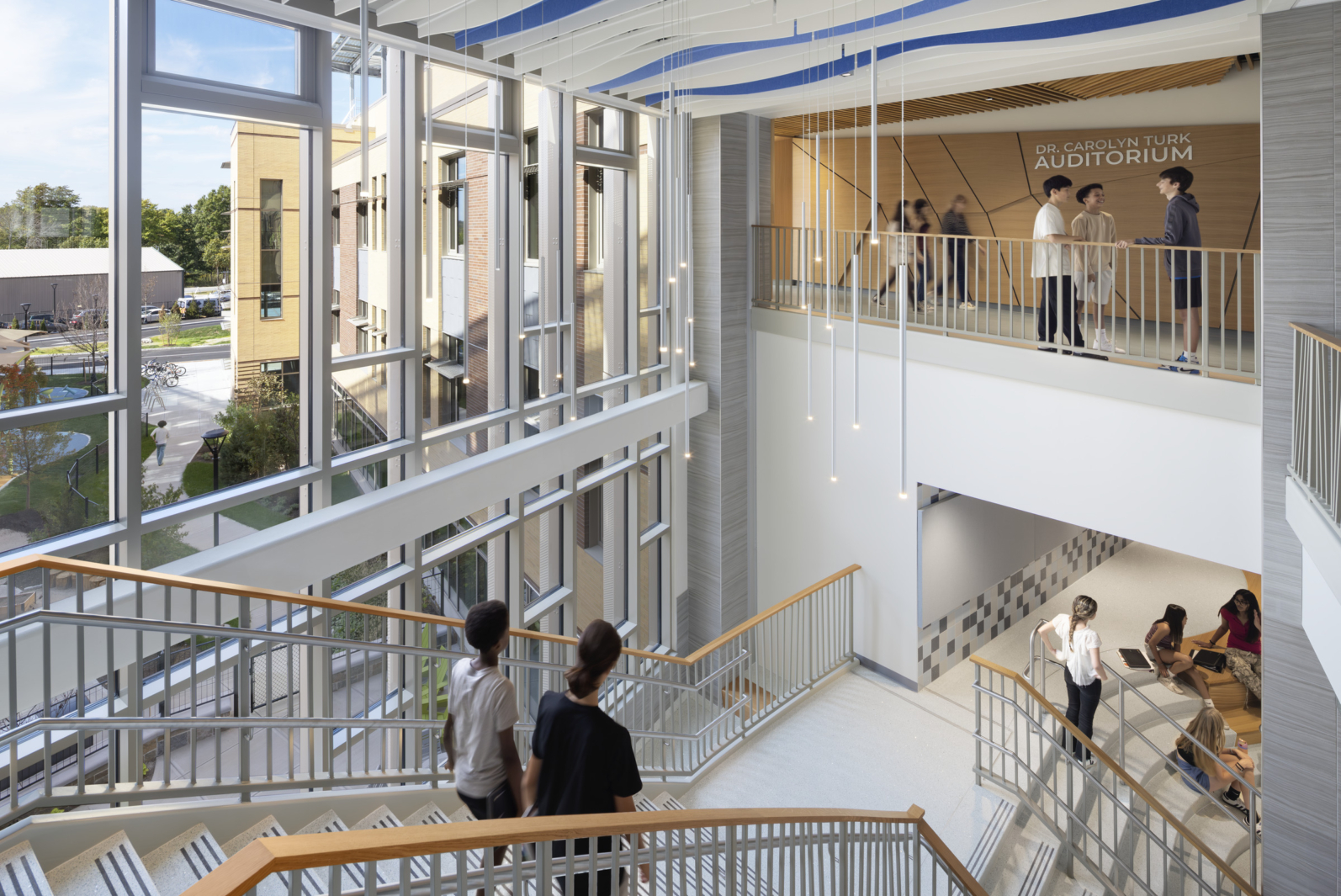
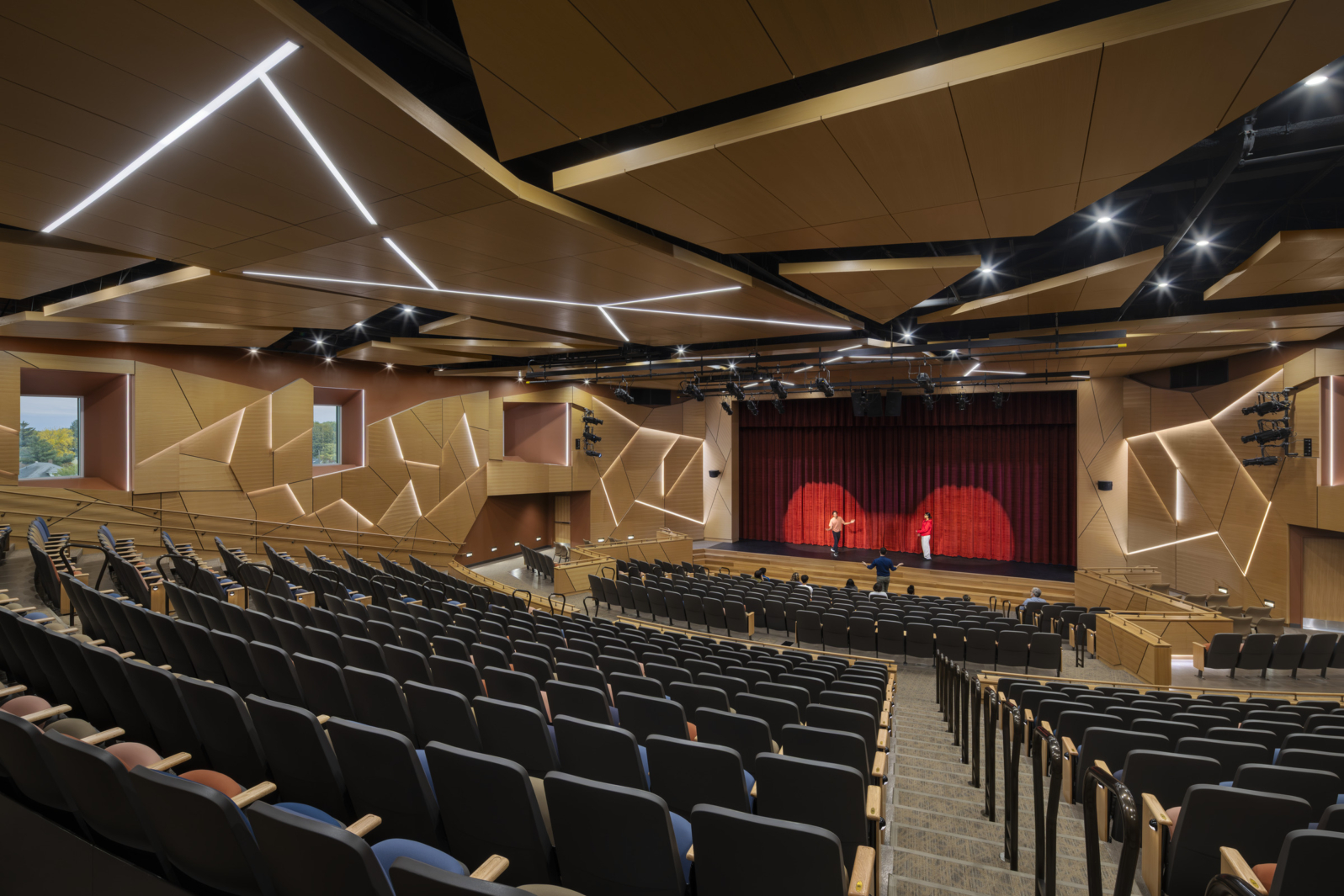
At the center of the complex, a three-story “Heart of the School” links all programs to shared spaces—cafeteria, gymnasia, auditorium, art, and music rooms—and to outdoor play areas. This light-filled commons allows each school to maintain its identity while functioning as a unified community. Curving floor patterns, custom ceiling baffles, and breakout spaces respond to the movement of different age groups, creating both flow and moments of rest. Generous views to the east and west courtyards bring daylight deep into the building, while open sightlines support easy supervision.
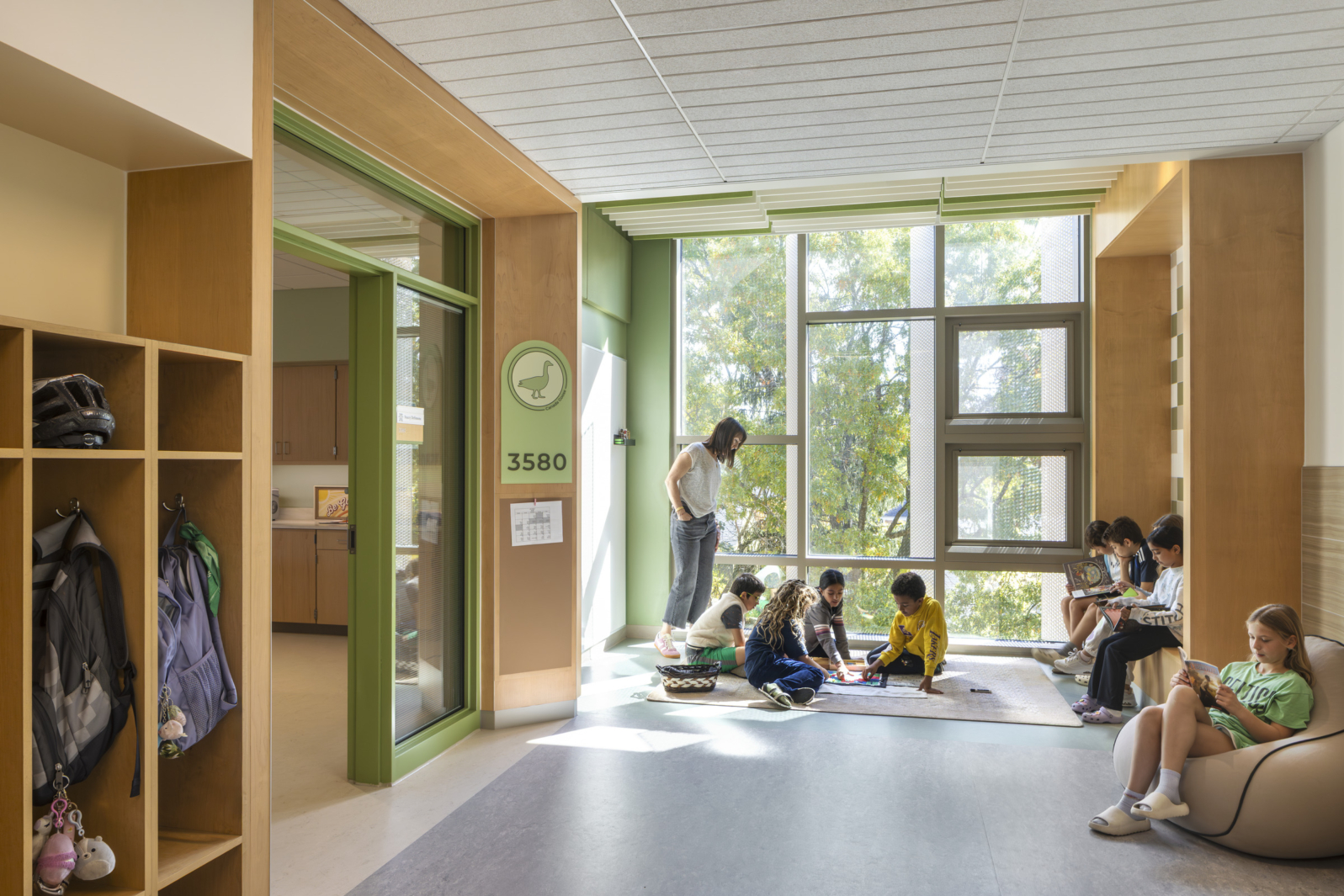
A nature-based wayfinding system organizes the campus into fire, air, water, and earth. Shared areas—fire, air, and water—serve all students, while the earth zone distinguishes each program as a local ecosystem: pond-marshland for early childhood programs, wetlands for Tobin Montessori, and uplands for Darby Vassall. Classroom signage features native plants and animals, reinforcing identity and creating everyday learning moments.
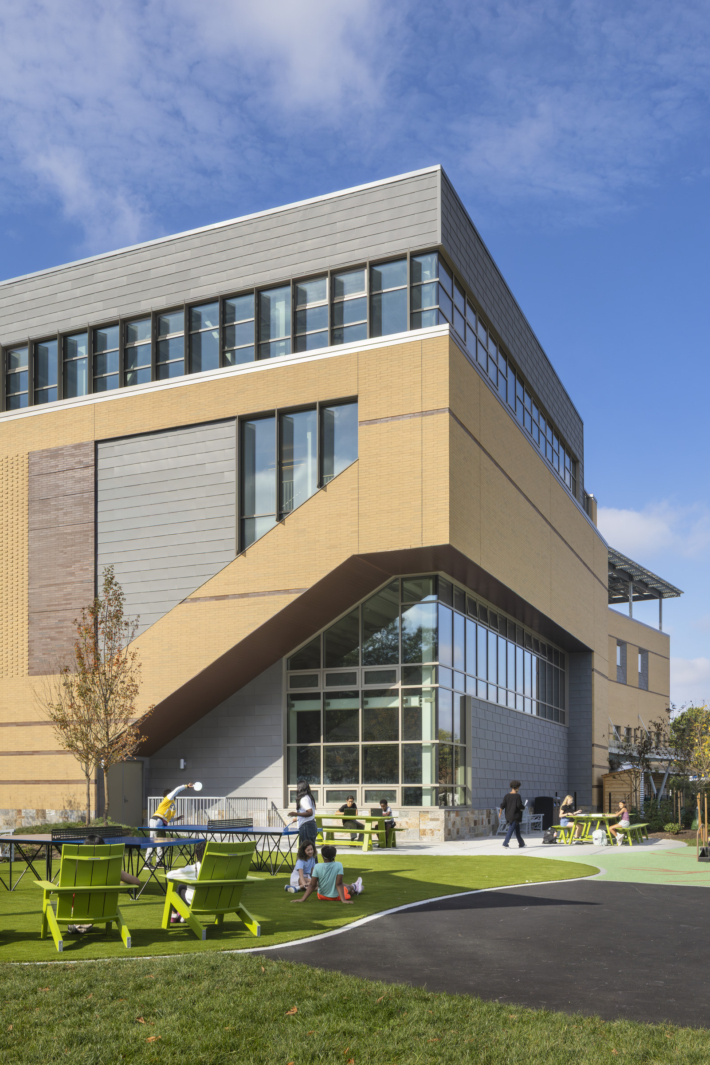
Across the nine-acre site, the landscape connects play, exploration, and environmental stewardship. Rain gardens, native plantings, and outdoor classrooms bring students into contact with nature, while a 1.25-million-gallon underground stormwater tank and a series of bioswales reduce neighborhood flooding. A rainwater harvesting system collects roof runoff, landscape drainage, and condensate into two cisterns to irrigate the fields and plantings. The campus generates a substantial amount of clean, renewable electricity each year, supported by a nearly one-megawatt solar array and 76 geothermal wells. A high-performance building envelope further reduces energy use, enabling the school to operate far more efficiently than typical educational facilities. Healthy, low-emission materials and active air-quality monitoring support wellness and learning for students and educators alike.
The project demonstrates how school design can honor distinct educational philosophies while functioning as essential civic infrastructure—managing stormwater, generating renewable energy, and anchoring neighborhood life.