Insights

Designing High-Performance Environments on the Road to AIA’s COTE Top Ten

Years of research, analysis, and improvement with every project result in milestone awards—and a sustainable way forward.
By Heather Jauregui, LEED AP BD+C, O+M, CPHC, Principal and Director of Sustainability
Designing High-Performance Environments on the Road to AIA’s COTE Top Ten
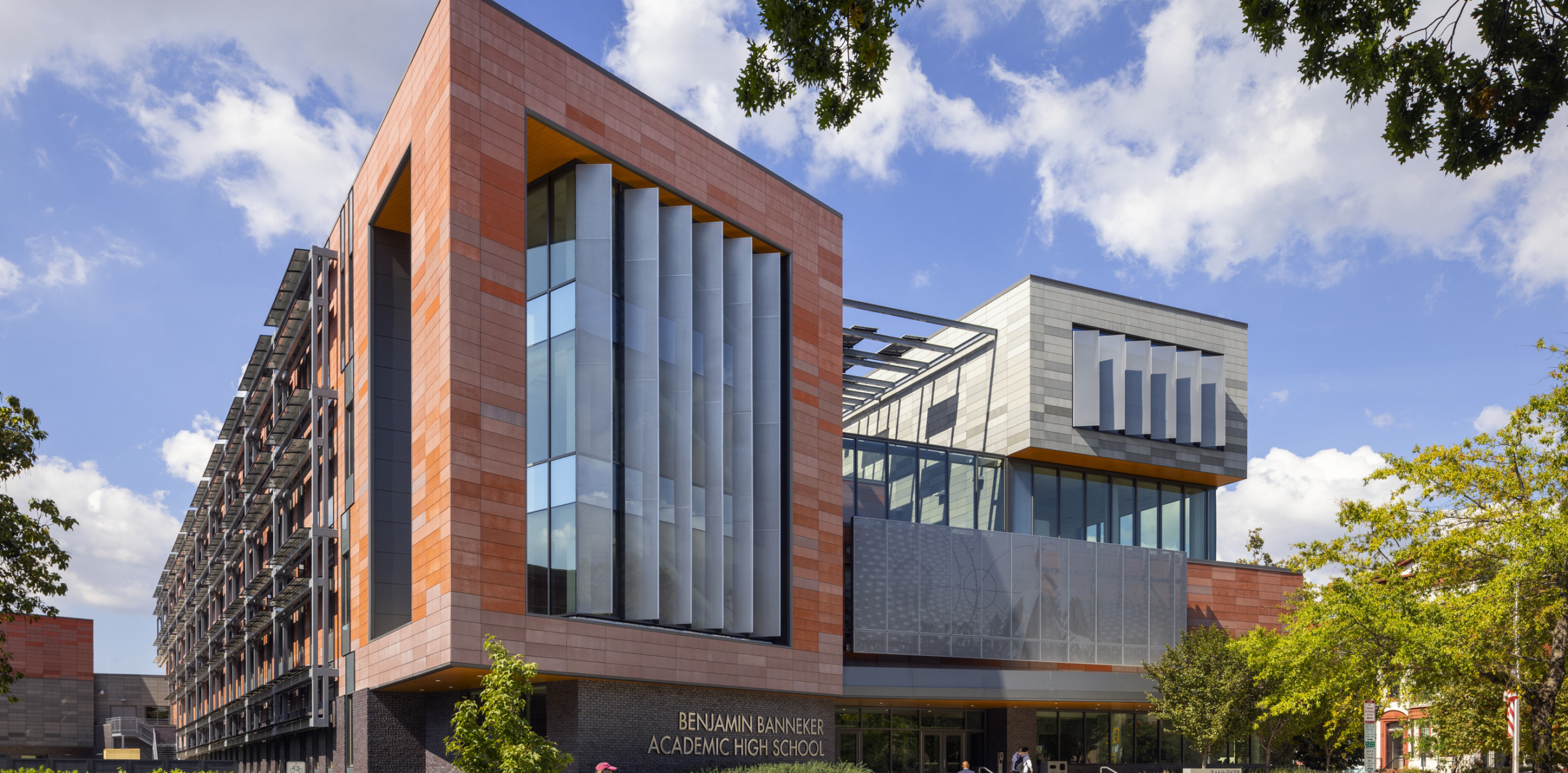
Benjamin Banneker Academic High School (above) and John Lewis Elementary School have both earned the AIA COTE Top Ten Award.
Photographs © Joseph Romeo

This is the fourth in a series of posts expanding on our 2026 State of Sustainability.

At the outset of the John Lewis Elementary School and Benjamin Banneker Academic High School projects in Washington, DC, Principal and K-12 Education Practice Leader Sean O’Donnell told the design, construction, and client teams that each building would win a coveted AIA COTE Top Ten Award from the American Institute of Architects’ (AIA) Committee on the Environment (COTE).

His pronouncement came true this summer, when Banneker earned the award one year after John Lewis won it—the foremost accolade for high-performing design. The committee recognizes ten projects per year out of hundreds of entries.

Designing High-Performance Environments on the Road to AIA’s COTE Top Ten 1

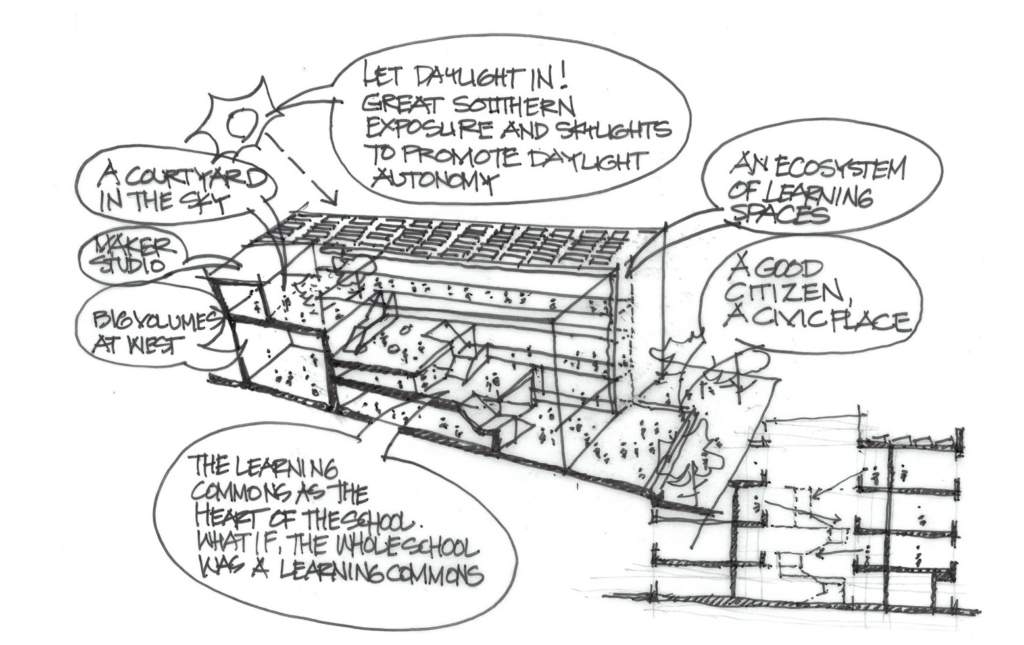
Principal Omar Caldéron Santiago’s early sketch of Benjamin Banneker Academic High School highlights the values that guided the design. © Perkins Eastman


Designing High-Performance Environments on the Road to AIA’s COTE Top Ten 2
Benjamin Banneker Academic High School prioritizes daylight and solar power, with panels built into the building’s facade and roof.
Designing High-Performance Environments on the Road to AIA’s COTE Top Ten 5
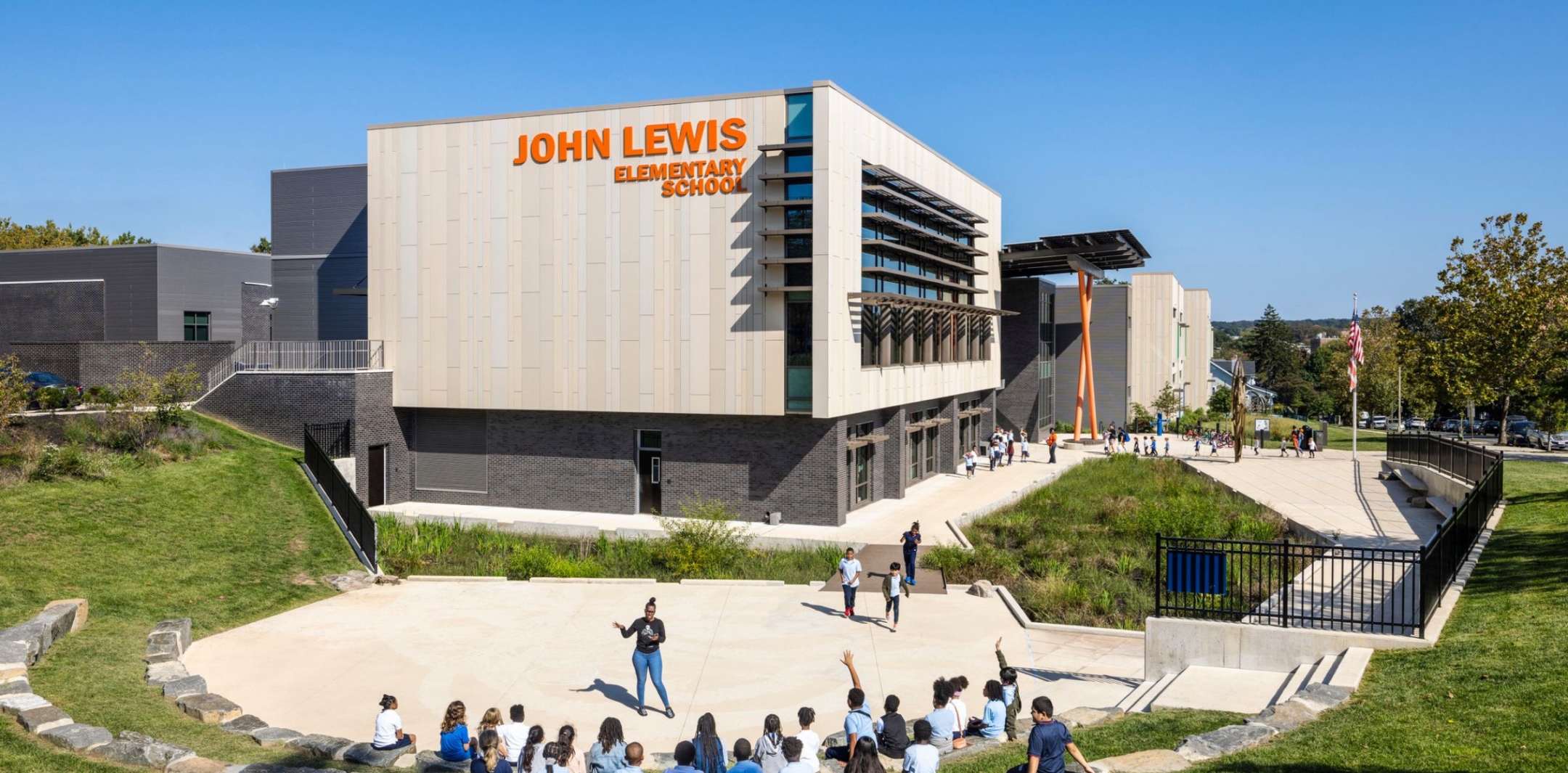
The landscape at John Lewis Elementary School provides many outdoor settings, including rain gardens, for learning about ecosystems.
COTE’s Humble Beginnings and Enduring Influence

High-performing buildings were not always so glamorous. Committee on the Environment founding chairman Bob Berkebile, FAIA, described “a tiny band of change agents dedicated to promoting a new vision for design” when the AIA announced the committee’s formation in 1990. The group approached the AIA Committee on Design in 1994 to discuss modifying the institute’s Honor Awards program to include performance standards. By 1996, the AIA president and board decided that “performance was too great a burden to impose on AIA members working to deliver beautiful buildings,” Berkebile added. In response, COTE established the Top Ten Award in 1997. The criteria for the awards have since become the AIA Framework for Design Excellence, the foundation by which all AIA national awards are judged.

Our Human by Design ethos means we believe that design should have a lasting and positive impact on human experience. There is no way to fulfill our vision without deeply embedding sustainability into our design thinking from the outset of a project. The Top Ten criteria are widely recognized for setting the standard in sustainable design excellence.

Framework Built into Our Processes Across Practice Areas
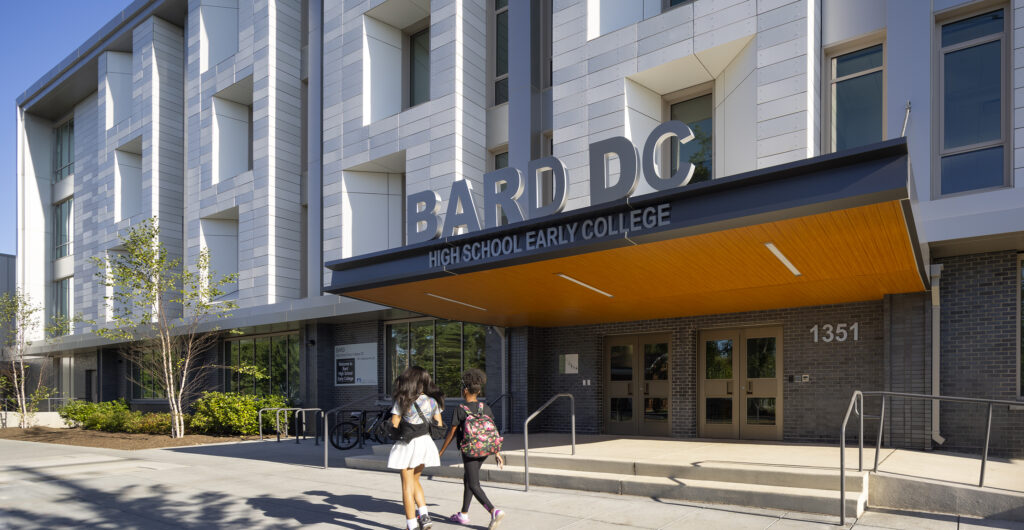
Bard High School Early College DC: A Case Study

Bard High School Early College DC is an adaptive reuse of a mid-century structure wherein the infrastructure was maintained but the building envelope was replaced.

We are incorporating sustainability throughout our school designs and across other project types. Within the K-12 Education practice, we have completed renovation projects such as Bard High School Early College DC and reused historic buildings such as the John Francis Education Campus, also in DC, demonstrating that COTE Top Ten-level performance isn’t limited to new construction.

Across the firm, at the earliest design stages, every project team is asked to set goals for all 10 principles in the Framework for Design Excellence. We set out to identify design strategies and responses that will help projects embody each principle by the time a building opens its doors. In addition, our energy modeling and other performance analyses ensure design decisions are data-informed. We are now able to track our progress around many of the principles of the AIA framework at portfolio scale.

Change Agents on Sustainability’s Front Line

Not every project will win a coveted COTE Top Ten Award, but every project should robustly address the AIA framework regardless of client, budget, or schedule. The resources and processes we have in place to improve our firm’s collective knowledge and embed sustainability into our work help us realize this goal. Berkebile’s “tiny band of change agents” was right—good design is sustainable design. The “new vision for design” they were seeking a generation ago has become an imperative we cannot afford to ignore.

For media inquiries, please reach out to: news@perkinseastman.com.