The entire baby boom generation will be 65 or older by 2030, but as we’ve watched this generation’s march into retirement and beyond for many years now, the housing industry is still falling short. Senior housing construction starts recorded an all-time low in the first quarter of 2025, according to NAIOP, with just 1,287 new starts compared to a high of more than 12,000 in the first quarter of 2018. Post-pandemic staffing shortages, high inflation, and high interest rates are among the causes for this lopsided supply vs. demand.
Active-adult developments and communities offer a promising solution for developers and older adults, because it decouples housing from services. Unlike independent living, which typically includes meal services, active adult is a stand-alone residential offering. Active-adult communities that have been open at least two years have occupancy rates close to 96 percent, according to a fall report by the National Investment Center for Seniors Housing & Care, yet they accommodate just 0.5 percent of Americans ages 65 to 84, the NAIOP report said.
A Shift To Self Advocacy
Active adult properties appeal to baby boomers and older Gen Xers whose focus on health and wellness is delaying the need for care-based communities. The decision to move is primarily a lifestyle choice for those with the means to afford resort-style amenities in central urban locations. Canvas Valley Forge in suburban Philadelphia is one example. Its rich finishes and furnishings, in addition to numerous amenities, are nearly indistinguishable from luxury market-rate multifamily developments.
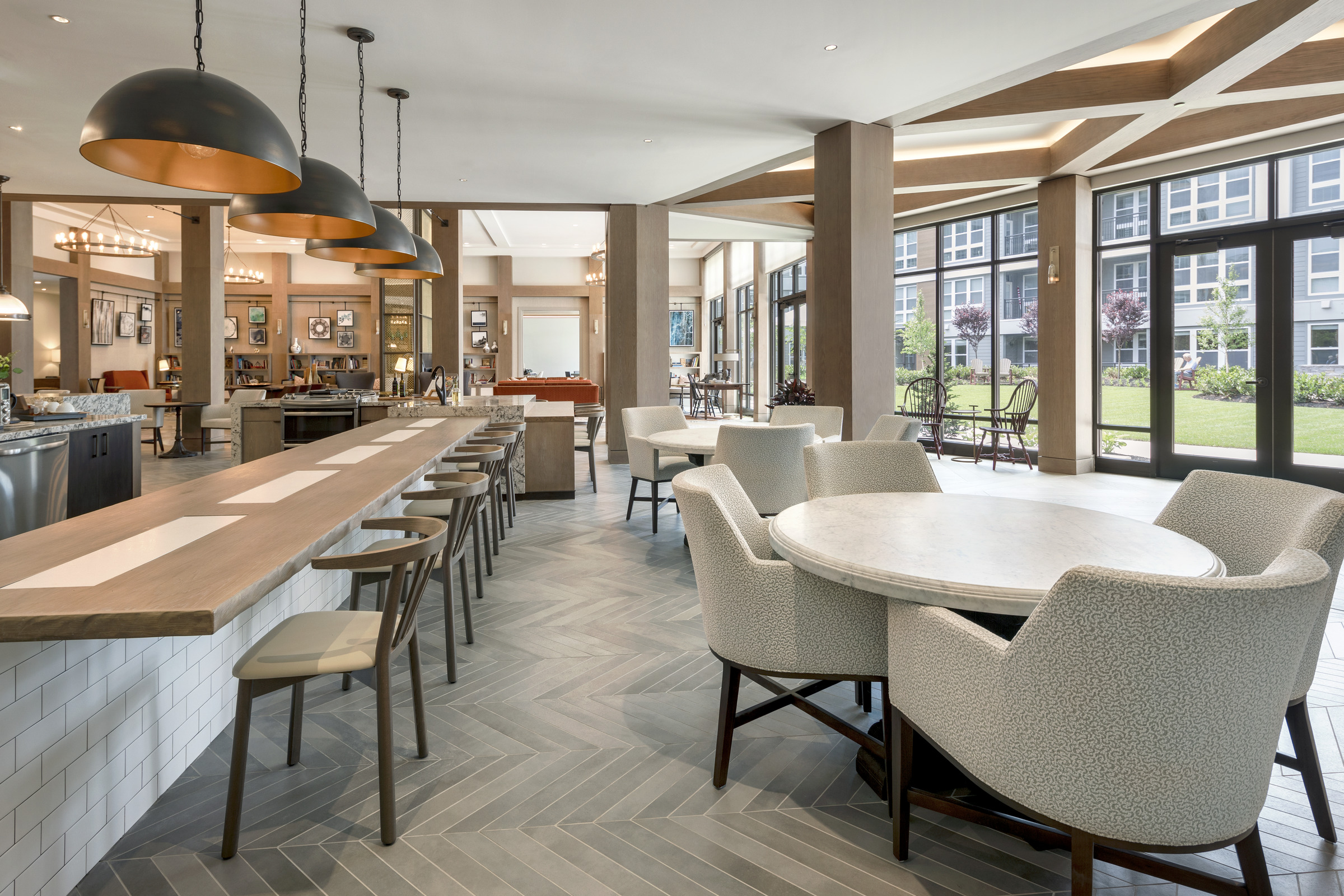
ForrestPerkins, a boutique hospitality studio within Perkins Eastman, worked with The Bozzuto Group to craft an interior hospitality environment to complement residents’ lifestyles at Canvas Valley Forge in King of Prussia, PA. Photograph © Ray Cavicchio